
Student Aid Eligible

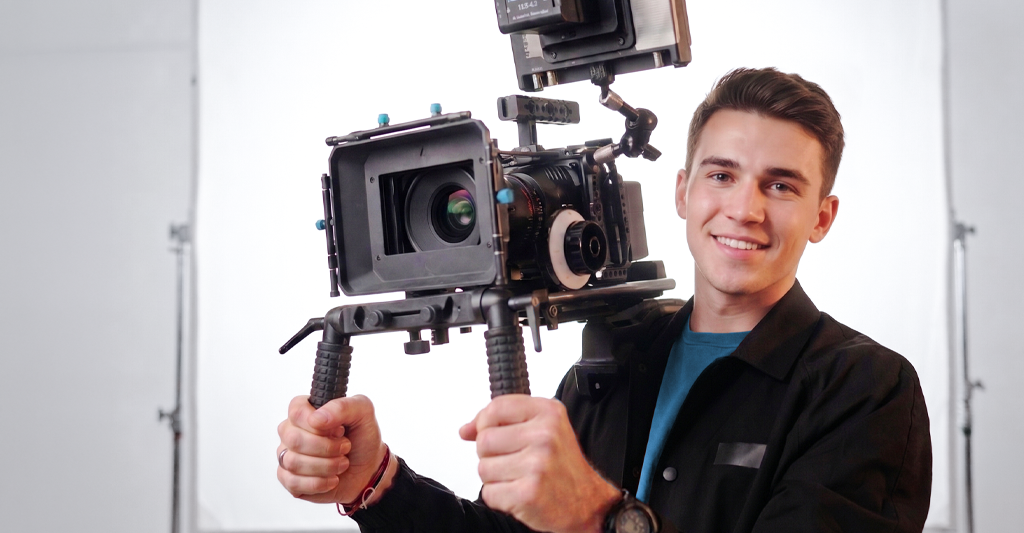
Motion Picture Production
As a Motion Picture Production professional, you'll help bring ideas from script to screen. Learn essential skills in screenwriting, directing, cinematography, special effects, and post-production through hands-on training at our Victoria campus. Create original film projects that demonstrate your skills and connect with real-world industry experts as you prepare for a career in the film industry.
Credential
Certificate
Duration
36 weeks
Portfolio +
Showcase
Employment Opportunities
Independent Filmmaker
Video Editor
Videographer
Production Designer
Grip/Lighting Technician
Set Decorator
Camera Operator
Script Supervisor
Props Assistant
What You Could Earn
Up to $104,000
Benefits
Our Motion Picture Production course is eligible for student aid funding; other options available.
Industry-experienced instructors bring firsthand knowledge from actual roles in their fields.
Get hands-on experience with industry-standard equipment such as film cameras, photo cameras and studio-grade lighting.
Graduate by premiering your short film that demonstrates your creativity and technical filmmaking skills.
Learn how a film goes from idea to final cut, including directing, cinematography, and post-production editing.
Benefit from lifetime access to our Career Services team for job search help and career advice.
Put your skills into practice creating documentaries, commercials, and other film projects.
We provide the tools you need to succeed in your program, including a new laptop you keep.
Motion Picture Production Certificate: Overview
Sundance College’s Motion Picture Production program equips you with practical skills, technical knowledge, and hands-on experience to pursue a career in film and video production.
In just 36 weeks, our diploma program prepares you to work across the creative and technical side of filmmaking. Learn scriptwriting, sound, visual effects, editing, production and the business of film while working alongside other creators to bring ideas from concept to screen.
Throughout the program, you will build practical skills and connect with film industry professionals through workshops and hands-on production experience.
By the end of the program, you will also premiere your short film at our Short Film Showcase. This helps you to demonstrate your creativity and technical filmmaking skills.
Graduates are prepared to step into roles as independent filmmakers, production designers, and video editors. They will also be ready to work on motion pictures, documentaries, and commercial productions.
A Career in Film Starts Here: MOTION PICTURE PRODUCTION
From day one you’re not just studying film – you’re making it. Write, direct, shoot, and edit with professional equipment alongside working industry instructors, building the real skills that matter on a film set.
Is a career as a Filmmaker right for you?
Take the Sundance College Career Training Readiness Quiz. The Career Quiz is a free tool that will help you identify goals, personal strengths and important facts about your potential career path so you can make an informed decision about your future. It takes just a few minutes!
Take Our Career QuizProgram Courses
Courses
Film Fundamentals
Learn film theories as well as their implementation in the viewing/critique of movies. Analyze film clips and feature screenings from 70s Grindhouse gore to the smoke-infused nakedness of French New Wave, and all stops in between. Apply the lessons learned in Screenwriting and Visual Storytelling.
Screenwriting I
Explore the foundations of screenwriting through lectures, discussions, in-class writing exercises, writing assignments, readings of screenplays and from noted texts on the craft, and viewings of short films and other clips. Screenwriting is a collaborative art form. Even when writing alone, you are working on something that will only be realized through the creative work of many people.
Create the most compelling architecture within which others can work. Screen is an audiovisual medium and narrative thrives on action. When writing your story, show, don’t tell.
Workshopping depends on generosity. Commit to your peers’ success by treating their scripts with the same ownership you give your own. Set a high standard in your own writing as a gift to the group and view their achievements as inspiration to elevate your own work.
Writing is rewriting. A bad idea written down is far better and far more useful than a blank sheet of paper.
Screenwriting II
Movies are, as famed critic Roger Ebert said, “empathy machines”. But this does not just happen. That connection to the characters onscreen and the adventures they partake first occurs on paper. On a screenplay, that is as much about formula and craft as it is magic and creativity.
Apply the theoretical lessons from Screenwriting I in a practical fashion via a “hands-on screenwriting” approach in which the actual writing is where the learning takes place. That’s the craft, and if you line up all the parts correctly, you can write something truly engaging.
Cinematography I
Get an introduction to the techniques and aesthetics of cinematography, emphasizing a “hands on” practical approach. You will be able to articulate key idea and themes relevant to the history of cinematography, apply select shooting techniques and styles to the creation of a montage, handle and operate a camera, use professional lighting techniques, practice working with a crew and location shooting.
Cinematography II
Build on the foundations of Cinematography I. Practical experience in Studio and Location lighting techniques will be emphasized. Get hands-on experience with a variety of cameras through filming assignments to expand your visual storytelling craft.
Cinematography III
Explore advanced techniques and technologies in the art of cinematography. Topics will include advanced DSLR techniques; on-location lighting and shooting and an introduction to 16mm film cameras and processes.
Editing I
Learn how editing is used as a means of creative storytelling while developing technical skills using the DaVinci Resolve editing system. Develop an understanding of the post-production workflow, gain hands-on experience making proficient editing decisions, and learn to apply both the technical and creative qualities of editing.
Editing II
Building on Editing I, learn colour grading, how to deconstruct a scene, commercial editing, storyboarding and study how to plan for post-production effects in preproduction.
Editing III
Develop a technical approach to the Adobe Premiere non-linear editing system and Adobe After Effects. Build on the work created in Cinematography, Production, and Directing courses to complete the Term III final project.
Documentary Production
Build basic literacy of documentary filmmaking and the key elements of strong visual storytelling. Learn about the different modes and formats of documentary filmmaking and discuss the use and purposes of each sub-genre. Explore technologies and techniques. Work with classmates to produce a minimum of two short documentary films.
Collaborative Design Workshop
Prepare for the complex problems you’ll face in the workforce by thinking critically and creatively, communicating your ideas effectively, and applying your specialized skills in a collaborative environment. Whether you’re working on a large-scale building development, making a movie, contributing to an online magazine, developing an app, or taking a new fashion line to market, the success of the project relies on your ability to work with others. Learn to work collaboratively in a team project-based environment, using the methods of design thinking to respond to a brief presented by a real community client.
Business of Film
Discuss the legal issues surrounding film production, particularly around maximizing financial value of a film or project and protecting yourself as a filmmaker from legal complications. Examine union collaborations, film sales, and specific broadcaster and distributor regulations. Explore various entry-level jobs within the film industry alongside the essential dos and don’ts of the business.
Sound I
Through in class exercises and short assignments, learn audio topics most relevant to documentary production. This is a two-pronged approach: proper audio acquisition through mic and recording techniques in a variety of situations; and voice relevant audio processing and mixing techniques. Experience on camera and off camera recording with dual system audio synchronization in the digital environment. Microphone and recorder characteristics will be examined along with common audio processing tools such as compression, equalization and noise reduction focusing on voice enhancement. Assessment will be through short audio projects, in class presentations and one on one assessment, and the quality of audio production demonstrated in term projects.
Sound II
Building on the skills acquired in Sound I, explore audio recording and digital processing challenges in PSA/Commercial production. The planning, audio acquisition and digital organization of complex projects will be reflected in assigned projects and in class exercises. Recording and other methods of acquiring additional audio assets such as voice overs, sound effects, music and ambience will be combined with practical exercises and assignments for the optimal use of audio assets in the digital PSA/Commercial creation environment. Advanced digital tools such as reverb/dereverb, chorusing, and others, will be addressed and utilized.
Sound III
Apply skills and knowledge acquired in previous Sound courses to focus on the challenges in recording a dramatic production. Learn how to record audio while dramatic action is taking place and appropriate microphone usage. Further explore post-production techniques for voice enhancement and the digital manipulation of environmental soundscapes. Study basic foley (SFX production) and ADR (automated/additional dialogue recording) techniques to make in-studio recording ambiance match on-location ambiance.
Visual Effects I
Develop a foundational understanding of graphic design and motion graphics as they relate to film. Learn how to use Adobe After Effects in the filmmaking process.
Visual Effects II
Build an advanced understanding of graphic design and motion graphics as they relate to film. Learn more about Adobe Photoshop and Adobe After Effects in the film making process.
Directing I
Learn the art and craft of directing while developing your own style and working with crew and actors. Analyze the development of the dramatic situation, explore character needs and relationships, and break down the script. Study the role of the director and practise directing throughout the filmmaking process while studying the role and responsibilities of an assistant director, and their collaboration.
Directing II
Get hands-on experience working directly with actors and effectively communicating as a director. Topics covered will include creating character profiles, the casting process, rehearsals, and getting the best performances out of actors. Refine your abilities to effectively communicate with actors and crew as well as pitch your ideas to producers and potential financiers.
Workshops
Discuss and review an assigned film and the key scenes with local filmmakers and production personnel. Get the opportunity to understand the real-world experiences of industry professionals as they share their insights into the industry.
Production
Learn the procedures, processes and practices of motion picture production with an emphasis on the practical mechanics of how a short drama film gets made. Explore stages of film production and how a beginning filmmaker can successfully navigate each stage.
Commercial Production
Explore the business aspects and production of television commercials. Study the steps involved in the development process, dealing with a client, and producing broadcast quality television commercials (scripting, storyboarding, shortlisting).
Portfolio
Bring your ideas to life and graduate by premiering your own short film at our Short Film Showcase. Your film serves as a portfolio piece that showcases your creativity, storytelling, and technical filmmaking skills to future clients and employers.
Connect with an Advisor
Connect with an Admission Advisor and get all the questions answered.
Find Out What Our Students
Say About Us
Admissions Open Now
Next Start Dates
View our upcoming start dates for this program. Secure your spot now to begin your educational journey to career success.
Frequently Asked Questions (FAQs)
What jobs can I get with a film production certificate?
Sundance College’s Motion Picture Production certificate prepares you to work in a range of roles both on-and off-set, including:
- Video Editor
- Videographer
- Independent Filmmaker
- Production Designer
- Camera operator
- Script Supervisor
- Grip/Lighting Technician
- Set decorator
The film industry is highly collaborative and community-based, giving you the opportunity to build connections with real-world industry professionals.
What is the difference between production and post-production?
Production is the execution phase on set or on location. The main goal is to capture all the raw sights and sounds involving directors, actors, camera operators, and audio technicians. Post-production happens in studios and editing rooms to shape the raw footage into a polished film.
Sundance College’s Motion Picture Production certificate prepares you to work in both areas.
Do I need experience to apply?
No, you don’t need experience to apply to Sundance College’s Motion Picture Production program. You just need a high school diploma or Mature student status and English proficiency.
What will I study in the program?
The program covers everything from script to screen, including:
- Screenwriting
- Cinematography and camera operation
- Editing
- Sound
- Directing
- Visual effects
- Production and post-production
- The business of film
Is the program hands-on with real equipment?
Yes. You’ll work with professional equipment on film sets and even collaborate with filmmakers and crew.
How long is it and is it in Victoria?
Sundance College’s Motion Picture Production Certificate is offered in-person at our Victoria campus and runs for 36 weeks.
Will I make my own films?
Yes. Throughout the Motion Picture Production program, you’ll work on projects including short documentaries and film clips. You will also premier your own short film at our Short Film Showcase at the end of the program.
What are the admission requirements?
To enroll in Sundance College’s Motion Picture Production certificate, you’ll need:
- A high school diploma or equivalent or Mature student Status
- English proficiency