
Blog / Why MOA Professionals Are Still in High Demand in 2026
Sundance Blog
Why MOA Professionals Are Still in High Demand in 2026

Medical Office Administration – Health Unit Coordinator Diploma
Employment Opportunities:
- Medical Receptionist
- Medical Secretary
- Medical Office Assistant
- Hospital Unit Clerk
Medical Office Administration – Health Unit Coordinator Learn more
Student aid eligible
2 February 2026 | Author: Jonathan Stoddart
| Read Time:
Quick Answer
Medical office administrators are in high demand in 2026 because more people need healthcare than ever before. Healthcare is also becoming more digital, driving demand for skilled healthcare professionals who can work with electronic medical records, handle billing, apply medical terminology and transcription skills, and follow medical office and clinical procedures.
Table of Contents
Healthcare continues to rely on skilled medical office administration professionals to coordinate patient services, manage clinical workflows, and ensure smooth day-to-day operations within medical practices.
The consistent demand for trained healthcare professionals in this field means this career provides stability, long-term growth opportunities, a better work-life balance, steadier income, and a chance to positively impact the lives of others every day.
Let’s look at the factors driving demand and how it can support your career goals.
Why Medical Office Administration Roles Continue to Grow
The continued growth of medical office administration (MOA) roles reflects broader changes in how healthcare is delivered today. Two key trends are impacting MOA job demand across the healthcare administration industry:
Increasing Patient Volume
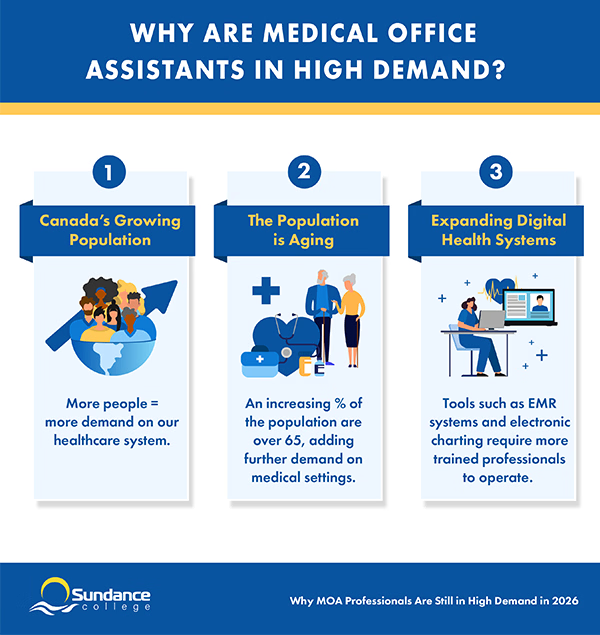
Canada’s population is growing, and more people are using healthcare services as a result. At the same time, Canadians are living longer, and seniors now make up a much larger share of the population. By 2030, more than one in five Canadians will be aged 65 or older, up from about one in eight in 2001.
Together, population growth and an aging population are increasing demand across the healthcare system. Hospitals, clinics, and other healthcare providers need skilled medical office administrators to manage patient information, scheduling, and daily operations – making this an in-demand and reliable career.
Expansion of Digital Health Systems
Digital health systems are central to managing patient information and daily workflows. Tools such as Electronic Medical Records (EMR) systems and electronic charting are now widely used across clinics, hospitals, and other medical settings, making digital processes a standard part of modern healthcare operations.
As Moe S., an instructor in Sundance College’s Medical Office Administration program, explains, technological know-how is essential for success as a medical office administrator.
“Electronic charting and EMR systems have become part of everyday practice in healthcare. As a trained administrative professional, a medical office will depend on you to support these systems and keep everything running efficiently as technology continues to evolve.”
As technology changes and digital record keeping increasingly becomes the norm in the medical field, your skills as a medical administration professional will continue to be needed to keep up with modern demand.
What Do Medical Office Administrators Do?
As a medical office administration professional, you’ll support the daily operations of a medical office or health unit. Your daily medical administration duties vary depending on the setting and position.
If you work as a medical receptionist, you’ll focus on patient check-ins, appointment booking, and front desk workflows. As a medical secretary, you’ll focus on documentation, correspondence, transcription, and organizing paperwork for insurance providers using the electronic health record system.
Working as a medical office assistant (MOA), you’ll handle both patient-facing tasks and operational coordination tasks like records, referrals, test requisitions, and follow-ups. A role like a medical billing clerk will require you to handle billing, claims, and payments, and fix errors that could delay processing. If you work as a hospital unit clerk, you’ll support hospital units with order entry forms and admission, discharge, and transfer processes, making sure all information is moved efficiently between departments.
No matter what medical administration role you pursue, you’ll play an essential part in how healthcare departments are run and the experience of patients.
Core Responsibilities of Medical Office Administrators
While your daily duties can change depending on where you work, your core responsibilities as a medical office administrator don’t. In every healthcare setting and administration role, you’re responsible for:
- Accurate and secure patient information
- Complete, organized, and accessible health records
- Prompt referrals, diagnostic tests, results, and follow-ups for patients
- Efficient scheduling
- Clear, accurate, and documented communication
- High office standards of documentation, billing, safety, and infection control
These responsibilities keep patient care effective and clinic operations efficient.
Key Skills Employers Expect in Medical Office Administration
In order to carry out the daily tasks and responsibilities effectively, employers look for trained healthcare professionals who have crucial medical administration skills in:
- Patient registration and scheduling: Accurately register patients, confirm details and paperwork, and manage appointment booking keeping the clinic or unit organized and patients moving.
- Health information management and EHR record keeping: Update patient records correctly, keep charts organized, and handle personal health information properly.
- Medical transcription and documentation: Create clear, accurate notes, forms, referrals, and correspondence using medical terminology and anatomy knowledge.
- Billing and administrative processing: Handle billing accurately, process payments or claims support where required, and catch errors that cause delays.
- Clinical coordination and hospital operations support: Coordinate diagnostic tests and results, understand prescription workflows and drug terminology, and in hospital settings, complete order entry forms and support admit, discharge, and transfer processes.
You’ll also need soft skills, like clear communication with patients and coworkers, strong attention to detail, and the ability to stay organized when the work is fast paced with interruptions.
These skills help medical offices function efficiently while supporting patient care and healthcare teams alike.

Where Medical Office Administration Professionals Are Most in Demand
Trained medical office administration professionals are in demand across a range of healthcare environments where consistent administrative support is essential to daily operations.
MOAs frequently work at clinics and physician offices. Family practices, walk-in clinics, and specialist offices rely on medical office administrators, such as medical receptionists, to greet and register patients, coordinate scheduling, and complete documentation. These roles reflect many of the career paths available to trained medical office assistants.
Hospitals and other busy medical settings also represent a strong area of demand, particularly in health unit coordination roles. Hospital units depend on unit clerks to support patient admissions, discharges, order processing, and coordination between departments as part of their daily work.
Diagnostic centers and medical laboratories rely on administrative professionals to support accurate documentation, electronic records, and coordination with healthcare providers involved in diagnostic testing.
How Sundance College Prepares Graduates
Get the skills you’ll need to succeed as a medical office administrator at Sundance College in less than a year. The Medical Office Administration – Health Unit Coordinator Diploma program is designed with employer input to meet industry expectations. Learn clinical procedures, medical terminology, medical billing, electronic record keeping, and other important skills.
The 43-week program includes a 5-week practicum opportunity where you’ll apply your knowledge hands-on in a medical setting.
There’s a Student Services team focused on supporting your success, and Career Services offers resume and interview support for life. These are just some of the reasons why 85% of Sundance College Medical Office Administration graduates are employed in their field within six months of graduating.
To get started with your career training, contact an admissions advisor today.
Frequently Asked Questions (FAQs)
-
Is medical office administration a stable career?
Yes. As patient volumes grow and healthcare systems continue to evolve, demand for trained administrative professionals remains strong across clinics, hospitals, and other healthcare settings.
-
Do medical office administrators work with patients?
Yes. They are often the first point of contact, supporting patient registration, scheduling, and communication between patients and healthcare providers. This patient interaction helps patients feel informed, supported, and guided during their care.
-
Do employers prefer graduates with practicum experience?
Many employers value candidates who have completed a practicum because these graduates have applied their knowledge in medical settings, used standard workplace procedures, and better understand the day-to-day expectations of the role.
-
Can Medical Office Administration graduates work in hospitals?
Yes. Hospitals employ administrative professionals as unit clerks or unit coordinators. In these roles, you support the unit by helping with admissions, discharges, orders, and day-to-day coordination.
-
What does the Health Unit Coordinator specialty focus on?
It focuses on supporting the day-to-day operations of hospital units. You learn how admissions, discharges, and orders are handled, and how to coordinate within medical units.
-
Why is a practicum important for medical office administration?
A practicum is important because it gives you hands-on experience in a medical office setting before graduation. You apply your training with actual scheduling, records, billing, and office procedures, and learn how daily workflows operate.
This experience strengthens your resume and shows employers that you’ll contribute to the workplace from day one.
Subscribe for more career advice
Blog Categories
Share on: