
Blog / Daily Responsibilities of Medical Office Assistants
Sundance Blog
Daily Responsibilities of Medical Office Assistants

Medical Office Administration – Health Unit Coordinator Diploma
Employment Opportunities:
- Medical Receptionist
- Medical Secretary
- Medical Office Assistant
- Hospital Unit Clerk
Medical Office Administration – Health Unit Coordinator Learn more
Student aid eligible
25 May 2026 | Author: Vallankan Mendonca
| Read Time:
Quick Answer
Medical office assistants handle a wide range of administrative and clinical tasks that keep healthcare settings running smoothly. Responsibilities include serving as the first point of contact for patients, scheduling appointments, managing patient records, handling insurance billing, providing medical transcription, and assisting with clinical procedures. These functions require proficiency with healthcare software, knowledge of medical terminology, and strong organizational skills.
Table of Contents
You’ve probably met a medical office assistant at your local clinic before.
They make it easier to handle appointments, confirm paperwork, and pick up test requisitions. Now picture yourself in that role, welcoming patients, preparing records, and being part of the essential care team.
So, what would you do each day as a medical office assistant? How do you become an MOA, and what opportunities can this career open? Let’s find out.
Core Responsibilities: What Does a Medical Office Assistant Do?
As a medical office assistant, you’ll serve as the link between patients, medical staff, and office operations.
You could work in a
- private clinic,
- dental or optometry office,
- community health centre, or
- long-term care home.
Your day may shift between
- supporting patients,
- managing records,
- coordinating tests,
- handling referrals, and
- following up with healthcare providers.
This variety shows how broad MOA duties can be, allowing you to support patients and staff in many different ways.
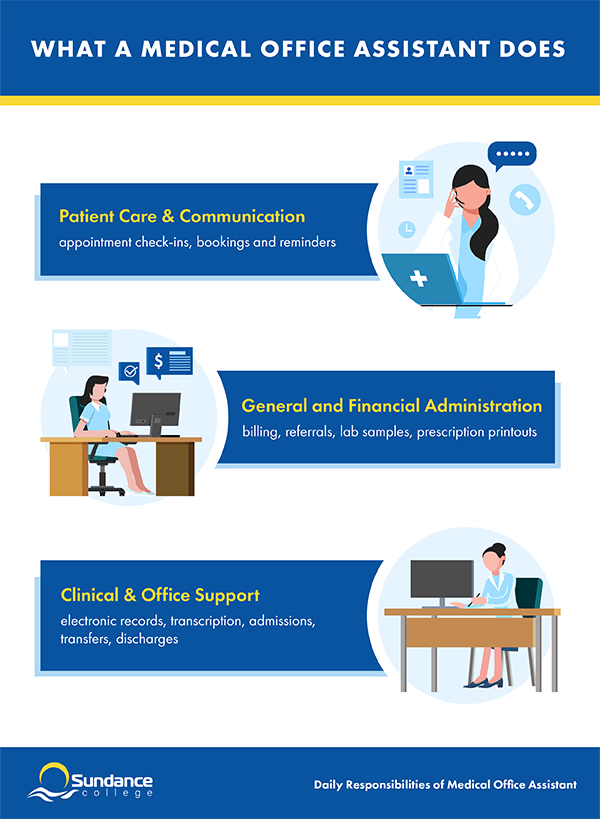
Patient Care and Communication

You’ll handle patient communication at every stage of their visit. Before appointments, connect by phone or email to confirm schedules, answer questions, or provide instructions.
When patients arrive, welcome them, help with forms, and update records for the medical team. After the appointment, continue with follow-ups such as sending reminders, sharing paperwork, or coordinating referrals.
These clinical interactions create a welcoming experience for patients and support medical staff in providing effective care.
Administrative & Financial Duties
In addition to patient care, you’ll take on various clinic administration and financial duties.
Your role will include
- medical office billing for patients and insurance providers,
- updating correspondence such as exam notices or referral forms, and
- coordinating with specialists for referrals.
You’ll also send lab samples for analysis, record and compile patient information, and print prescriptions.
By keeping the clinic organized, you make it possible for medical staff to give patients their full attention.
Clinical and Office Management Support
You’ll also play a key role in clinical and office management. Each day, you’ll be updating electronic health records, pulling together paperwork for diagnostic tests, or typing out a physicians’ notes.
In hospitals, you may also work as a unit clerk. Here you will handle order entry as well as patient admissions, transfers, and discharges.
What does this mean in practice? Patients receive timely care and attention because healthcare providers focus on treatment, and departments work together effectively. You help create an environment where medical teams can excel and patients can thrive.
Where Can a Medical Office Assistant Work?
Medical office assistants (MOAs) are needed across many parts of the healthcare system. Annual salaries reach as much as $50,980.
Typical MOA work settings include
- doctors’ offices,
- medical clinics,
- hospitals, and
- private practices.
These could include
- dental,
- optometry,
- chiropractic, and
- physiotherapy offices.
They are also employed in outpatient care centres and insurance companies. MOAs also work in public health settings, including
- government health agencies,
- community health centres,
- nursing homes, and
- long-term care facilities.
With this range of options, you can build a career that fits you best.
How Do You Become a Medical Office Assistant?
To become a medical office assistant, you need training that builds practical skills and knowledge of healthcare practices.
Employers look for these skills:
- electronic health records management,
- medical terminology,
- medical office procedures, and
- effective communication.
Educational Requirements and Training Programs
The Sundance College Medical Office Administration – Health Unit Coordinator diploma program will equip you with both the administrative and clinical skills.
You’ll learn
- medical terminology,
- anatomy,
- transcription,
- electronic health records,
- billing,
- diagnostic testing,
- pharmacology basics, and
- professional communication skills.
Online learning is paired with a practicum in a healthcare setting such as a clinic or community health centre. There you will apply what you’ve learned and develop the workplace experience employers want.
That’s exactly what Kimberly C., a graduate of Sundance College’s Medical Office Administration program, experienced:
During my practicum, I worked in the electronic medical records (EMR) system and created spreadsheets. Because of my program, I already had a strong understanding of electronic medical records, which helped me fit right in.
By training hands-on in the essential functions of a medical office administrator, you’ll be ready to excel from day one.
To get started with your MOA training program, contact an admissions advisor today.
MOA vs. Other Healthcare Office Roles: How Does This Role Compare?
When you explore careers connected to medical office assistants, you’ll see that each role has its own focus.
- MOA vs Medical Receptionist
Medical receptionists work at the front desk of clinics, hospitals, and doctors’ offices. They focus on welcoming patients, scheduling appointments, and handling calls. MOA responsibilities extend into managing records, billing, and clinical support.
- MOA vs Medical Secretary
Medical secretaries prepare documents, maintain files, and assist physicians with correspondence. MOAs do this as well and also manage patient intake, electronic records, and billing.
- MOA vs Hospital Unit Clerk
Unit clerks work within hospitals, handling
- admissions,
- transfers,
- discharges, and
- order entry.
MOAs train in these procedures and can also work in clinics, community centres, and other healthcare settings.
- MOA vs Medical Billing Clerk
Medical billing clerks focus on claims, invoices, and payments. MOAs include billing in their role, alongside broader administrative and clinical responsibilities.
MOAs adapt to a range of workplaces and responsibilities, making it a versatile entry point into healthcare administration.
Frequently Asked Questions
-
Is a medical office assistant the same as a medical receptionist?
Not exactly. Medical receptionists focus on front-desk duties like greeting patients and scheduling. As an MOA, you’ll do this and much more, including records management, billing, and clinical support.
-
Can I work in a hospital as a medical office assistant?
Yes. MOAs can work in hospitals, typically in roles such as unit clerk or administrative support.
-
How can I become a medical office assistant in less than a year?
By completing Sundance College’s Medical Office Administration – Health Unit Coordinator diploma. Training takes 43 weeks and includes hands-on learning and a 5-week practicum placement.
-
Where do medical office assistants typically work?
MOAs are employed in doctors’ offices, medical clinics, hospitals, and private practices. These could include such as
- dental,
- optometry,
- chiropractic, and
- physiotherapy offices.
They are also employed in outpatient care centres, and insurance companies. MOA jobs can extend further to public health settings, including
- government health agencies,
- community health centres,
- nursing homes, and
- long-term care facilities.
-
Do medical office assistants interact directly with patients?
Often, yes. In clinics and private practices, MOAs regularly communicate with patients by phone, email, and in person. In hospital units, MOAs may focus more on administrative and record-keeping duties, with less direct patient interaction.
-
Is there a demand for MOAs in Canada right now?
Yes. Healthcare settings across Canada need MOAs, making it a stable and in-demand career choice.
Subscribe for more career advice
Blog Categories
Share on: