
Blog / Top 5 Medical Office Administration Careers to Consider
Sundance Blog
Top 5 Medical Office Administration Careers to Consider

Medical Office Administration – Health Unit Coordinator Diploma
Employment Opportunities:
- Medical Receptionist
- Medical Secretary
- Medical Office Assistant
- Hospital Unit Clerk
Medical Office Administration – Health Unit Coordinator Learn more
Student aid eligible
24 August 2026 | Author: Vallankan Mendonca
| Read Time:
Quick Answer
A Medical Office Administration career can take you into patient-facing, administrative, and billing roles. Medical Office Assistants and Medical Receptionists support patients from check-in to follow-up. Medical Billing Clerks and Medical Secretaries focus on managing medical records and billing while Hospital Unit Clerks provide administrative support within hospital units.
Table of Contents
Medical Office Administration training can prepare you for more than one type of healthcare career. You could greet patients at a clinic, manage medical records, process medical billing and claims, or provide administrative support in a hospital unit.
This article explores the top five Medical Office Administration career paths, what you will do in each role, and where you can work.
Discover Career Opportunities for Medical Office Administrators
The right training prepares you for work in clinics, hospitals, specialty practice clinics and other healthcare settings.
Whether you want to work directly with patients or prefer administrative support, our Medical Office Administration diploma program equips you with specialized skills. By the end of your program, you will get a chance to apply these skills in a real healthcare environment through a 5-week practicum opportunity.
Hybrid Roles (Administrative and Clinical)
For those who enjoy variety, hybrid roles combine administrative work with patient interaction. A Medical Office Administration diploma prepares you with the skills needed to support both sides of a healthcare office.
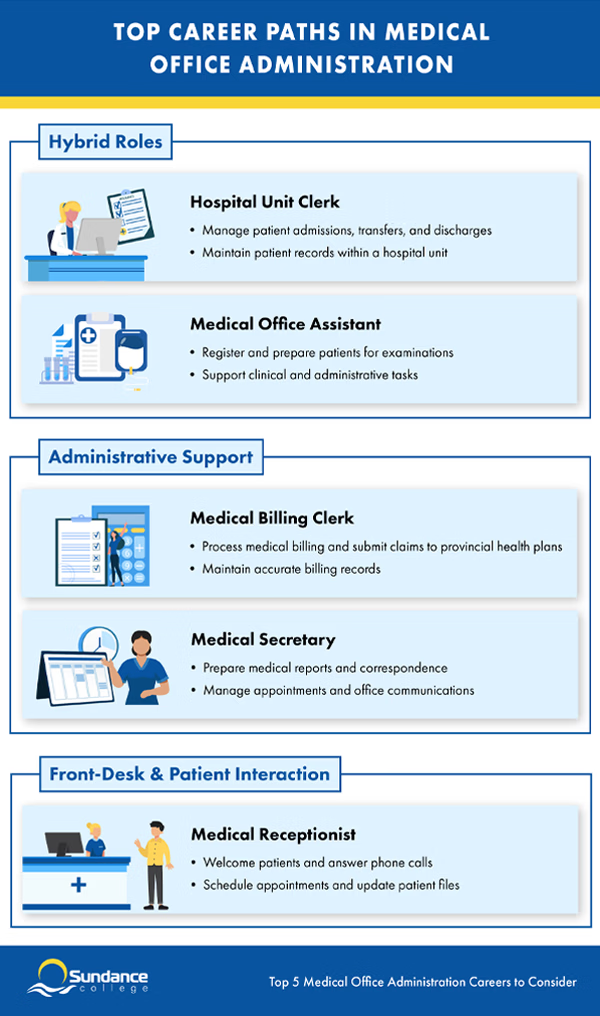
Hospital Unit Clerk
As a Hospital Unit Clerk, you’ll provide administrative support within hospital units.
Responsibilities include:
- Maintaining patient records
- Answering phone calls
- Scheduling appointments
- Supporting patient admissions, transfers, and discharges
- Providing clerical support to nurses and physicians
Work schedule: Full-time, often with rotating shifts, including evenings and weekends.
People interaction: Moderate. You will interact with patients, nurses, physicians, and other healthcare staff.
Work environment: In-person, within a hospital unit.
Potential employers: Hospitals.
Medical Office Assistant
As a Medical Office Assistant, you’ll handle both administrative and patient-facing tasks.
Depending on the workplace, you will:
- Register patients and maintain electronic medical records
- Answer phone calls and schedule appointments
- Prepare patients for examinations
- Support daily office operations
Work schedule: Depending on the employer, you can work full-time or part-time, with a variety of scheduling options.
People interaction: You will work with patients, physicians, nurses, and other healthcare professionals which requires high interaction with people.
Work environment: Primarily in person, working closely with healthcare teams in medical offices and healthcare
Potential employers:
- Private medical practices
- Hospitals
- Clinics
- Specialist offices
- Public health departments
See what makes this career worth considering. Read Why Should You Become a Medical Office Assistant? 5 Key Reasons.
Administrative Support Roles
Administrative support roles focus on the essential office functions that keep healthcare services organized. These careers suit people who pay close attention to detail, accuracy, and are comfortable handling confidential information.
Medical Billing Clerk
Medical Billing Clerks handle billing and claims for healthcare providers. Responsibilities include:
- Preparing and submitting claims to provincial health insurance plans
- Reviewing and correcting rejected or incomplete claims
- Maintaining accurate billing records using specialized medical billing software
- Processing billing for uninsured or third-party services, when applicable
Work schedule: Depending on the employer, you can work full-time or part-time, typically during regular business hours.
People interaction: Moderate. You’ll work with patients, healthcare professionals, and insurance providers.
Work environment: Primarily in-office, with some employers offering remote or hybrid work options.
Potential employers:
- Hospitals
- Clinics
- Physician practices
- Medical billing companies
Medical Secretary
As a Medical Secretary, you’ll help healthcare professionals stay organized and informed by managing administrative tasks such as:
- Preparing medical reports, letters, and other documents
- Managing appointment schedules and correspondence
- Updating electronic medical records
- Organizing patient files
Work schedule: Full-time; with some positions requiring evenings or weekends.
People interaction: You’ll work with patients, physicians, and other healthcare staff with moderate interaction.
Work environment: Primarily in an office or healthcare setting.
Potential employers:
- Private medical practices
- Hospitals
- Clinics
- Specialist offices
Front-Desk and Patient Interaction Roles
Front-desk roles put you in regular contact with patients. Along with greeting them and answering their questions, you will manage appointments, update records, verify insurance information, and process medical payments.
Medical Receptionist

As a Medical Receptionist, you are often the first person patients meet when they visit a healthcare office. Responsibilities include:
- Welcoming patients and answering their questions
- Scheduling appointments and updating patient information
- Verifying insurance information
- Processing payments
Work schedule: Full-time or part-time, with flexible hours depending on the workplace.
People interaction: High. You’ll work closely with patients, physicians, and other healthcare staff.
Work environment: Primarily in person, usually in a busy front office.
Potential employers
- Primary care clinics, such as family medicine clinics and community health centres
- Walk-in clinics
- Dental, optometry, and physiotherapy clinics
- Other specialty practices
Salary and Growth Potential
Salaries in Medical Office Administration vary depending on your role, employer, location, and level of experience. On average, you can earn up to $50,980 per year.
Canada’s growing and aging population continues to increase the demand for healthcare services. This creates opportunities for skilled administrative professionals across different healthcare settings.
“After earning my diploma, I took on the role of Medical Office Administrator. It even came with a wage increase.”
– Kimberly C., Medical Office Administration – Health Unit Coordinator Graduate, Sundance College
Find the Right MOA Career Path for You
The day-to-day work can look very different from one role to another.
A front-desk role may suit you if you enjoy regular patient interaction. If you prefer detail-focused work, medical billing or medical secretarial roles fit better. Hospital Unit Clerks and Medical Office Assistants offer a mix of administrative responsibilities and patient interaction.
“During my practicum, I had the opportunity to register patients, assist with diagnostic tests, and support the healthcare team. It helped me decide which role was the right fit for me.”
– Liel P., Medical Office Administration – Health Unit Coordinator Graduate, Sundance College
A 5-week practicum gives you a closer look at the work before you begin your career.
How Sundance College Prepares You for Medical Office Administration
The Medical Office Administration – Health Unit Coordinator Diploma prepares you for medical administrative roles in various healthcare settings.
You can complete the program in 43 weeks, including a 5-week practicum in a healthcare setting. During your training, you’ll train in:
- Medical terminology and transcription
- Clinical procedures
- Medical billing
- Electronic medical records
- Medical office software
You’ll receive support throughout your studies, including:
- Live onboarding and the Becoming a Master Student (BAMS) course to help you prepare for your studies
- Access to instructors, Student Services, and 24/7 counselling
- Lifetime Career Services, including resume writing, interview preparation, and job search guidance
Want to learn more about the program? Connect with us to get started.
FAQs
-
What are the most common career paths for MOA graduates?
Medical Office Administration graduates can pursue a wide range of in-demand careers such as:
- Medical Billing Clerk
- Hospital Unit Clerk
- Medical Office Assistant
- Medical Receptionist
- Medical Secretary
-
What is the difference between a Medical Receptionist and a Medical Office Assistant?
Medical Receptionists focus on front-desk responsibilities, while Medical Office Assistants take on a wider range of administrative and clinical tasks.
Medical Receptionists typically:
- Welcome patients and answer phone calls
- Schedule appointments and update patient information
Medical Office Assistants typically:
- Register patients and maintain electronic medical records
- Prepare patients for examinations and support daily office operations
-
Can an MOA diploma lead to a Hospital Unit Clerk role?
Yes. The Medical Office Administration – Health Unit Coordinator Diploma prepares students with the necessary skills to start a career as a Health Unit Clerk. You will get training in:
- Managing patient admissions, transfers, and discharges
- Understanding medical terminology
- Maintaining electronic medical records
- Handling hospital administrative procedures
-
Can MOAs work in specialized clinics or specialty settings?
Yes. Depending on the role, Medical Office Administration graduates can find opportunities in:
- Specialist offices
- Urgent care clinics
- Physician practices
- Community health centres
- Hospitals
-
What is the job demand for MOAs across different provinces?
Job demand for skilled Medical Office Administration professionals is strong across Canada. Due to Canada’s growing and aging population, the need for healthcare services continues to rise. This creates ongoing opportunities for skilled medical administrative professionals.
-
How does a practicum help MOA students prepare for the workplace?
The Medical Office Administration – Health Unit Coordinator Diploma includes a 5-week practicum in a healthcare setting. Throughout your practicum, you’ll have the opportunity to:
- Apply your knowledge and skills in a professional workplace
- Gain hands-on workplace experience
- Work alongside healthcare professionals
- Build professional connections before graduation
Subscribe for more career advice
Blog Categories
Share on: