
Blog / What Does a Fashion Designer Do? From Sketch to Finished Garment
Sundance Blog
What Does a Fashion Designer Do? From Sketch to Finished Garment

Fashion Design Diploma
Employment Opportunities:
- Fashion Designer
- Pattern Drafter
- Tailor
- Stylist
Fashion Design Learn more
Student aid eligible
19 October 2026 | Author: Vallankan Mendonca
| Read Time:
Quick Answer
Fashion designers create clothing and accessories by turning creative ideas into wearable designs.
Their work starts with research, inspiration, and early design concepts. From there, designers sketch concepts, choose fabrics, help create patterns and develop garments through fittings and sample construction.
Their work includes:
- Researching trends, textiles, and sources of inspiration
- Creating fashion illustrations, flats, and design concepts
- Selecting fabrics and draping
- Drafting and manipulating patterns
- Working with stylists, manufacturers, clients, and production teams
The process takes a design from an early idea to a finished garment or collection. A Fashion Design diploma program helps you develop the creative and technical skills behind that process.
Table of Contents
We all have that one outfit in our wardrobe we keep reaching for. It might be the jacket that fits perfectly, the dress that always earns a compliment, or the shirt that just works.
But before any of those pieces ended up in your wardrobe, a fashion designer made decisions about the look, fabric, fit and construction. These decisions shape how the finished garment looks and feels.
So, what does a fashion designer do daily, and how do you become one?
Here’s a closer look at the work behind the clothes we wear.
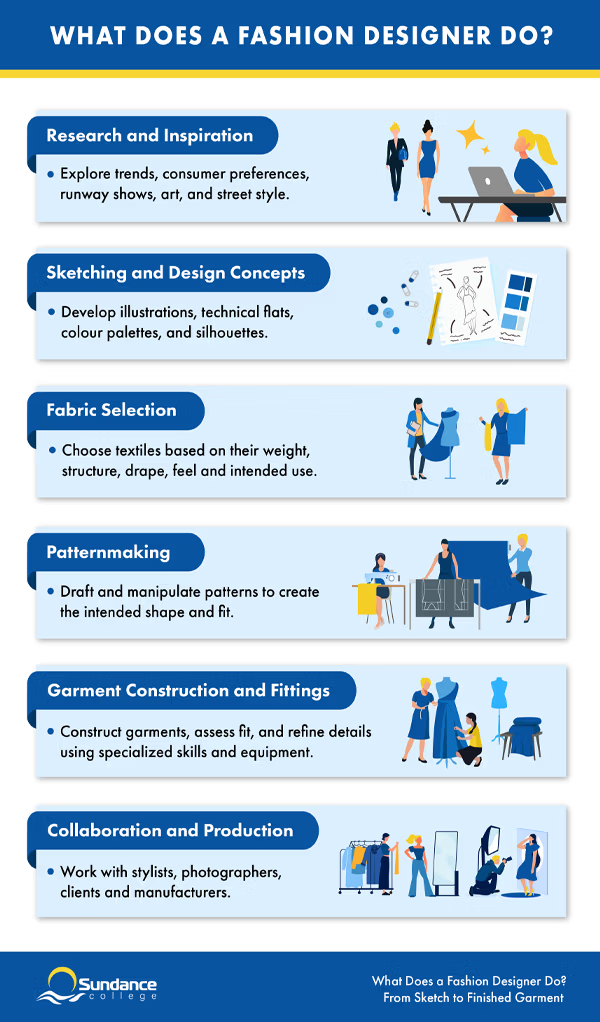
Core Duties of a Fashion Designer
Fashion designers work in independent studios, design houses, retail brands, theatres, and film productions. Their daily responsibilities depend on the role and the stage of production.
Research
Fashion designers are always looking for new ideas. They explore current trends, revisit fashion history, and pay attention to what people are wearing and buying. Inspiration can come from:
- Runway shows and street style
- Art, media, and cultural movements
- Textiles and everyday fashion trends
Sketching and Conceptualization
Once an idea starts taking shape, designers need a way to develop it. Sketching helps turn an early idea into something others can understand.
This work includes:
- Fashion illustrations
- Fashion flats
- Colour palettes
- Silhouettes
- Mood boards
These visuals help establish the direction of a garment or collection. They also give everyone a clear reference during production.
Fabric Selection
Some fabrics are soft and move with the body, while others are stiff and hold their shape. Designers need to understand how different textiles behave before choosing one.
Designers consider:
- Fibre content
- Weave or knit structure
- Weight and thickness
- Drape
- Surface and hand feel
- Function or end-use
The right fabric needs to suit both the design and its purpose.
Patternmaking
Patternmaking (also called pattern drafting) turns a design concept into pieces that can be cut and sewn. Fashion designers create and adjust patterns to achieve the design, shape, and fit they want. Patternmaking can range from the basic block set (skirt front/back, bodice front/back, and sleeve) to complex garments. It also involves manipulating existing patterns to create new designs.
Garment Construction and Fittings
Fashion designers construct garments using professional sewing techniques and specialized equipment. This includes:
- Industrial sewing machines
- Sergers
- Knitting machines
When a sample garment is fitted on a dress form or model, the designer can assess proportion, balance, and fit. Fittings help designers evaluate and refine:
- Comfort
- Ease of movement
- Overall fit
- Garment appearance
Collaboration and Communication
Fashion designers regularly collaborate with other professionals throughout the design and production process. This can include working with:
- Photographers
- Stylists
- Production teams
- Manufacturers
- Clients
Clear communication helps everyone understand the design direction and production requirements.
From Sketch to Garment: The Design Process
“Fashion design is a process of testing ideas, adjusting details, and refining every stage until the final piece looks and feels right.”
– Stephanie M., Fashion Design Instructor, Sundance College
Every designer has their own approach to developing a garment. Some begin with sketches, while others start by experimenting with fabric or working directly on a dress form. The process can vary from one designer to another, though most collections are developed using many of the same techniques.
Inspiration and Design Development

A design can start almost anywhere: a colour, a fabric, a shape, or an idea. Designers develop that starting point through sketches and other visual tools.
They create:
- Fashion illustrations
- Fashion flats
- Colour palettes
- Silhouettes
These early decisions establish the direction for the garment.
Draping
Designers also develop ideas directly on a dress form. Draping allows them to explore a garment in three dimensions and see how the fabric falls and takes shape.
Through draping, designers work on:
- Shape and proportion
- Fit and garment balance
- Design details
- Pattern adjustments
Patternmaking
Patternmaking turns a design concept into pieces that can be cut and sewn.
Designers draft patterns using:
- Standard measurements and garment specifications
- Technical drafting methods to achieve accurate fit
- Pattern manipulation to achieve a desired design
Fittings
Fittings help designers see how a garment works on a body. They provide opportunities to identify problems before final construction.
Designers may refine:
- Comfort
- Ease of movement
- Fit across different body areas
- Proportion and balance
- Final construction details
Muslins and Sample Construction
Before the finished piece is produced, designers often construct sample pieces or muslins. These test versions use inexpensive fabrics to show what’s working and highlight what needs improvement.
This stage helps identify issues with:
- Seams and darts
- Size and proportions
- Neckline, armhole, and sleeve placement
- Fabric behaviour
- Garment movement
- Overall appearance
Cutting and Garment Construction
Once the design is ready, designers cut the selected fabric and bring the pieces together to create the garment. This is where earlier design decisions come together through skilled sewing and construction techniques.
How Sundance College’s Fashion Design Diploma Prepares You
Sundance College’s Fashion Design Diploma program combines creative and technical training. With hands-on studio classes, you will turn your own ideas into finished garments.
Over 56 weeks, you’ll develop skills in areas such as:
- Fashion Illustration
- Pattern Drafting
- Draping
- Garment Construction
- Computer Aided Drafting (CAD)
- Styling
- Fashion Photography
- Fashion Sustainability
- Tech Packs
- Design for Stage and Screen
Hands-on Training in Garment Construction and Patternmaking
You’ll work with professional equipment and software during your training. The program includes industrial sewing machines, sergers, knitting machines, and Adobe Creative Cloud. You will also build skills through multiple garment construction courses. These courses cover areas such as:
- Professional garment sewing techniques
- Knitwear and stretch garments
- Menswear and tailoring
- Pattern drafting and manipulation
- Draping and fitting
Portfolio Development
Presenting your work professionally is an important part of your career in fashion. During your program, you’ll design and create a professional portfolio website, including photography, to showcase your fashion designs and personal brand.
The website includes:
- Homepage
- About/bio page
- Showcase pages
- Contact page
By the end of the program, you’ll have developed the practical skills needed to design, construct, and present original fashion work at our annual fashion show.
Learn more about Sundance College’s Fashion Design Diploma today.
FAQs
-
What skills do fashion designers need?
Fashion designers need a combination of creative and technical skills.
They include:
- Fashion illustration and sketching
- Technical drawing and fashion flats
- Pattern drafting and manipulation
- Draping and garment fitting
- Garment construction and sewing techniques
- Fabric and textile selection
- Computer Aided Drafting (CAD)
-
What is a typical day for a fashion designer?
A typical day for a fashion designer depends on the project and stage of production. It can involve:
- Researching trends
- Sketching design ideas
- Selecting fabrics
- Creating patterns
- Constructing garments
- Conducting fittings
- Collaborating with other professionals
-
Is fashion design a good career?
Fashion design is a rewarding career for people who enjoy combining creativity with hands-on technical work. Fashion designers work for design houses, retail brands, costume departments, theatres, film productions, or pursue independent design opportunities.
-
What qualifications do I need to become a fashion designer?
Employers look for technical training, practical experience, and a strong portfolio that demonstrates your creativity and skills.
-
Do fashion designers need to know how to sew?
Yes. Sewing skills help fashion designers understand how garments are constructed and how fabrics, patterns, and design details work together. Sundance College’s Fashion Design diploma includes hands-on training with industrial sewing machines, sergers, and knitting machines, along with professional garment construction techniques.
-
Is fashion design more creative or technical?
Fashion design is a mix of creative and technical skills. Designers develop ideas, refine garment details, and work with techniques such as patternmaking, draping, and construction to bring their ideas to life.
Subscribe for more career advice
Blog Categories
Share on: