
Blog / What Skills Do You Need to be a Medical Office Assistant?
Sundance Blog
What Skills Do You Need to be a Medical Office Assistant?

Medical Office Administration – Health Unit Coordinator Diploma
Employment Opportunities:
- Medical Receptionist
- Medical Secretary
- Medical Office Assistant
- Hospital Unit Clerk
Medical Office Administration – Health Unit Coordinator Learn more
Student aid eligible
23 February 2026 | Author: Jonathan Stoddart
| Read Time:
Quick Answer
Medical office assistants need technical skills in electronic health records (EHRs), medical billing software, and medical transcription. They must understand medical terminology, anatomy, and clinical procedures to accurately process patient information. In addition to technical knowledge, strong communication and organizational skills are essential. These professional skills help improve the patient experience and ensure medical facilities operate efficiently.
Table of Contents
When you visit a doctor’s office, health unit, or specialty clinic, the right support can change the entire experience. It can mean the difference between feeling informed and feeling overwhelmed.
As a medical office assistant, you provide that support. You guide patients through their visits and help the healthcare team work efficiently.
Your skills keep clinics running effectively. Clear, organized communication supports every step of care. Fewer errors mean less confusion and faster service. As a result, both patients and medical professionals benefit.
So, what does it take to succeed as an MOA? Let’s explore the technical and professional skills used every day.
Core Technical Skills in Healthcare
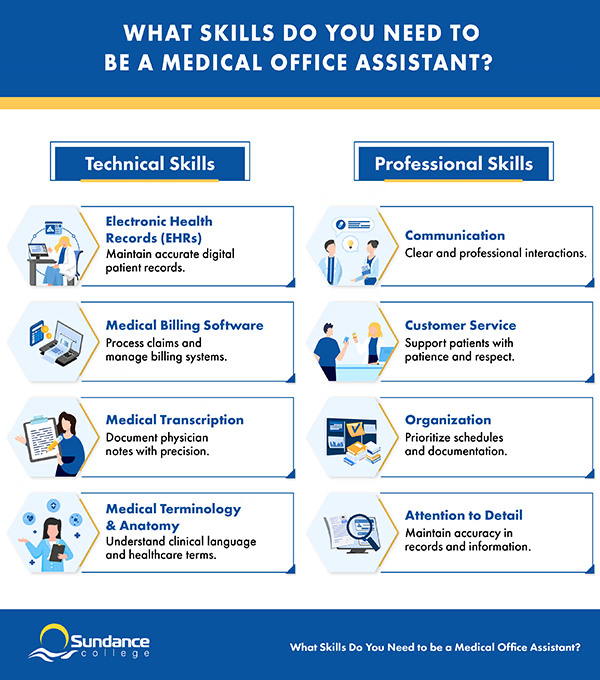
As a medical office assistant, you’ll need core technical skills to ensure accuracy and efficiency in medical offices. You’ll use these skills daily to manage patient information, coordinate schedules, and handle documentation without delays or errors.
These skills help providers focus on care and create a better experience for patients and staff alike.
Electronic Health Records (EHRs)
Electronic health records (EHRs) are part of nearly every task in a medical office. As a medical office assistant, you’ll use EHR systems to update patient information, manage schedules, and ensure records are accessible to care teams.
Moe S., an instructor in Sundance College’s Medical Office Administrator – Health Unit Coordinator Diploma program, says that good EHR management brings numerous benefits to both the medical facility and the patient:
“Faster patient processing means shorter wait times and more efficient clinic operations, something physicians and patients both appreciate. Improved accuracy ensures that drug interactions or allergies are noted.
Good records allow easy access to patient reports, vaccine schedules, and the generation of appointment reminders. They help clinics remain proactive instead of reactive.
Patients appreciate seamless visits and benefit from accuracy. Most modern practices require EHR proficiency. It’s no longer optional.”
Electronic health record management is at the heart of almost every clinic’s operation, making it a fundamental skill for an MOA.
Medical Billing Using Specialized Healthcare Software
Medical billing requires accuracy when entering, reviewing, and submitting information through specialized healthcare billing software. As a medical office assistant, you’ll work with billing systems to make sure patient information, procedure and other codes and documentation are recorded correctly.
When you handle billing properly, claims move through the system as expected, and records stay consistent. This allows healthcare teams to focus on patient care.
Medical Transcription
Every detail matters when turning information from healthcare providers into written records.
Moe S. illustrates the practical benefits of good transcription:
“When a physician dictates what happened during an appointment, the medical office assistant ensures every detail is recorded accurately. This includes the diagnosis, medications, dosages, and follow-up plan.
In a case like mild asthma, precise transcription means the patient receives the correct inhaler and medication without delays or confusion at the pharmacy. It also ensures that any future provider can clearly see what was diagnosed and how it was treated.
For the clinic, accurate documentation supports seamless billing and insurance processing while maintaining professional credibility. When transcription is done right, everyone moves forward with clarity and confidence, especially the patient.”
Accurate transcription has far-reaching benefits, making it an essential skill for an MOA.
Knowledge of Medical Terminology and Anatomy
Small details matter when it comes to communicating in a medical office or healthcare facility. As a medical office assistant, knowledge of medical terminology and anatomy will help you understand the language you hear around you each day and handle patient notes correctly.
For example, if a doctor writes, “Refer to orthopedics for lumbar radiculopathy,” you need to know that lumbar refers to the lower back and radiculopathy involves nerve-related pain. This ensures the referral is sent to the correct specialist with the appropriate notes.
Your ability to understand and interpret medical terminology helps you avoid errors, reduce delays, and support patient care efficiently. It means patients get answers faster and avoid repeat appointments. This reduces unnecessary strain on healthcare teams and allows patients to receive the attention and care they deserve.

Professional Skills and Personal Qualities to Excel as a Medical Office Assistant
Technical skills matter in medical office administration, but how you use these skills each day is also important. Professional skills and personal qualities influence how you communicate, stay organized, handle responsibility, and interact with patients and healthcare teams. These abilities shape the day-to-day experience of the role and are developed through training and hands-on practice.
Communication & Interpersonal Skills
Clear communication helps you share information accurately and interact professionally with patients and healthcare teams.
Customer Service Skills
Customer service skills help you handle questions, concerns, and requests with professionalism, contributing to a positive experience for patients in medical office settings.
Emotional Intelligence
Emotional intelligence helps you remain calm, respectful, and professional when situations feel sensitive or high-pressure.
Organizational Skills
Organizational skills help you manage information, tasks, and priorities efficiently throughout the day.
Problem-Solving Skills
Problem-solving skills help you respond effectively when situations change or plans don’t go as expected.
Attention to Detail
Attention to detail helps ensure accuracy when handling patient information and medical documentation.
Adaptability and Resourcefulness
Adaptability helps you adjust to changing priorities and workflows in fast-paced healthcare settings. Resourcefulness helps you use available tools effectively, find information when needed, and know when to ask questions.
How to Develop Essential Medical Office Administration Skills
The best way to build the technical and professional skills you’ll need to excel as a medical office assistant is through focused, career-oriented training. A specialized diploma program from a career college can provide you with the knowledge and skills that we’ve mentioned, plus sought-after industry experience in a healthcare setting in just 10 months.
How Sundance College’s Medical Office Administration – Health Unit Coordinator Diploma Program Prepares You
Sundance College’s Medical Office Administration – Health Unit Coordinator Diploma program combines up-to-date curriculum with hands-on courses taught by instructors who have experience working in healthcare.
The program includes courses in:
- Medical office procedures
- Medical transcription
- Anatomy and medical terminology
- Electronic medical records and billing
- Clinical procedures
- Health unit clerk procedures
These courses give you the in-demand skills employers are looking for when hiring for medical office administration roles. Our modular-based learning system means you’ll cover each topic one at a time, allowing you to fully focus on one subject before moving on to the next.
MOA graduates like Mary J. often point to specific courses that helped them feel more confident entering the workforce:
“One of the courses that made a big difference for me was medical transcription. I learned a lot, and it gave me the confidence to apply those skills in work settings. The office-based training also helped sharpen my skills and made me feel more prepared for administrative work in a medical setting.”
The practical knowledge gained through courses like this will be directly applicable during your five-week practicum opportunity. This experience is part of the 43-week diploma program, and it allows you to apply your skills in medical settings, understand workplace expectations, and gain experience you can draw upon as you answer common medical office administration interview questions.
In addition, you have access to Career Services support, including resume guidance, interview preparation, and job search assistance. MOA graduate Jherlyn L. recalls how valuable that assistance was during her studies:
“The support at Sundance College really stands out. There is always someone available to help, whether it’s with coursework, student services, or understanding your options. Knowing that support was there made the learning experience much easier.”
Together, this combination of training, practicum experience, and career support helps you build the skills needed to pursue a career in medical office administration in under a year. It’s part of the reason why 84% of Sundance College graduates find employment in their chosen field within six months of graduation.
Reach out to an admissions advisor to learn more about next steps.
Frequently Asked Questions (FAQs)
-
What is the most important quality employers look for in a medical office assistant?
Employers look for medical office assistants who can help their medical facility operate effectively and without error for the best patient experience. MOAs can provide this by being accurate and efficient in their management of electronic health records, medical billing, transcription, and terminology. This allows providers to easily access and trust information and place their focus on helping patients.
-
Do I need previous healthcare experience before starting an MOA career?
No previous healthcare experience is required to begin a career as a medical office assistant. The best diploma programs provide you with foundational knowledge, practical skills, and a practicum opportunity in a real-world working environment. This combination of skills and experience will make you job-ready, even if you’re new to healthcare administration.
-
What software or systems should I be comfortable with as a new MOA professional?
Medical office assistants are expected to be comfortable working with electronic health records (EHR) systems, clinic scheduling tools, and medical billing software. You’ll use these systems daily to manage patient information, appointments, and documentation. Training that includes hands-on exposure to EHR and billing systems will help you adapt more easily to workplace environments.
-
What healthcare settings commonly hire medical office assistant graduates?
Medical office assistants work in a range of healthcare settings. Common settings include doctor’s offices, laboratories, clinics, and other medical settings. As a graduate, you may also find healthcare administration roles in hospital environments, where responsibilities are often more unit-based and focused on coordination and documentation.
-
How important is practicum experience when hiring medical office assistant graduates?
MOA practicum experience is highly valued by employers because it demonstrates hands-on training in a healthcare environment. Practicum placements allow students to apply their skills, understand workplace expectations, and gain exposure to daily administrative responsibilities. This experience lets employers know that you are job-ready.
-
How can a new medical office assistant graduate show employers they are truly job-ready?
As a new graduate, you can show your readiness for this new career by highlighting practical training, practicum experience, and relevant coursework on your resume. Strong organization, professionalism, and a clear understanding of administrative workflows help reinforce that you are ready to contribute from day one.
When preparing for interviews, structure your answers using the STAR method. Describe the situation you encountered during coursework or practicum, the task you were responsible for, the actions you took, and the result. Framing your experience this way helps employers see how your training translates into workplace performance.
At Sundance College, the Career Services team will assist you with resume preparation and job interview practice.
Subscribe for more career advice
Blog Categories
Share on: