
Blog / Pharmacy Assistant Career Outlook 2026: Job Stability and Growth in Healthcare
Sundance Blog
Pharmacy Assistant Career Outlook 2026: Job Stability and Growth in Healthcare

Pharmacy Assistant Diploma
Employment Opportunities:
- Retail Pharmacy Assistant
- Hospital Pharmacy Assistant
- Central Fill Dispensary Assistant
- Pharmaceutical Business Development Assistant
Pharmacy Assistant Learn more
Student aid eligible
16 February 2026 | Author: Vallankan Mendonca
| Read Time:
Quick Answer
Pharmacy assistants are in demand because people are living longer than before and managing chronic conditions, increasing the need for pharmacy support. Pharmacies are also expanding the services they offer, and many long-time workers are preparing to retire. These changes are creating consistent hiring in retail pharmacies, hospitals, and other healthcare settings, where pharmacy assistants are crucial.

Table of Contents
Pharmacy assistants remain highly sought after, and that demand reflects what’s happening inside pharmacies every day.
A pharmacy is the place to fill or refill prescriptions, get help understanding your medication, or receive a vaccine. For many Canadians, especially those managing chronic conditions like diabetes, heart disease, and arthritis, pharmacy visits are part of a regular routine.
As more people rely on these services, activity behind the counter continues to grow, pointing to the need for more pharmacy assistants.
Let’s take a closer look at what’s driving these changes and how they are leading to more career opportunities.
Why Demand for Pharmacy Assistants Remains Strong in 2026
Demand for pharmacy assistants continues to grow as population needs change and the healthcare industry evolves.
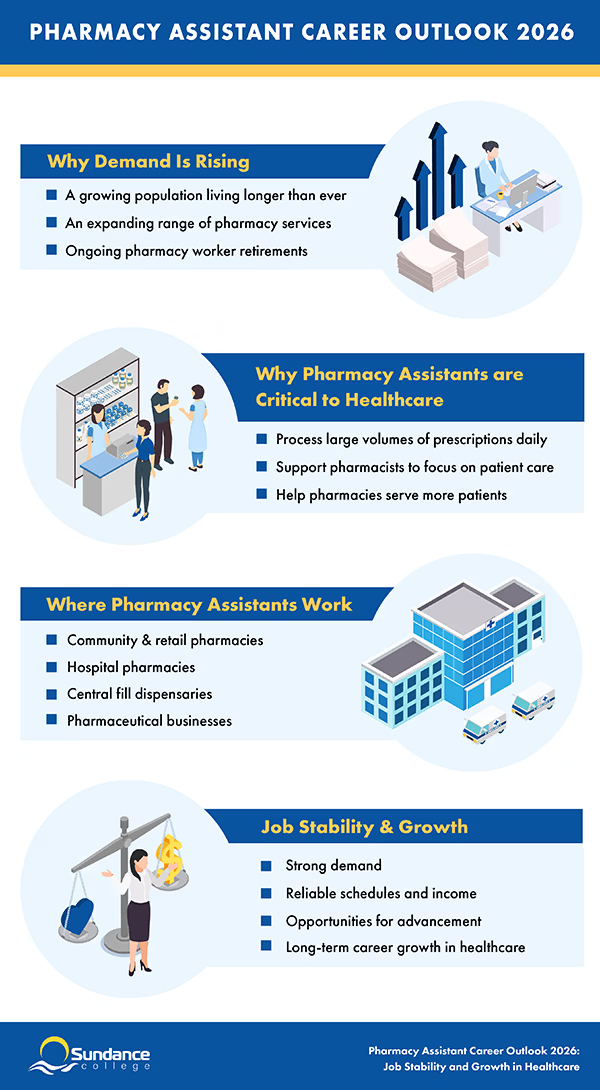
1. A Growing Population Living Longer than Ever
Over the next decade, the population of those aged 65+ is expected to grow to 5.1 million people. Many are already living with chronic conditions such as diabetes, heart disease, and arthritis. This means higher prescription demand and reliance on pharmacy support.
2. An Expanding Range of Pharmaceutical Services
Pharmacies today do far more than dispense medications. Many now provide medication reviews, minor ailment consultations, vaccinations, and other frontline healthcare services.
In rural and remote communities in particular, retail pharmacies often serve as a main access point for care.
These changes are creating a strong demand for skilled assistants in every type of pharmacy setting.
3. Ongoing Retirements
A large number of experienced pharmacy workers are retiring, creating openings that need to be filled. This steady turnover keeps pharmacies hiring year after year.
The growing need for pharmacy support is exactly what drew Kelsey G., a Sundance College graduate, to the field:
“Seeing how pharmacies today are much busier than they used to be, I felt it would be a good career choice and a way to help people, especially seniors, access their medications.”
For those considering a pharmacy assistant career, these trends point to a stable field with strong job prospects.
Why Trained Pharmacy Assistants are Critical to Today’s Healthcare System

With all of these additional pressures in place, trained pharmacy assistants have become essential to keeping pharmacies running for the people who depend on them.
Noor S., an instructor at Sundance College, explains why pharmacy assistants are a lifeline for pharmacies and the patients they serve:
“Pharmacy assistants support pharmacists by processing large numbers of prescriptions every day. Their work prevents delays, reduces errors, and gives pharmacists more time to focus on clinical care and patient consultations.
They directly affect how quickly patients receive medications and the guidance they need.”
Beyond efficiency, Noor emphasizes the role of pharmacy assistants in patient safety and confidentiality:
“Through careful attention to prescriptions and patient medical records, pharmacy assistants help patients receive reliable, consistent care. They protect sensitive health information and help make sure every patient is treated with respect and dignity. Because of these contributions, pharmacies can respond quickly to patient needs and effectively meet growing demand.”
By supporting pharmacists in their clinical work, pharmacy assistants help deliver timely medication service and better patient care.
Where Pharmacy Assistants Work – Top Hiring Environments
From 2024 to 2033, the demand for pharmacy assistants is expected to be higher than the number of people entering the field. That demand shows up in different places where medications are prepared, handled, and provided.
- Retail pharmacy assistants work in community and chain pharmacies, processing prescriptions, supporting customers, and maintaining inventory. If you enjoy direct interaction with customers and prefer a community-focused environment, this setting might be ideal for you.
- Hospital pharmacy assistants work within pharmacies associated with hospitals. In this role, you’ll support medication preparation and distribution for pharmacists and other healthcare teams. The clinical setting means you’ll be part of acute care and treatment processes.
- Central fill dispensary assistants work in high-volume pharmacy operations. In this role, you’ll handle packaging, labelling, and inventory control, following established procedures. This setting suits those who prefer working away from direct customer interaction.
- Pharmaceutical business development assistants work in pharmaceutical businesses. In this role, you’ll support pharmacy-related business and administrative operations.
- Pharmacy administrative professionals handle documentation, communication, scheduling, and organizational support in a variety of settings.
These diverse work settings create steady opportunities for pharmacy assistants. Whether in community pharmacies, hospitals, central fill operations, or pharmaceutical businesses, pharmacy assistants play an essential part in supporting patient care needs. This widespread reliance across different parts of the healthcare system shows why pharmacy assistants will remain in high demand.
Job Stability and Long-Term Growth Opportunities for Pharmacy Assistants
High demand for pharmacy assistants naturally leads to stronger job stability. When employers are consistently looking for qualified professionals to fill empty roles, it becomes easier to secure steady, ongoing work on a consistent schedule instead of random hours and unpredictable shifts. This leaves you with a better work-life balance, a steady income, and the freedom to focus on long-term goals instead of short-term survival.
That stability can result in opportunities for long-term career growth in healthcare. As you gain experience in the field, you can take on greater responsibility, higher salaries, and opportunities to continue to build your skillset.
How Sundance College Prepares You for Success
The Pharmacy Assistant diploma program at Sundance College is designed to help you move into the workforce quickly. The program focuses on skills employers expect with a flexible learning option, and strong student support available throughout your training.
Hands-on Training
During your program, you’ll build skills in pharmacology, compounding calculations, Kroll software, inventory management, anatomy and physiology, as well as community and institutional pharmacy procedures.
A practicum opportunity then allows you to apply what you’ve learned in a real pharmacy setting before graduation.
Flexible Learning
Training is delivered online and in a modular format, allowing you to focus on one subject at a time. This structure supports balancing school with work, family, and other responsibilities.
Support Throughout Your Studies
Support begins when you start the program and continues through graduation.
- Live onboarding helps you get comfortable with online systems and learning tools from the start.
- Industry-experienced instructors provide guidance on course material and share practical insight based on workplace expectations.
- Student Services is available to support academic or personal concerns during your studies, helping you stay focused and on track.
- Career Services supports your practicum placement during the program and continues after graduation with resume support, interview preparation, and targeted job search guidance.
- Sundance College’s Mental Wellness Program gives all students 24/7 access to confidential, immediate or scheduled mental health support throughout their studies.
This combination of career-focused training and ongoing support is why 84% of Sundance College graduates find employment in their field within six months of graduation.
Real Graduate Scenarios & Workplace Examples
Hearing from people already working in the field can guide your career decisions and help you make an informed choice.
Minerva and Alyssa, both graduates of the Sundance College Pharmacy Assistant diploma program, share their personal journeys.
Why a pharmacy assistant career?
Alyssa knew she wanted a people-focused role in healthcare:
“I decided to join the Pharmacy Assistant program because I wanted to work in healthcare. I like interacting with people, and I wanted a career with more opportunity.”
Minerva wanted practical, hands-on work. A midwife in the Philippines before becoming a Permanent Resident in Canada, she saw this career as the right fit:
“I didn’t want a desk job. I wanted something hands-on, meaningful, and in demand.”
For both graduates, this field offered meaningful work, daily interaction with people, and a clear direction forward.
From training to employment
Both moved directly from practicum placements into jobs.
Alyssa completed her practicum at Northway Pharmacy in Manitoba and was hired after her placement. She continues to use her training regularly:
“There are many things I learned in my program that I use every day, like inputting prescriptions, entering patient information, and handling billing. Learning Kroll was especially helpful because I use it constantly at work.”
Minerva’s experience was similar. After her practicum at a pharmacy in Grande Cache, Alberta, she was offered a position:
“Understanding prescriptions and knowing how to handle medications properly helped me feel confident doing my job.”
Two graduates. Two different journeys. The same outcome. Career training that led directly to employment and practical skills they rely on every day.
To prepare for your pharmacy assistant career, contact an admissions advisor today.
Frequently Asked Questions
-
Is pharmacy assistant a stable and in-demand career in 2026?
Yes. Pharmacy assistants are in demand due to an aging population, rising rates of chronic conditions, an expanding range of pharmacy services, and ongoing workforce retirements.
-
What factors are driving demand for pharmacy assistants?
Demand for pharmacy assistants is being driven by an aging population, rising rates of chronic conditions, and the expanding role of pharmacies in healthcare. Pharmacies now offer more services such as vaccinations and medication reviews, which increases the need for trained support staff. Ongoing workforce retirements are also creating steady job openings across retail pharmacies, hospitals, and other healthcare settings.
-
Do I need previous experience to start a career as a pharmacy assistant?
No. With the Pharmacy Assistant diploma program, you will be ready for your new career in under a year.
-
What’s the difference between a pharmacy assistant & technician?
Pharmacy assistants play a critical role in patient care by keeping pharmacies organized, efficient, and welcoming. They help patients at the counter, prepare prescriptions for processing, manage inventory, answer questions, and support pharmacists with the daily responsibilities that make safe, timely service possible. Their work directly affects how quickly patients receive medications, how accurately prescriptions are prepared, and how effectively the pharmacy can serve the community.
Pharmacy technicians focus on different functions of the pharmacy requiring regulation and registration.
-
When is the best time to become a pharmacy assistant?
Now is a practical time to enter the field, as pharmacies continue hiring and employers value candidates with up-to-date training and software knowledge.
-
How do I prepare for a career as a pharmacy assistant?
Preparation typically includes completing a Pharmacy Assistant diploma program that covers pharmacy procedures, software like Kroll, customer service, and practicum experience in a real pharmacy setting.
Subscribe for more career advice
Blog Categories
Share on: