
Blog / Why Become an Education Assistant? Top Reasons to Start This Career
Sundance Blog
Why Become an Education Assistant? Top Reasons to Start This Career

Education Assistant Diploma
Employment Opportunities:
- Education Assistant
- Educational Resources Assistant
- Homework Assistant
- Remedial Education Aide
Education Assistant Learn more
Student aid eligible
3 August 2026 | Author: Vallankan Mendonca
| Read Time:
Quick Answer
Education Assistants support students with learning, development, and everyday classroom needs. This rewarding career offers diverse experiences, professional growth, and job stability.

Table of Contents
Think back to your school years. Was there someone who helped you through a difficult lesson, encouraged you when you felt stuck, or believed in you when you needed it most?
As an education assistant, you could be that person for the students you support.
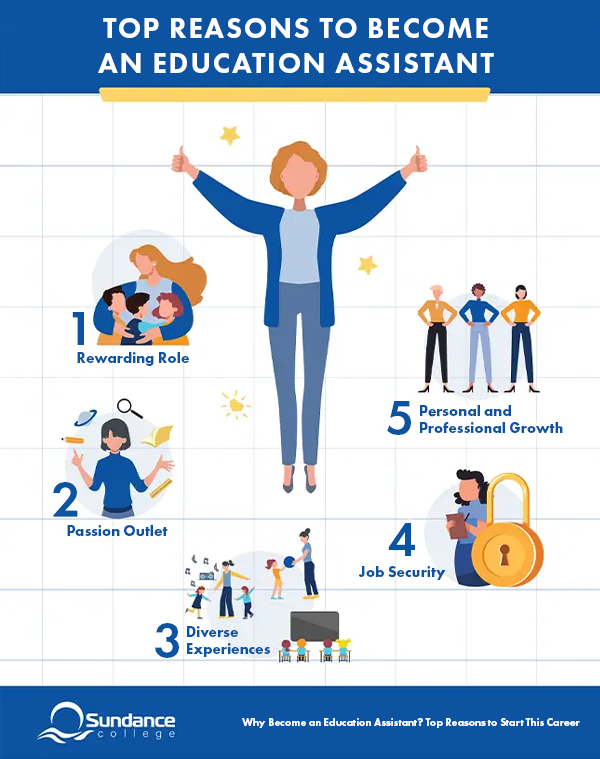
Here are five reasons to consider becoming an education assistant.
Rewarding and Fulfilling Career Path
As an education assistant, you’ll work closely with students every day. You’ll help them build new skills, overcome challenges, and feel confident participating in class.
“I was assigned to work one-on-one with a student who was non-verbal. Weeks later, he started saying simple words like ‘hi’ and ‘hello.’ Yesterday, he received a Rising Star award. I feel so happy that, in my first year of work, I made a difference in his life.”
-Vanessa E., Education Assistant Graduate, Sundance College
“I enjoy all their little personalities. There was a boy who was on the autism spectrum, and he would always come to me and say, ‘Miss Steffanie, I’m having big emotions.’ I’d ask him if he needed to go for a walk and help him process his feelings. That was really rewarding.”
-Steffanie P., Education Assistant Graduate, Sundance College
Small moments like these are often the most meaningful. Watching a student grow or reach a milestone can enrich both their learning and your career.
An Outlet for Your Passion

If you enjoy working with children, becoming an education assistant lets you turn that interest into a rewarding career.
Learn about the top career paths available to Education Assistants.
Every student deserves the opportunity to learn and succeed.
You’ll support students one-on-one and in small groups, adapting your approach to their different learning needs. You’ll collaborate with teachers to create inclusive classrooms where every student feels supported.
Over time, you’ll build meaningful relationships to encourage participation, build trust, and support their learning and development.
Work Environment with Diverse Experiences
As an education assistant, your role can look different from one classroom to another. You might help students build reading, writing, and math skills in one class. In another, you’ll support social and emotional development.
“Every class is different, so education assistants need to be flexible. You might support a student’s learning, encourage positive behaviour, adjust activities to meet different needs, or work with teachers to help every student take part in class.”
-Steven D., Education Assistant Instructor at Sundance College
Every classroom brings different students, responsibilities and opportunities to learn, making each day different, engaging and rewarding.
If this is something you’d enjoy, these 7 signs for a career change can help you decide your next step.
Personal and Professional Growth

Every day in the classroom helps you build practical skills that employers value. You will learn to:
- Adapt your communication
- Apply behaviour management strategies
- Support individual learning needs
- Support classroom management
- Integrate technology into education
- Work with students with exceptional needs
You will also get a deeper understanding of how children learn, communicate, and overcome challenges. These experiences strengthen your professional skills and interactions with others.
A Career with Growing Demand
Job security matters when choosing a career. Education assistants have positive job prospects in many provinces.
Demand is supported by more inclusive classrooms and increased support for students with diverse learning needs.
Most provinces report positive job prospects for education assistants.
Growth in school enrolments and retirements of skilled workers are creating additional opportunities.
With demand across public and private schools, early learning centres, and specialized treatment facilities, this career offers long-term employment.
Get Started with an Education Assistant Diploma
The right training prepares you for the classroom and the responsibilities of the role.
Sundance College’s 43-week Education Assistant Diploma program includes a 10-week practicum opportunity. This gives you a chance to apply your skills in a real educational setting and put your learning into practice before you graduate.
You will build practical and specialized knowledge in areas including:
- Child Development
- Educational Psychology
- Technology in Education
- Language & Literacy Development
- Observation Skills
- Applied Behaviour Analysis
- Working with Exceptionalities
- Working with Learners with Reading & Math Challenges
Throughout your studies, you’ll also have access to support including:
- Online learning with live classes and recorded lessons allows you to balance your studies with work, family, and other commitments.
- Academic and student support, through live onboarding, the Becoming a Master Student (BAMS) course, access to instructors, Student Services, and 24/7 counselling.
- Lifetime Career Services, including resume writing, interview preparation, and job search guidance.
To learn more about the Education Assistant diploma and how it prepares you for the classroom, contact us today.
FAQs
-
What does an Education Assistant do day to day?
Education Assistants work closely with teachers to support students in the classroom. Their responsibilities vary depending on the students, classroom, and school.
Functions frequently include:
- Supporting classroom activities and learning
- Assisting students with exceptionalities
- Reinforcing positive behaviour
- Using technology to support learning
- Communicating with teachers and families
-
What qualifications do I need to become an Education Assistant?
To become an Education Assistant, you will complete a diploma program that includes hands-on training and a real-world practicum opportunity. Courses include:
- Child development
- Educational psychology
- Technology in education
- Classroom management
- Applied behaviour analysis
- Working with students with exceptionalities
- Language and literacy development
-
How long does it take to become an Education Assistant?
At Sundance College, the Education Assistant diploma program, including a 10-week practicum, can be completed in 43 weeks.
-
What is the job outlook for Education Assistants?
Many provinces report positive job prospects for Education Assistants. Demand continues to grow due to:
- More inclusive classrooms
- Increased support for students with diverse learning needs
- Ongoing hiring across educational settings
-
What is the difference between an Education Assistant and a teacher?
Teachers plan lessons, deliver instruction, and assess student progress. Education Assistants work alongside teachers to:
- Reinforce classroom learning
- Provide individualized student support
- Assist with academic, behavioural, and social development
-
What skills make a great Education Assistant?
Successful Education Assistants combine specialized knowledge and practical skills including:
- Child development and educational psychology
- Classroom management and behaviour support strategies
- Effective communication with students, teachers, and families
- Using technology to support learning
Subscribe for more career advice
Blog Categories
Share on: