
Blog / Top PSW Interview Questions: The Ultimate Preparation Guide
Sundance Blog
Top PSW Interview Questions: The Ultimate Preparation Guide

Personal Support Worker Diploma
Employment Opportunities:
- Personal Aide - Home Support
- Family Caregiver
- Personal Support Worker
- Home Support Worker
Personal Support Worker Learn more
Student aid eligible
22 June 2026 | Author: Vallankan Mendonca
| Read Time:
Quick Answer
Preparing for a Personal Support Worker (PSW) interview starts with understanding what employers are looking for. Interviewers could ask about your hands-on experience, handling difficult situations, or working with others. The right preparation helps you answer these questions effectively and make a strong impression.

Table of Contents
- Tips to Prepare for the Personal Support Worker Job Interview
- Most Common Personal Support Worker Interview Questions
- What Questions to Ask at the End of the Interview?
- Common Mistakes to Avoid During a PSW Interview
- What to Do After Your PSW Interview: Bonus Tip
- Boost Your PSW Interview Skills with Professional Training
- FAQs
Personal Support Worker (PSW) interviews are designed to assess your skills, experience, and knowledge about client care. Employers often ask about how you communicate, collaborate, and respond to challenges in the workplace.
Whether you’re preparing for your first interview or exploring a new opportunity, the right preparation will help you to stand out.
This guide covers common PSW interview questions, preparation tips, and strategies for structuring your answers.
Tips to Prepare for the Personal Support Worker Job Interview
Preparing for an interview helps you to effectively communicate your skills and experience. For more insight, we spoke with Victoria A. from Sundance College’s Career Services team. Victoria works closely with students and graduates on resumes, interview preparation, and job search.
- Research the Organization
Learning about the organization before your interview strengthens your answers and shows initiative.“Before an interview, I recommend spending some time researching the employer. Visit their website, read about their mission and values, and learn about the services they provide. Understand the people they support, whether that’s seniors, individuals with disabilities, or another client group. This shows initiative and gives you a better understanding of the organization.”
- Understand the Job Requirements
Job postings can offer valuable insight into the skills, qualities, and experience an employer is looking for.“I often encourage students to use the job posting as a guide when preparing for interviews. Pay attention to the responsibilities and qualifications listed, then identify experiences that show you can perform those tasks. The closer your examples relate to the role, the easier it is to see your fit for the position.”
- Practice Common Interview Questions
Reviewing common interview questions gives you time to think about the experiences and examples you want to share.“One strategy I often share with students is the STAR method. STAR stands for Situation, Task, Action, and Result. This framework encourages you to walk employers through a specific example from start to finish. It provides structure, keeps your response focused, and gives employers a clear understanding of your skills, decision-making, and experience.”
- Dress Appropriately for a PSW Interview
Your appearance is one of the first things an employer notices during an interview. Professional attire creates a strong first impression before the conversation begins.“When choosing an interview outfit, keep it simple and professional. Business casual attire is a safe choice, such as a shirt with pants and a cardigan or blazer. Avoid jeans, sneakers, or flashy accessories. The goal is to present yourself professionally and keep focus on your skills and experience.”
Most Common Personal Support Worker Interview Questions
Personal Support Worker interviews often focus on your interpersonal skills, emergency response abilities, and commitment to client care. Here is how to approach PSW job interview questions effectively.
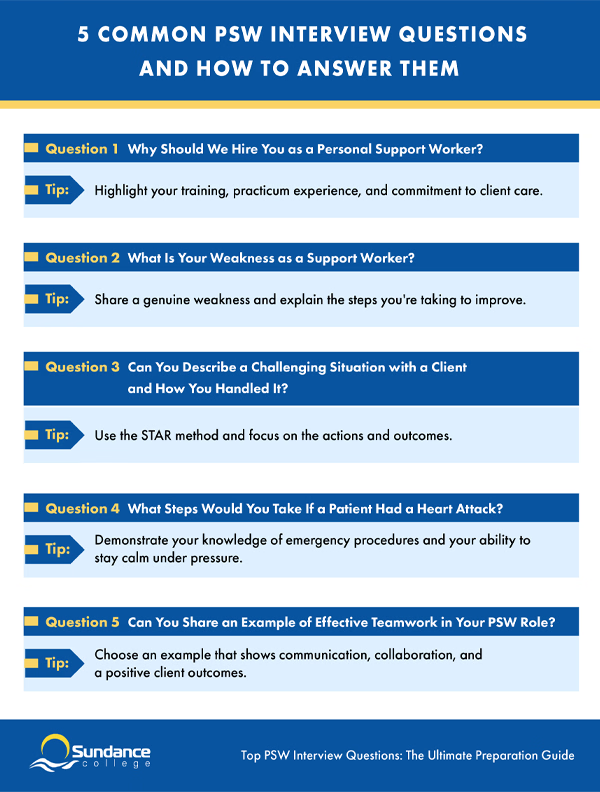
Question 1: Why Should We Hire You as a Personal Support Worker?
Purpose: To assess your PSW skills, experience, and passion for caregiving.
How to Answer:
- Discuss any specialized training such as dementia care or elderly support.
- Share specific examples from your practicum or healthcare-related experience.
- Highlight qualities such as empathy, patience, and reliability.
Example:
“I am deeply committed to providing quality care. During my practicum at a nursing home, I supported a resident who often felt confused and anxious. I worked with the care team to establish a daily routine with regular times for meals, activities, and rest. Over time, the routine helped reduce confusion and improved their mood and overall comfort.”
Question 2: What Is Your Weakness as a Support Worker?
Purpose: To understand your level of self-awareness and ability to improve.
How to Answer:
- Be honest but positive.
- Share a real but manageable weakness and explain the steps you’ve taken to overcome it.
- Emphasize how you’ve grown professionally.
Example:
“I initially struggled with time management during busy shifts at my practicum placement. To improve, I started setting goals each day, a skill I learned during my diploma program. This helped me stay focused, finish my work on time, and provide quality care.”
Question 3: Describe a Challenging Situation with a Client and How You Handled It?
Purpose: To assess your problem-solving and interpersonal skills.
How to Answer:
This is a behavioural interview question. Employers use it to understand how you respond to real situations.
Use the STAR method to create an effective response.
Example:
Situation: During my practicum at a retirement home, a resident with mobility challenges felt frustrated about missing family gatherings.
Task: My goal was to support the resident’s emotional well-being and help them stay connected with their family.
Action: I listened to their concerns and worked with the family to arrange regular virtual visits.
Result: The resident became more engaged and looked forward to staying connected with their loved ones.
Question 4: What Steps Would You Take If a Patient Had a Heart Attack?
Purpose: To test your emergency response capabilities.
How to Answer:
- Explain the steps clearly: assess responsiveness, call 911, perform CPR as trained in your program, and inform your supervisor.
- Mention your certifications and emphasize staying calm under pressure.
Example:
“In a cardiac emergency, I’d immediately check for responsiveness and call 911. I’d perform CPR if needed and keep the client comfortable until help arrived.”
Question 5: Can You Share an Example of Effective Teamwork in Your PSW Role?

Purpose: To see how well you work with others.
How to Answer:
- Provide a real teamwork example.
- Focus on your role, contributions, and the positive results.
- Use the STAR method to create an effective response.
Example:
Situation: During my practicum, our team was short-staffed and several residents required assistance at the same time.
Task: I needed to support residents while helping the care team manage competing priorities.
Action: I identified residents who needed immediate assistance and supported them with tasks I was trained to perform. I also kept staff informed about residents who needed additional attention.
Result: The team was able to focus on higher-priority care needs, and residents continued to receive timely support.
What Questions to Ask at the End of the Interview?
The end of an interview is your opportunity to learn more about the role and employer. It also shows that you’re genuinely interested in the position.
“I encourage students to think about the information that would be most useful to them if they received a job offer. Questions about training, daily responsibilities, or advancement opportunities can provide insight into the role and the workplace.”
Common Mistakes to Avoid During a PSW Interview
Avoid these common pitfalls to make a strong impression during your interview:
- Not Researching the Organization:
Why It’s a Mistake: It shows a lack of preparation and interest.
What to Do Instead: Familiarize yourself with the company’s mission, services, and client demographics. - Providing Generic Responses:
Why It’s a Mistake: Vague answers don’t demonstrate your skills effectively.
What to Do Instead: Use specific examples to connect your client care expertise to the specific skills and knowledge you’ll bring to the role. - Overlooking Key Details Like Schedule and Pay:
Why It’s a Mistake: Uncertainty about hours or salary may lead to dissatisfaction later.
What to Do Instead: Politely inquire about work hours, shift flexibility, and pay structure during the interview. - Failing to Ask Questions:
Why It’s a Mistake: It can make you appear disinterested or unengaged.
What to Do Instead: Ask thoughtful questions about daily routines, team dynamics, and growth opportunities.
By addressing these areas, you’ll be better prepared to impress employers and secure one of the personal support worker career paths.
What to Do After Your PSW Interview: Bonus Tip
What you do after an interview leaves just as much of an impression as the interview itself. A thoughtful thank-you email sent within 24 hours reinforces your enthusiasm and keeps you top-of-mind.
“A short thank-you email sent within 24 hours is a simple but professional way to follow up after an interview. Thank the interviewer for their time, express continued interest in the position, and leave a positive final impression.”
Boost Your PSW Interview Skills with Professional Training
Preparing for a PSW interview starts with building the specialized skills and experience employers are looking for.
Sundance College’s Personal Support Worker diploma program provides the knowledge, hands-on experience, and specialized skills needed to succeed in your new career.
- Hands-On Training
Build skills in personal care, safety, mobility, and care planning through coursework and lab training. - Real World Experience
Put your training into practice during a 7-week practicum placement. This gives you valuable professional experience to discuss during interviews. - Modular and Online Learning
Study online with access to recorded lessons. The one-course-at-a-time format lets you focus on one subject before moving on to the next. - Support to Complete Your Program
Start your studies with the Becoming a Master Student course. You’ll learn how to set goals, manage your time, and prepare for tests. Throughout your program, Student Services will provide you with support. - Career Services Support
The program includes Career Management training, where you’ll develop resume writing, job search, and interview skills. You’ll also receive ongoing support from the Career Services team after graduation.
To get started, connect with an admissions advisor today.
FAQs
-
What are the most common PSW interview questions?
Some of the most common PSW interview questions include:
- Why do you want to become a PSW?
- What are your strengths and weaknesses?
- Tell me about a time you handled a difficult situation.
- How do you work as part of a team?
- Tell me about a time you dealt with a client who is upset or refusing care?
-
How should I answer “Why do you want to be a PSW?” in an interview?
Employers want to understand what motivates you to pursue a career in caregiving. Think about related experiences like caring for a loved one, volunteering, or supporting clients during your practicum opportunity. Explaining these experiences can make your answer more memorable.
-
What is the STAR method and how do I use it for a PSW interview?
The STAR method is an effective way to highlight your experience while answering interview questions. STAR stands for Situation, Task, Action, and Result. You start by describing the situation to give context, then the task or responsibility you had. Take most of your time to describe the action you took so your skills and thinking process are clear for the interviewer and conclude with the result.
-
How do I prepare for a PSW interview with no experience?
Many employers recognize that new graduates are entering the workforce for the first time. Examples from your diploma training and practicum can demonstrate valuable skills. Focus on what you learned and how you applied it in your training.
-
What should I wear to a PSW job interview?
Professional attire creates a positive first impression. Business casual clothing is generally appropriate and keeps the focus on your qualifications. Clean, neat clothing often makes a better impression than an uncomfortable formal outfit.
-
How do I answer questions about handling difficult clients as a PSW?
Employers understand that challenging situations can happen in any caregiving role. They are often interested in how you responded rather than the situation itself. Focus on your communication, professionalism, and the steps you took to support the client.
Subscribe for more career advice
Blog Categories
Share on: