
Blog / HR Management Interview Questions with Sample Answers (2026 Guide)
Sundance Blog
HR Management Interview Questions with Sample Answers (2026 Guide)

Human Resources Management Diploma
Employment Opportunities:
- Human Resources Advisor
- Recruitment Officer
- Pay and Benefits Administrator
- Human Resources Coordinator
Human Resources Management Learn more
Student aid eligible
8 December 2025 | Author: Jonathan Stoddart
| Read Time:
Quick Answer
Succeed in an HR management interview by preparing clear, structured responses that show HR knowledge, communication, and problem-solving skills. Review common HR manager interview questions and use the STAR method to share real examples with measurable results. Focus on strategic alignment by linking your HR experience to business goals and demonstrating confidence under pressure.
Table of Contents
Succeeding in a human resources management interview means demonstrating both technical knowledge and strong interpersonal skills. HR interview prep will help you present that experience in a way that stands out.
Thoughtful answers will show your interpersonal skills, planning skills, and ability to align HR responsibilities with organizational goals. They’ll also demonstrate your understanding in key areas such as recruitment, workforce planning, compensation, training, and employment law.
Let’s look at sample questions and responses, preparation techniques, and insights into what employers look for when hiring HR management professionals.
Most Common HR Manager Interview Questions & Sample Answers
During your interview, you’ll be asked a set of HR management questions that give you the opportunity to demonstrate your experience and proficiency in areas like recruitment, compliance, and compensation, as well as your understanding of workplace culture.
Here are the sample answers that will help you make a strong impression:
How do you ensure fair and competitive compensation practices?
What the interviewer wants to know:
Employers ask this question to see whether you understand the basics of fair and competitive compensation. They want to know that you can support established pay practices, follow organizational guidelines, and help keep compensation processes accurate and consistent.
Sample answer:
“During my Human Resources Management diploma program, I learned in my Compensation and Benefits coursework how job evaluation methods, pay-for-performance models, and government regulations all contribute to fair and competitive compensation. That helped me understand how HR supports equity and consistency across roles.
During my practicum, I assisted my HR supervisor by helping organize compensation documentation and reviewing job descriptions to ensure they reflected the responsibilities identified in the job evaluation process. I also helped verify that postings included accurate wage information based on the organization’s established pay structure.”
This demonstrates that you can apply what you learned about job evaluation, compliance, and compensation guidelines in real workplace situations.
How do you approach designing and delivering effective employee training?
What the interviewer wants to know:
Employers ask this to see whether you understand how training supports performance and organizational growth. They want to know you can identify training needs, design solutions, and evaluate whether the learning was effective.
Sample answer:
“In my coursework on Training and Development, I learned how to conduct a training needs analysis to identify performance gaps and determine the right learning approach. I also studied learning theory and instructional design, which helped me understand how to structure training so it’s clear, engaging, and practical for employees.
During my practicum, I assisted my HR supervisor in updating a skill-training module for new staff. I helped review the materials for clarity, align the content with the team’s performance objectives, and support the delivery of the session by preparing learning resources. Afterwards, I participated in a performance evaluation process to gather feedback and assess whether the training improved on-the-job performance.”
This approach shows employers that you understand how effective training supports employee performance, knowledge transfer, and overall organizational growth.
Can you describe your experience supporting HR work in a unionized environment?
What the interviewer wants to know:
Employers ask this to see whether you understand how labour, management, and government interact in a unionized workplace. They want to know you are aware of collective agreements, labour legislation, and dispute resolution processes, and that you can support fair workplace practices while following established frameworks.
Sample answer:
“I learned in my Labour Management Relations coursework how labour, management, and government interact within the Canadian workplace, and how collective bargaining and unionization shape HR policies and practices. We studied labour legislation, dispute resolution, and the administration of collective agreements, which gave me a clear understanding of the frameworks that guide HR decisions in unionized settings.
During my practicum, I assisted my HR supervisor with an issue involving scheduling concerns in a unionized department. I reviewed the relevant section of the collective agreement with them, helped organize the documentation for the discussion between the supervisor and union representative, and took notes during the meeting to ensure the outcome reflected the agreement and workplace policies.
This experience showed me how important it is to follow labour legislation and collective agreements carefully while still supporting fair workplace practices and maintaining positive employee relations.”
This answer shows that you understand labour legislation, the administration of collective agreements, and the importance of supporting fair workplace practices. Employers will see that you can contribute to positive employee relations in a unionized environment.
How do you approach talent acquisition?
What the interviewer wants to know:
Employers want to know whether you can match organizational needs with effective hiring practices that build a strong team. You know there are several steps, so show them you know how to tie it all together.
Sample answer:
”The first step is to meet with the hiring manager to clarify organizational goals and discuss the role we’re hiring for. From there, it’s time to create job descriptions that reflect both responsibilities and the qualities needed for success.
During my practicum, I helped my supervisor manage a recruitment campaign for administrative roles. We’d mainly used LinkedIn. I expanded outreach through referrals and other social media, bringing in a wider range of candidates.
I supported the initial screening process by reviewing resumes against the required qualifications and preferred competencies. I used structured screening criteria to ensure every applicant was evaluated consistently and fairly.
I assisted in coordinating and participating in structured interviews, using standardized questions to compare candidates equally. I focused on asking behaviour-based questions that revealed how each person approached real workplace challenges
I worked with the HR team to incorporate basic assessment tools, such as skills tests and work samples, to get a clearer picture of each candidate’s strengths. These tools helped us make more informed hiring decisions and identify candidates who aligned well with the roles.”
This approach shows that when it comes to talent acquisition, you see the big picture. You know the job description must match the true needs of the company and you’re proactive about finding good candidates.
How do you align HR with business goals?
What the interviewer wants to know:
Employers ask this question to see whether you understand HR-business alignment and how HR decisions contribute to an organization’s success. Show them you’re a partner in achieving results.
Sample answer:
“My Human Resources and Strategic Human Resource Planning coursework taught me how HR supports organizational goals through workforce planning, performance management, and data-informed decision-making. That helped me understand how HR’s role contributes to the bigger picture.
During my practicum, I saw this in action when the HR team was working to improve consistency in a department that had recently expanded. I assisted by organizing onboarding materials, helping prepare training resources, and reviewing documentation to ensure procedures matched the department’s updated goals. I also joined a few team meetings where my supervisor explained how the HR changes supported the department’s long-term objectives.
This experience demonstrated what I learned in class: that HR supports growth through planning, communication, and alignment with business needs.”
This answer proves that you understand how HR supports organizational goals through clear processes, effective onboarding, and aligned training. It shows how you have contributed to HR activities that help teams work more efficiently.
What is your experience with compliance?
What the interviewer wants to know:
This question helps employers assess your understanding of employment law and HR compliance, both of which are critical for protecting the organization and its employees.
Sample answer:
“My experience with compliance began through coursework focused on employment law, compensation, and recruitment. I learned how HR policies must align with legal standards to reduce risk and support fair, transparent practices.
For example, in my recruitment and selection studies, I explored legal compliance in hiring and bias reduction. Then, during my practicum, I applied these principles while assisting with a recruitment process. I helped review job postings and screening criteria to ensure they met legal and organizational compliance standards, and worked with the HR team to confirm fair, unbiased selection practices.
I also studied employment standards and human rights laws, as well as ways that government regulations and union agreements shape fair pay practices.”
Compliance requires a proactive approach, backed by knowledge. The right diploma program will ensure you have both. Show them you understand how to handle legal challenges effectively, and you’ll be at the front of the line for a job offer.
How do you promote workplace health and safety?
What the interviewer wants to know:
Employers want you to help create and maintain a safe, compliant, and supportive work environment. They’re looking for structured answers that show awareness of policies, training, and prevention, not just reaction. Clear, effective interview answers are best.
Sample answer:
“I take a proactive, education-focused approach, beginning with regular training and open communication so employees understand procedures and feel empowered to report concerns. I work with leadership when policies need to be updated, ensure compliance with safety regulations, and conduct regular reviews to identify potential risks before they escalate.”
This approach shows that you see health and safety as an ongoing commitment, not a one-time checklist. Employers will know that you’re someone who will help to protect both their people and their organization, a key quality in any HR team member.
Tell me about a time you used negotiation skills in an HR context.
What the interviewer wants to know:
Employers ask this to see whether you understand negotiation as a professional skill. They want to know that you can use effective and ethical, negotiation strategies and consider psychological, cultural, and legal factors when resolving workplace issues.
Sample answer:
“In my Networking and Negotiation Skills coursework, I learned how to employ different negotiation strategies while considering the ethical, psychological, cultural, and legal factors that influence workplace discussions. We also practiced applying these techniques in professional settings, which helped me understand how to reach solutions that support both employees and organizational goals.
During my practicum, I assisted my HR supervisor with a scheduling concern between a supervisor and an employee. Both had different expectations about shift coverage, and the conversation had become tense. I prepared by reviewing the workplace procedures and the context of the request. In the meeting, I noticed that my supervisor helped clarify each person’s needs, used open-ended questions to reduce tension, and summarized shared interests so the discussion could move forward. They reached an agreement that balanced fairness for the employee with the department’s operational needs.”
This shows that you know how negotiation strategies are used ethically and effectively to support both employee needs and organizational goals.”
How to Approach HR Interview Questions
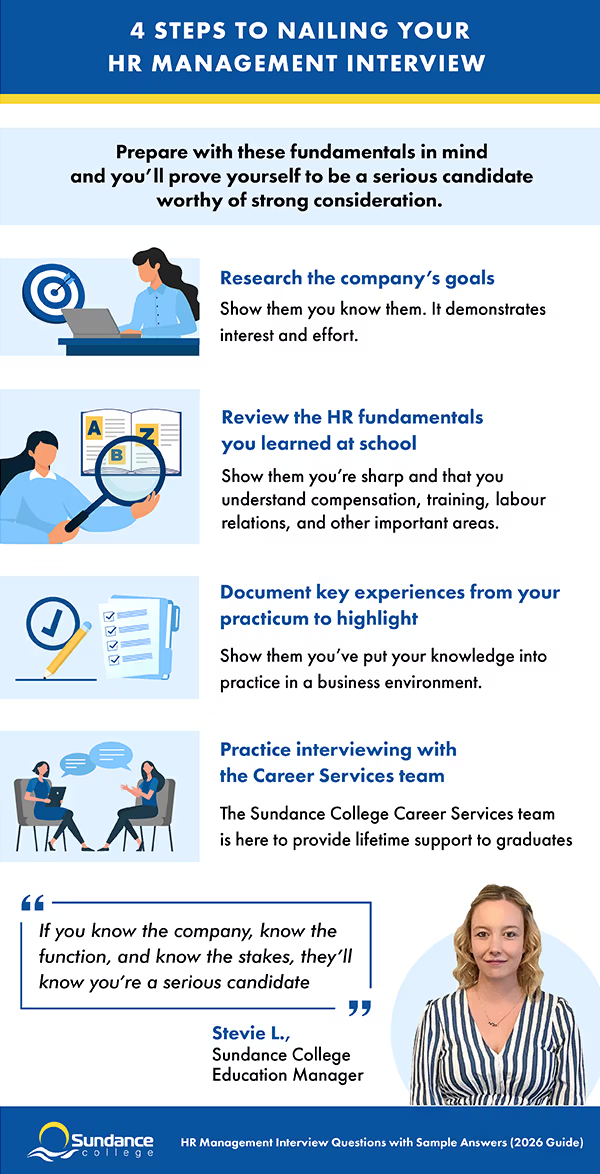
Preparing for an HR management job interview is about positioning yourself as an effective team member who has the knowledge and hands-on experience to balance business needs with clear communication and problem-solving skills.
Start by reviewing the company’s goals so you understand what matters most to them. When you connect your experience to their priorities, your answers sound relevant and strategic instead of rehearsed.
Structure your responses clearly: describe the situation, explain your action, and share the result. This helps you stay focused and makes it easy for interviewers to picture you succeeding in the role.
When you approach each question with clarity and purpose, you show that you’ve got the skills and know-how to take on an HR management position.
Behavioural Storytelling Using STAR
You know those questions that start with things like “Tell me about a time when…”? Behavioural questions help employers see how you’ve handled real situations in the past. The STAR method (Situation, Task, Action, Result) is a simple structure that helps you tell stories clearly and with impact.
Situation: Set the scene briefly so the interviewer understands the context. Keep it short, giving just enough to explain what was happening and why it mattered.
Task: Describe your responsibility or the challenge you needed to address. This shows what was expected of you and helps define your role in the situation.
Action: Explain the specific steps you took to handle the problem. Focus on what you did, how you made decisions, and why you chose that approach.
Result: End with the outcome. Emphasize improvements such as clearer documentation, smoother onboarding steps, or better alignment with HR procedures to show how your contribution made a difference.
Practicing this storytelling approach helps you sound polished and professional. When you can walk an interviewer through a real example, you stand out as someone who doesn’t just understand HR, you apply it to achieve meaningful outcomes. This can lead to a job offer and career growth.

Strategic Alignment in Answers
HR professionals understand that every decision, policy, or initiative should support the organization’s larger goals. You’ll want to show interviewers that you can make the connection between HR decisions and business outcomes.
Before you answer any question, think about how your example fits into the bigger picture. What business goal did your work support? Maybe your recruitment strategy helped reduce turnover, or your training initiative improved performance scores. When you link your HR actions to measurable results, you demonstrate that you understand the HR-business link and can contribute to long-term success.
People who connect HR work to company strategy show they can move the business forward.
Balancing Knowledge & Soft Skills
HR management requires a rare mix of expertise: knowing the rules and understanding people. Knowledge can be gained through coursework, while softer skills are developed and practiced through hands-on experience, such as a practicum. Show employers that you can apply your HR knowledge while leading with empathy and clear communication. The best interview answers show you can enforce policy and support employees in a way that builds trust.
When interviewers see the combination of knowledge and soft skills, they recognize someone who can both protect the organization and support its staff. The opportunity to develop both of these skills is a key benefit of enrolling in the right diploma program.
How Sundance College Prepares HR Management Professionals
The Sundance College HR diploma program turns ambition into opportunity. In just 10 months, you gain the practical skills and experience to enter HR roles that demand legal knowledge, planning capabilities, and communication skills. Every topic reflected in these interview questions: recruitment, compliance, compensation, workforce planning, safety, training, and labour relations, is part of the hands-on human resources education that makes Sundance graduates career ready.
You’ll benefit from industry-experienced instructors who share their insights in the field, as well as small class sizes and flexible study options that allow you to balance your training with other commitments while getting the guidance you need quickly.
The built-in 5-week practicum gives you a chance to apply your HR management training in a real business environment, giving you stories and accomplishments to draw on in your next interview.
On top of that, Sundance’s Career Services team is available for life, offering resume support, interview coaching, and job placement assistance whenever you need it. In addition to earning a diploma, you’re also gaining a lifelong resource to help you move forward into a stable, respected, and rewarding career in HR. This support is part of the reason that 84% of Sundance College graduates are employed in their chosen field within six months.
As Stevie L., Education Manager, explains, HR interview success comes down to preparation, practice, and the ability to connect your experience to what employers truly value.
“The most effective candidates are those who combine knowledge with communication and organizational skills. By understanding how to structure your answers to align with an organization’s goals, you show employers that you are ready to make an impact from day one.”
Sundance College’s Human Resources Management diploma program will give you this knowledge, allowing you to assess an organization’s needs and speak confidently. It provides the tools, support, and real-world experience you need to be ready for interviews and ready for success.
Get started with your training. Contact an admissions advisor today!
Frequently Asked Questions
-
What should I wear to an HR management interview?
For an HR management interview, wear professional dress that projects confidence and credibility. A tailored suit, dress shirt, or blouse in neutral colours is ideal, showing that you understand workplace standards and take the interview seriously.
Choosing the right interview attire complements your skills and experience, helping you make a strong first impression. You’ll have extra confidence helping you communicate clearly and professionally throughout the interview.
-
How do I prepare for behavioural questions?
To prepare for behavioural questions, think about your practicum and consider which experiences you’d like to highlight. Choose ones that show your communication and problem-solving skills and focus on what you personally contributed to the outcome. Practice using the STAR method (Situation, Task, Action, Result) to organize your examples clearly and confidently.
This kind of behavioural interview prep helps you answer questions with structure and purpose. When you can explain how you’ve turned challenges into results, you show employers that you’re ready to bring the same value to their organization.
-
What questions should I ask the interviewer?
During an HR management interview, ask thoughtful interview questions that show you understand the role and the organization. Consider asking about team structure, company culture, performance expectations, and professional development opportunities.
This kind of reverse interview demonstrates genuine interest and strategic thinking. You’ll gather valuable insight while showing that you think ahead.
-
How can I highlight my practicum experience during an interview?
Use specific examples from your practicum to showcase both what you learned and how you applied it. Consider the areas where you were most involved, which may include recruitment, workforce planning, compensation, or employment law. Study the organization in advance to determine which of these areas are most relevant, then connect your experiences to their goals. Highlight noteworthy achievements and relevant feedback you gained during your practicum. Frame your answers using the STAR method (Situation, Task, Action, Result).
Sundance College’s Human Resources Management diploma program includes a 5-week practicum, which gives you relevant, valuable real-world experience. Successfully completing this practicum should instill you with a sense of confidence and achievement, which you should carry into the interview.
-
How do I handle questions about difficult HR situations?
When faced with challenging questions about difficult HR situations, stay calm and use a structured approach to show professionalism and composure. Explain the situation briefly, outlining the steps you took to resolve it, and highlighting what you learned. Keep your answer factual and avoid blaming others.
This method shows that you can stay objective and solution-focused under pressure. Employers see you as someone who can handle sensitive issues and lead effectively when challenges arise.
-
What salary expectations should I have for HR roles?
HR Advisors, Coordinators, or Supervisors, Recruitment Officers, or Pay and Benefits Administrators can earn as much as $79,996. Before your interview, research current salary ranges in your region using reliable sources such as Job Bank or industry reports.
When the topic arises, approach negotiation with professionalism. Emphasize the value you bring through your skills, and results rather than focusing on a single number. Being informed and flexible shows employers that you understand your worth and are prepared to discuss it thoughtfully.
Related Blogs
Subscribe for more career advice
Blog Categories
Share on: