
Blog / How to Become a Filmmaker: A Step-by-Step Guide
Sundance Blog
How to Become a Filmmaker: A Step-by-Step Guide

Motion Picture Production Diploma
Employment Opportunities:
- Independent Filmmaker
- Video Editor
- Videographer
- Production Designer
Motion Picture Production Learn more
Student aid eligible
23 November 2026 | Author: Vallankan Mendonca
| Read Time:
Quick Answer
There are five steps to prepare for a career in the film industry:
- Stages of Film Production: Get familiar with pre-production steps, production, and post-production.
- Hands-on training: Practise writing scripts, directing scenes, operating cameras, and editing footage.
- Experience different areas of filmmaking: Work with cinematography, sound, and visual effects to understand how each contributes to a finished film.
- Produce your own short films: Convert the script into an on-screen experience by applying your knowledge and skills.
- Look into film industry jobs: Research roles in film, television, and commercial video production, to find the best fit for you.
Sundance College's 36-week Motion Picture Production Certificate program teaches you to write, direct, shoot, and edit films while building a portfolio of original work.
Table of Contents
The way a scene is written, filmed, and edited can make an audience laugh, hold its breath, or see something differently. Learning to create that experience is part of becoming a filmmaker. You might enjoy writing stories, working behind the camera, directing actors, or editing footage. Turning that into a career means learning how a full production comes together, from the script to the final film.
So where do you start? Here are five steps, from learning how films are made to applying for your first film industry job.
What Does a Filmmaker Do?
A filmmaker turns an idea into a finished film by planning the production, directing the scenes, and assembling the final footage.
Responsibilities vary depending on the project size. Independent filmmakers might handle several aspects of production themselves, whereas larger productions involve specialized teams for each step.
Filmmakers also deal with budgets, equipment, schedules, and creative teams throughout the filming process.
How to Become a Filmmaker in 5 Steps
Starting a filmmaking career involves learning the craft, gaining production experience, and finding opportunities in the film industry.
Step 1: Learn the Different Stages of Film Production
Every film moves through three main stages; each shaped by creative and technical choices.
Pre-production: This is where the team prepares for filming. They develop the story, write the screenplay, scout locations, and organize the cast and crew.
Production: This is when filming takes place. Actors perform scenes while camera and sound teams capture the footage. Directors guide performances, and crew members manage lighting and equipment.
Post-production: Once filming is completed, the team edits the footage, refining sound, adjusting colours, and adding visual effects.
The next time you watch a film, observe how individual scenes come together. Notice the camera angles, lighting, sound, and editing. Each of these elements is shaped by film professionals.
Step 2: Get Hands-On Training
Working in film requires technical skills, creative judgment and the ability to work with others.
Look for a filmmaking program where you can put what you learn into practice. When comparing programs, consider:
- Practical Training: Find out how you’ll learn camera operation, lighting and sound, and what equipment you’ll need to complete your projects.
- Industry-Experienced Instructors: Look for professionals who can share firsthand knowledge of film production and provide constructive feedback.
- Original Film Projects: Find out whether you’ll develop, film, and complete your own projects, with feedback to help you grow.
- Post-Production Training: Look for hands-on experience across filming, editing, sound, and visual effects using industry-standard software.
For Sundance College graduate Elyse P., working with instructors and classmates was an important part of the experience.
“The highlights have been learning about the film fundamentals of the industry from top to bottom, the help and support from my teachers and peers, being able to collaborate creatively with my peers and being able to create really fun/cool pieces of film work throughout the year.”
– Elyse P., Motion Picture Production Graduate, Sundance College
Step 3: Build Filmmaking Skills
Filmmaking brings together several creative and technical disciplines. You may eventually focus on one area, but learning the fundamentals of each helps you understand the full production process.
Here are six important areas to focus on:
- Screenwriting: Develop characters, write dialogue, and structure scenes to tell a compelling story.
- Cinematography: Learn camera settings, shot compositions, and lighting techniques to create the visual style and mood of a scene.
- Directing: Guide actors, plan shots, and communicate how the story should come together on screen to the cast and crew.
- Video Editing: Use software such as Adobe Premiere Pro and DaVinci Resolve to arrange footage, control pacing, and refine scenes.
- Sound Production: Record dialogue, edit audio, and use sound effects to establish tone, mood and atmosphere.
- Visual Effects: Use Adobe After Effects to create digital effects and enhance footage.
Practise making decisions, not just using the tools. Film the same scene from different angles. Change the lighting. Edit the footage to create a different pace or mood. Ask for feedback and use it to improve your next project. These exercises help you understand how your choices affect the story.
Step 4: Make Your Own Films
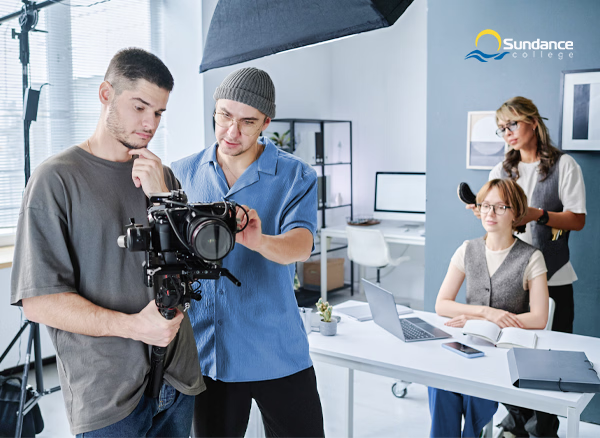
Producing your own short film is an opportunity to practise filmmaking skills. Start with an idea, write a script, plan how to bring it to the screen, and work through the filming and editing stages.
Completing a film teaches you how to work through practical challenges, from planning shots to solving sound or editing problems. You’ll discover what works, what you’d approach differently, and which filmmaking skills you want to improve.
Save your strongest finished projects for your portfolio. A short film, documentary, or commercial gives potential employers and clients a way to see your storytelling, technical skills, and creativity.
When your short film is complete, share it through local screenings, online platforms, or film festivals. These events also introduce you to other filmmakers and people working in the industry.
Step 5: Start Your Career in the Film Industry
Filmmaking careers offer different ways to contribute to production.
Your first opportunity could come from an independent film, a commercial shoot, or television production.
Here are nine roles you could pursue:
- Independent Filmmaker: Develops and produces original films, often taking responsibility for multiple stages of production.
- Video Editor: Selects, arranges, and edits footage to create a finished film or video.
- Videographer: Records video for businesses, events, documentaries, and other projects.
- Production Designer: Develops the visual look of a production, including its sets and environments.
- Grip/Lighting Technician: Sets up and manages lighting and camera support equipment.
- Set Decorator: Selects and arranges furnishings and decorations used on screen.
- Camera Operator: Operates the camera to capture scenes according to the production requirements.
- Script Supervisor: Tracks details such as dialogue, props, and continuity between shots.
- Props Assistant: Prepares and manages props used by actors and crew during filming.
Working on different productions helps you understand how teams operate and identify the work that best suits your strengths and interests.
To begin pursuing work:
- Select portfolio pieces that match the work you’re applying for.
- Describe your contribution to each project so employers and clients can see what you did.
- Apply for suitable openings and introduce yourself to production companies or potential clients.
- Stay in touch with instructors, classmates, and people you’ve worked with. Let them know what kind of work you’re seeking.
Workshops, screenings, and film projects are also opportunities to connect with people in the industry.
Careers in this industry rarely follow a single path. Some people gain experience through entry-level crew positions, while others focus on independent filmmaking, and some build careers in commercial video or post-production.
How Sundance College Prepares You for Film Work
Which part of filmmaking interests you most: writing a script, working behind the camera, directing actors, or editing?
Sundance College’s 36-week Motion Picture Production Certificate program gives you practical experience across every stage of filmmaking. You’ll learn to write, direct, shoot, and edit films, with guidance from industry-experienced instructors.
During the program, you’ll create different types of films, including documentaries, commercials, and a short drama, and work on a project for a real community client. You’ll graduate by premiering your original short film at the Short Film Showcase, a piece you can add to your portfolio.
After graduation, you’ll have lifetime access to Career Services for job search help and career advice.
Connect with a Sundance College advisor about your career goals, the program, and how to get started.
FAQs
-
Do you need formal training to become a filmmaker?
Hands-on filmmaking training helps you develop technical skills to take a film from idea to finished production. Sundance College’s Motion Picture Production Certificate program teaches screenwriting, directing, camera work, sound, and editing. You’ll learn from industry-experienced instructors and create original film projects to build your portfolio.
-
Can you become a filmmaker with no experience?
Yes. Many filmmakers start by learning the fundamentals and building experience through formal training. In Sundance College’s 36-week Motion Picture Production Certificate program, you get started through:
- Hands-On Training
- Industry-Experienced Instructors
- Film Production Projects
- Short Film Showcase
- Lifetime Career Services
-
How long does it take to become a filmmaker?
You can build filmmaking skills in 36 weeks through Sundance College’s Motion Picture Production Certificate program.
-
What software does filmmakers use?
Filmmakers use DaVinci Resolve for video editing and colour grading, Adobe Premiere Pro to edit and assemble video footage, Adobe After Effects to create motion graphics and visual effects, and Adobe Photoshop to edit images and create visual assets.
In Sundance College’s Motion Picture Production Certificate program, you’ll have the opportunity to work with these softwares on actual film projects.
-
What is the difference between production and post-production?
In filmmaking, production is the stage when filming takes place. It includes directing performances, operating cameras, recording sound, and capturing footage on set or location.
Post-production begins after filming. It involves editing footage, refining sound, adding visual effects, and preparing the finished film for its audience.
-
How much do filmmakers make?
Earnings vary depending on the role, experience, and type of production. On average, you could earn up to $104,000 a year.
Subscribe for more career advice
Blog Categories
Share on: