
Blog / How to Become a Cybersecurity Analyst
Sundance Blog
How to Become a Cybersecurity Analyst

Cybersecurity Diploma
Employment Opportunities:
- Cybersecurity Specialist
- Information Technology Security Specialist
- Cybersecurity Analyst
- Network Security Specialist
Cybersecurity Learn more
Student aid eligible
2 November 2026 | Author: Nick Greene
| Read Time:
Quick Answer
To become a cybersecurity analyst, build foundational knowledge in IT, security, and networking. Develop practical skills in threat analysis, ethical hacking, cloud security, and Linux security. Apply these skills by getting hands-on experience through a real-world practicum.
A college diploma prepares you for a career in cybersecurity. Sundance College’s 50-week Cybersecurity diploma is available online or on campus and combines IT and networking fundamentals with training in cybersecurity analysis, ethical hacking, and cloud and Linux security.
The program includes a 7-week real-world practicum completed in person, along with financial assistance for students who pursue industry certifications such as CompTIA Security+.

Table of Contents
A suspicious login, an unfamiliar device on the company network or an alert about a possible security threat can all signal a cybersecurity issue that needs investigating.
Cybersecurity analysts investigate these warning signs, identify potential threats, and protect organization’s systems and data.
If you enjoy investigating problems and understanding how technology works, this career is a good fit for you. But where do you start, especially if you’re new to IT?
This article explains what cybersecurity analysts do, the knowledge and practical skills you need, and the steps to get started.
“Being curious, paying attention to details, and being willing to learn are great starting points.”
– Amrinder S., Sundance College Technology Instructor
What is a Cybersecurity Analyst?

A cybersecurity analyst helps protect an organization’s computer systems, networks, and information from cyber threats. One of the main responsibilities involves monitoring systems for signs of suspicious activity. These can include:
- Unknown IP addresses
- An employee logging in from a different country unexpectedly
- Known malicious software
- Unapproved or unidentified devices accessing a network
- Web domains with known ties to cybercriminals
When an alert appears, cybersecurity analysts investigate what happened and assess the risk.
If the threat is valid, the analysts work with other cybersecurity and IT professionals to mitigate it.
Analysts also deploy preventative measures like password policies, network encryption, and vulnerability patches to help organizations improve their security.
They are often responsible for configuring security tools, creating incident reports, and managing cybersecurity awareness training.
Their goal is to identify potential problems early, keep systems and information secure, and prevent threats from happening again.
Why Become a Cybersecurity Analyst?

Cybercrime is a multi-trillion-dollar industry. Organizations worldwide experience thousands of cyberattacks per week, and that number is growing fast. Successful attacks expose sensitive data, disrupt operations, and damage organizations’ finances and reputation.
Cybersecurity analysts help identify threats to protect the systems and data that businesses and individuals rely on.
“Cybersecurity is a good fit for someone who enjoys solving problems and learning new things. You’re helping protect people’s information and keeping businesses safe, which makes the work meaningful.”
– Amrinder S., Technology Instructor
As long as hackers exist, organizations will need professionals like cybersecurity analysts to protect their people, systems, and data.
Steps to Becoming a Cybersecurity Analyst

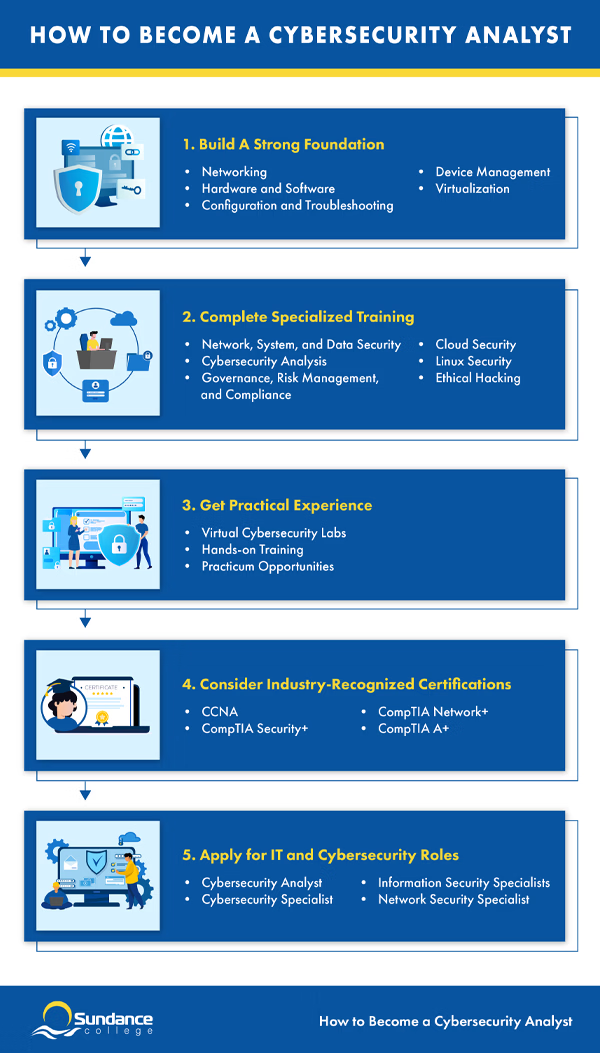
Becoming a cybersecurity analyst starts with building technology knowledge and gaining practical experience. A well-structured diploma program provides specialized knowledge and practical experience, preparing you for a cybersecurity career in under a year.
Step One: Build a Foundation in IT and Networking
Cybersecurity starts with understanding the systems you are protecting.
Analysts need to know how computer systems, networks, operating systems, and software platforms work. They also need to understand how these devices communicate and how users access systems and information.
This foundation provides context to investigate security issues and understand how they affect the wider IT environment.
Step Two: Complete Essential Cybersecurity Training
A cybersecurity analyst should know the fundamentals of data security, governance, risk management, and compliance alongside cybersecurity analysis to help them mitigate and prevent threats.
Look for training that covers:
- Ethical Hacking
- Cloud Security
- Linux Security Fundamentals
- CCNA Routing & Switching
- Security+
“Students should start by understanding how computers, networks and operating systems work. Then build their hands-on skills through practice, like checking logs, using cybersecurity tools, spotting suspicious activity, and responding to security incidents. Being able to explain a problem clearly is just as important as knowing how to fix it.”
– Amrinder S., Technology Instructor
Look for a structured diploma program that can help you develop skills in a clear sequence from foundational IT knowledge to specialized security concepts.
Step Three: Get Practical Cybersecurity Experience
Understanding a security concept is one thing and knowing how to apply it is another. That’s part of why hands-on projects and practicum work are important for cybersecurity analysts. They let you build the experience to understand how, when, and where to apply your skills.
A practicum takes that learning into a real workplace, where you gain experience with day-to-day IT and security responsibilities, work alongside experienced professionals, and see how organizations manage their systems and security challenges.
This also helps you to effectively demonstrate your abilities to potential employers.
Step Four: Consider Industry-Recognized Certifications
Technical certifications like CompTIA Security+ and CCNA help you demonstrate your knowledge and validate your technical skills. They also help you stand out to employers.
Sundance College’s Cybersecurity diploma prepares you to pursue certifications including CompTIA A+, Network+, Security+, and Cisco CCNA, and provides financial assistance to obtain them.
Step Five: Apply for Entry-Level IT and Cybersecurity Roles
Your first technology job is the starting point for a cybersecurity career. Look for entry-level cybersecurity positions that match your training and skills such as:
- Cybersecurity Analyst
- Cybersecurity Specialist
- Information Technology Security Specialist
- Network Security Specialist
IT support and networking roles also help you build experience with systems that cybersecurity professionals protect.
When applying, highlight relevant coursework, practicum experience, and technical skills. Focus on showing employers what you have learned and how you have applied it in a real workplace.
Connect with instructors, classmates, and professionals you meet during your practicum to learn about opportunities. Use available career services for support with your job search, applications, and interview preparation.
What Skills Do You Need for a Cybersecurity Career?

Cybersecurity professionals need technical knowledge, and the ability to investigate problems carefully. They also need to have strong attention to detail, the ability to collaborate and communicate with other IT professionals and departments.
Other key cybersecurity skills include:
- Threat intelligence
- Vulnerability management
- Compliance management
- Cybersecurity automation
- Networking
- Cloud security
- Linux security and administration
Start Your Cybersecurity Career with Sundance College
Sundance College’s 50-week Cybersecurity diploma program provides online, hands-on training in:
- IT and Network Fundamentals
- Security
- Ethical Hacking
- Cybersecurity Analysis
- Cloud Security
- Linux Security and Administration
The program combines technical instruction with practical training. You will identify potential threats, assess vulnerabilities, and protect digital systems. Taught by cybersecurity-experienced instructors, the program includes a 7-week real-world practicum opportunity for you to apply your skills.
“Sundance College provides students with practical, hands-on IT knowledge and skills that are valuable in today’s technology driven world. By learning how systems, networks, and security work together, students build a strong foundation for a career in cybersecurity.”
– Amrinder S., Technology Instructor
Lifetime Career Services are available to support graduates with their job search, and financial support is available to pursue industry certifications.
Connect with us today to start your cybersecurity career.
Frequently Asked Questions About Cybersecurity Analysts
-
Do I need a degree to become a cybersecurity analyst?
No. In Canada, both college diplomas and university degrees are recognized educational pathways to becoming a cybersecurity analyst.
University degrees typically include additional coursework in subjects such as advanced mathematics and theory, as well as general electives that may not be required for cybersecurity analyst roles. Career-focused diplomas concentrate on the technical knowledge and practical skills used in the workplace, usually in considerably less time.
Sundance College’s 50-week Cybersecurity diploma provides hands-on training in networking, ethical hacking, cybersecurity analysis, and cloud security, as well as practical work experience.
-
What certifications can help me compete for cybersecurity positions?
The most relevant cybersecurity certifications for entry-level roles in IT systems and security include:
- CompTIA A+
- CompTIA Network+
- CompTIA Security+
- CCNA
-
Can I study cybersecurity online?
Yes. Sundance College offers the Cybersecurity diploma program online as well as on campus. The program includes a 7-week practicum that must be completed in person.
-
Where do cybersecurity analysts work?
Cybersecurity analysts work in every industry, often within an organization’s IT team. In some organizations, they may be part of an official cybersecurity department. Consulting firms, especially those in technology and the public sector, also employ cybersecurity analysts.
-
Is cybersecurity hard to learn for beginners?
No, cybersecurity is a field you can learn as a beginner with the right training and a step-by-step approach.
Sundance College’s modular course format helps you focus on one subject at a time before moving on to the next topic.
-
How long does it take to become a cybersecurity analyst?
Sundance College’s Cybersecurity diploma program takes just 50 weeks to complete, preparing you with both foundational and advanced cybersecurity knowledge and skills. The program includes a 7-week practicum, allowing you to graduate with real-world experience.
Subscribe for more career advice
Blog Categories
Share on: