
Blog / 9 Healthy Habits For The New Year
Sundance Blog
9 Healthy Habits For The New Year

Explore our Diploma Programs
Fields of Study:
- Business, Hospitality, and Legal
- Health and Human Services
- Technology
Explore our Diploma Programs Learn more
Student aid eligible
5 January 2026 | Author: Vallankan Mendonca
| Read Time:
Quick Answer
Healthy habits for the new year include:
- Eating nutritious foods
- Cutting down on sugar and fast food
- Drinking more water
- Adding regular physical activity
- Waking up at a consistent time
- Practicing self-care
- Strengthening your relationships
- Focusing on your career growth
Table of Contents
- 9 Healthy Habits to Improve Your Life
- 1. Cut Down On Fast Food
- 2. Cut Down On Sugar
- 3. Choose Fruits & Vegetables More Often
- 4. Drink More Water
- 5. Get Enough Exercise
- 6. Get Up At The Same Time Every Day
- 7. Practice Self Care
- 8. Work On Your Relationships
- 9. Aim For A Better Career
- How Sundance College Can Support Your Career Goals
- FAQs
Now that the new year is here, it’s a good time to revisit the resolutions you’ve set for yourself. Whether they involve your health, daily routines, relationships, or career, real change comes from the choices you make each day.
Healthy habits will keep you moving toward your goals, even when life gets busy. They support your energy, mindset, and ability to stay committed over time. When your habits line up with your goals, it’s easier to make progress.
Here are nine healthy habits that can push you toward the lifestyle you want this year.
9 Healthy Habits to Improve Your Life
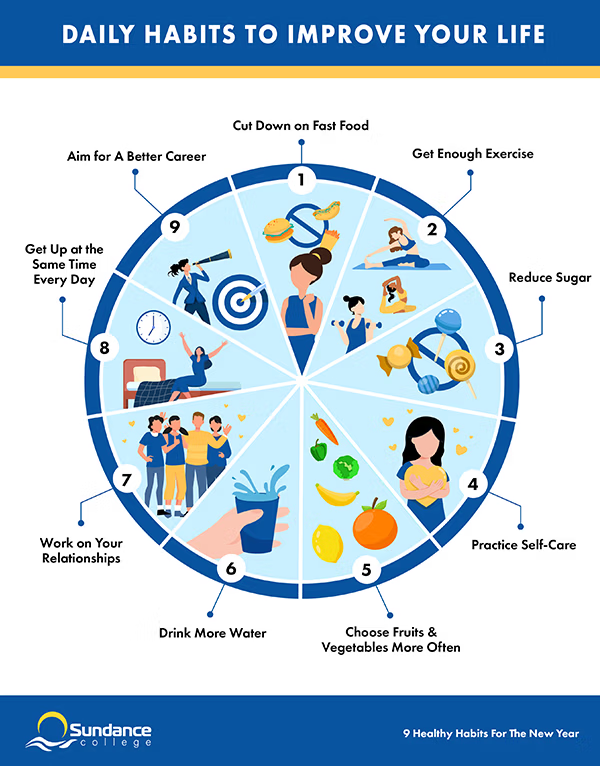
Building healthy habits across different parts of daily life can really change how you feel. When those habits support both your body and mind, it’s easier to stay alert, use your time well, and keep up with your commitments.
Let’s take a look at a few habits you can start practising today.
1. Cut Down On Fast Food
Fast food is made tastier through some unhealthy ingredients. MSG, excessive sodium, corn syrups, and more can make food delicious but unhealthy. A good daily habit is to avoid fast food whenever possible!
Taking time to do meal preparation for the week can really help you avoid leaning on fast food — especially when you’re working late at the office or spending the evening studying at home. Try batch cooking on weekends and refrigerate or freeze portions of balanced, organic meals.
2. Cut Down On Sugar
Sugar has a spike-and-crash effect on your energy levels, but that’s just the beginning. Too much sugar can affect your focus, stress levels, and mood, so, it’s important to be mindful of how much sugar you’re consuming. Cutting down on sugar is easier if you approach it as a balancing act.
- Cut sugar from your morning coffee.
- Skip dessert when you can.
- Choose organic milk or juice (not from concentrate) instead of soda pop for natural sugars.
- Choose water more often than sweet drinks
- Check ingredient labels for sugar content to budget your sugar intake for the day.
3. Choose Fruits & Vegetables More Often

Fruits and vegetables are packed with vitamins, minerals, and other nutrients that help your body stay energized throughout the day. That’s why so many reliable eating habits and dietary approaches start with them.
They’re also convenient. Raw fruits and vegetables make simple grab-and-go snacks you can eat on the way to class or during a break at work. Choosing them regularly keeps your energy steady, which makes it easier to focus, learn, and follow through on the goals you’ve set for yourself.
4. Drink More Water
Drinking more water carries major benefits for your body and mind. Health experts note that water:
- Balances bodily fluids
- Helps you feel full, which reduces overeating
- Supports muscle performance
- Reduces strain on your kidneys
- Keeps your joints lubricated
Making water your go-to drink is a simple habit to adopt. Keeping a glass or bottle nearby and sipping throughout the day refreshes your system, maintains your energy, and helps you feel more engaged in whatever you’re doing.
5. Get Enough Exercise
Exercise does more than change your appearance. It lifts your mood, improves your sleep, and gives you the energy to get through your day.
You don’t need a gym to start being more active. Adding small bursts of physical activity can create a routine without feeling like a workout:
- Take the stairs
- Park farther away and walk
- Do chores that keep you on your feet
- Walk a dog
- Go for hikes or walks with friends
If you prefer a planned workout, set time aside for it like any other responsibility. When physical activity becomes part of your day, it becomes easier to stick with it.
6. Get Up At The Same Time Every Day

Sleeping in feels great at first, especially after a busy few days. The problem is that irregular wake-up times can leave you groggy, unmotivated, and more anxious than you expect. Your body works better when it knows what time the day begins.
Getting up around the same time every morning creates a rhythm your mind can rely on. You feel more awake, your mood stays steadier, and you don’t spend half the day trying to wake up.
Before you silence your work or school alarm for good, ask yourself how you want to feel tomorrow. A consistent wake-up time might not sound exciting, but it can make your day easier from the moment your feet hit the floor.
7. Practice Self Care
Whether it’s a spa day, time spent hiking or doing winter sports, or curling up with a good book, self-care keeps you rested and refreshed between work or school days. Self-care is what you make it, as long as it isn’t unhealthy in and of itself.
Popular self-care methods include:
- Spa days
- Bathing
- Napping
- Journalling
- Taking walks & enjoying nature
These are healthy ways to relax and recharge after a hard day at the workplace or keeping up with your studies.
8. Work On Your Relationships
A good support network can raise your morale when the going gets tough. Having positive people in your life is crucial to keeping you in the mental and emotional state you need to succeed.
Think about the individuals who matter in your life, such as parents, siblings, partners, children, friends, coworkers, and neighbours. These relationships do not require grand gestures. Small acts of appreciation can strengthen them. Saying thank you, checking in, or spending a few minutes together shows you value the connection.
Gratitude is a habit worth building. When you acknowledge the people who stand by you, those bonds grow stronger. Investing time in these relationships gives you encouragement you can rely on during school, work, or any personal goals you are pursuing this year.
9. Aim For A Better Career
Are you happy where you are working right now? Is there room for advancement? Do you feel that your work is valued? Does the compensation support your needs? If you feel you are in a dead-end job, this will affect your health and well-being. A new year is the perfect time to pursue a career that makes the most of your talents and potential.
A career college is the best place to gain the in-demand skills that employers are looking for. Instead of spending years in school, you focus on the tools and knowledge used in today’s workplaces, and it’s flexible so you can continue to work.
Some career colleges also meet industry-specific standards, which strengthens the value of your qualifications.
Stevie L., Education Manager at Sundance College, explains the importance of industry-recognized qualifications:
“All Sundance College diploma programs are provincially approved, so graduates hold qualifications employers recognize.”
“In fields with additional requirements, our programs align with those standards too. Our Addictions and Community Health Professional diploma has CACCF approval, and our Supply Chain Management Professional program includes advanced standing toward the SCMP designation. These recognitions reassure students that their training is valued in the workplace.”
When your qualification holds value, employers take notice. That recognition opens doors to new opportunities in your career.
How Sundance College Can Support Your Career Goals
Sundance College offers diploma programs that prepare you for in-demand careers in under a year. Here’s what that preparation includes:
- Practical training with the tools and procedures used in today’s workplaces
- Hands-on experience through a practicum that lets you apply what you learn in your field
- A flexible learning format that makes it easier to balance classes with personal and work responsibilities
- Student Services support when academic or personal challenges arise
- Career Services assistance with practicum placement, résumés, interviews, and employment preparation
This support leads to proven outcomes, with 84% of Sundance College graduates working in their field within six months of graduation.
Christina’s experience is one example of how the right training can make a difference:
“I got excellent education and support at Sundance College. The instructors were top tier, and the training helped me get a high-profile legal assistant role with the Government of Alberta.”
– Christina B., Professional Legal Assistant Graduate
Her experience highlights the role career-focused diploma programs play in helping people find the careers they’re looking for.
To get started with your training, contact an admissions advisor today. If you’re still deciding which direction to take, try our Career Quiz to discover options that match your interests and goals.
FAQs
-
What are the most effective healthy habits to adopt in the new year?
Habits that support both your body and mind make the biggest difference. Eating healthier foods, cutting down on sugar and fast food, drinking more water, exercising regularly, waking up at the same time each day, practicing self-care, improving your relationships, and planning for a better career are habits that create stability in your daily life. These choices give you more energy, focus, and motivation, which makes long-term goals easier to pursue.
-
How can you incorporate small wellness habits into your daily routine?
Start with manageable changes that fit naturally into your day. Keep water nearby and sip it throughout the day instead of drinking soda. Add fruits and vegetables to your meals or pack them as snacks for work or class. Take the stairs, walk a little farther, or do chores that keep you active. Preparing meals on weekends helps you avoid fast food during busy evenings. These small steps slowly build into routines that feel effortless over time.
-
Why is starting with small changes better than making big drastic resolutions?
Big resolutions depend heavily on willpower, which can fade quickly. Small changes are easier to repeat, and repetition is what forms habits. When a change feels manageable, you are more likely to stick to it. Over time, these small actions build momentum and lead to better results.
-
What tips help students maintain healthy habits when their schedule is irregular or heavy?
Students benefit from habits that save time and protect their well-being. Meal preparation stops them from relying on fast food during late study sessions. Keeping snacks like fruits and vegetables nearby supports energy and focus. Scheduling physical activity the same way they schedule assignments helps exercise become part of the day. A consistent wake-up time and simple self-care activities, like journalling or short walks, prevent burnout and make busy weeks feel more manageable.
-
How can you stay motivated to follow through on healthy habits beyond January?
Motivation lasts longer when habits connect to a goal you care about. When healthier routines improve how you feel at work, increase your energy, or help you learn skills for a new career, you start to notice real benefits. Seeing those benefits makes it easier to stick with your habits because you know they’re working. Surrounding yourself with supportive people keeps you accountable, and noticing small improvements in your mood, energy, or productivity encourages you to keep going long after the excitement of the new year fades.
-
How can you measure the impact of healthy habits on academic performance, professional life, and well-being?
Progress becomes easier to see when you pay attention to the ways your habits affect your daily experience. You may notice that you feel more alert during classes, complete assignments more efficiently, participate with greater confidence, or handle stress with less difficulty. In the workplace, you might find that you have more energy, stay focused for longer periods, and interact more positively with colleagues. These noticeable changes show that your healthy habits are benefiting your academic performance, professional life, and overall well-being.
Subscribe for more career advice
Blog Categories
Share on: