
Blog / Medical Office Assistant Interview Questions & How to Answer Them
Sundance Blog
Medical Office Assistant Interview Questions & How to Answer Them

Medical Office Administration – Health Unit Coordinator Diploma
Employment Opportunities:
- Medical Receptionist
- Medical Secretary
- Medical Office Assistant
- Hospital Unit Clerk
Medical Office Administration – Health Unit Coordinator Learn more
Student aid eligible
3 November 2025 | Author: Vallankan Mendonca
| Read Time:
Quick Answer
To prepare for a medical office assistant interview, focus on how your diploma program has trained you to support patients, use medical office systems, and communicate professionally. Anticipate questions and practice answers that best reflect your skills, knowledge, and experiences. Show employers that you can manage records and billing accurately, stay composed in busy settings, and contribute to a positive patient experience.
Table of Contents
- Listen to: Medical Office Assistant Interview Questions & How to Answer Them
- Questions About Motivation and Career Goals
- Questions About Technical Skills
- Questions About Clinical Procedures and Medical Knowledge
- Questions About Patient Care and Communication
- Questions About Confidentiality, Ethics, and Professionalism
- Questions About Workplace Skills and Organization
- How Sundance College's Medical Office Administration Diploma Prepares You for Interview Success
- Frequently Asked Questions
Getting an interview is a big step toward a career in medical office administration. It’s your opportunity to show that you understand healthcare office procedures, can communicate professionally, and have the technical knowledge to help patients and medical staff. With the right diploma program, you’ll gain the skills employers value and feel prepared to answer confidently.
Now, let’s look at the questions you’re most likely to hear and how to give answers that stand out.
Listen to: Medical Office Assistant Interview Questions & How to Answer Them


Medical Office Assistant Interview Questions & How to Answer Them
Sundance College Podcast
3 November 2025
Questions About Motivation and Career Goals
Most interviews begin with questions about you and what inspired your career choice. They help employers get to know you, whether it’s about your motivation or your goals in healthcare. Nearly 70% of interviewers make their decision within the first few minutes, so you need to make your opening answers count.
These questions also help employers see who you are and how you would fit into their team. Stevie L., Education Manager at Sundance College, explains, “When employers meet you, they’re looking for three things: that you can handle the job, that you’re genuinely interested, and that you’ll fit in with their workplace culture.”
Remembering this helps you approach these questions thoughtfully, showing that your interest in medical office administration is sincere and that you know what employers want.
Why are you interested in becoming a Medical Office Assistant?
This is your chance to share what draws you to medical office administration.
Show employers that you’re excited to enter this important field. What personal traits have led you here? Which tasks are you looking forward to? Lead with enthusiasm.
Sample answer:
“I’ve always enjoyed helping people and being there when they need support. Going through medical care can be stressful, so I’d like to make that experience easier for patients. Through my Medical Office Administration – Health Unit Coordinator diploma program, I realized how much organization impacts patient care. Learning to manage records, coordinate appointments, and use electronic health record systems showed me that every detail counts when people are waiting for timely care. Understanding medical terminology, transcription and clinical procedures has also given me the confidence to communicate clearly with patients. I want to support the healthcare team in providing them the best experience possible.”
This response not only shows your commitment to helping others but also demonstrates that you’re ready to meet the expectations of a medical office.
Why do you want to work for our hospital /medical office?
Use this as an opportunity to talk about what interests you most, whether it’s their mission, values, or work environment and how your skills fit in. Convince them you have the motivation and skills their facility has been looking for.
Sample answer:
“I’d like to work in your hospital because it follows the same protocols and standards I trained for in my Medical Office Administration Health Unit Coordinator diploma program. During my practicum at a local hospital unit, I saw how every process depends on coordination and attention to detail.
I enjoyed managing order entry forms, updating patient records, and communicating between departments to keep information current. Seeing how these procedures help patients receive timely care confirmed that this is the setting where I want to build my career.”
This kind of response shows that you not only understand hospital operations, but that you’re ready to step in and contribute to patient-centered care from day one.
Questions about motivation and career goals give you the chance to show who you are beyond your resume. When you express genuine interest, clear direction, and a strong connection to the work, you’ll naturally stand out.
Questions About Technical Skills
Hiring managers want candidates who can manage patient information, process billing, and schedule appointments using the digital tools that keep offices efficient. When you train for this career, you’ll learn the technology and administrative systems that prepare you to answer these types of interview questions confidently.
Describe your experience with medical billing and insurance verification.

Employers want to see if you can handle billing accurately and understand how it impacts patients and healthcare teams. Think about your practicum experience and the hands-on opportunities you had throughout your studies to work with electronic health records (EHRs) and billing. This is also an opportunity to highlight the skills you’ve developed that make sure billing and insurance verification process run efficiently, like attention to detail, confidentiality, problem solving.
Sample answer:
“During my practicum in a busy outpatient clinic, I helped process billing and verify insurance coverage for patients before their appointments. We often contacted insurance providers to confirm eligibility or clarify claim details, especially for procedures that required pre-authorization.
I used what I learned in the Medical Office Administration – Health Unit Coordinator diploma program to enter billing information and match procedure codes with the correct patient files. When a claim was delayed, I worked with the administrative team to trace the issue and update the patient’s record right away.
That experience showed me that when billing is handled correctly, patients avoid unexpected costs, receive timely care, and staff can focus on treatment. Of course I practiced strict confidentiality throughout the process.”
You know you can handle confidential information carefully and maintain reliable records. Answers like this let employers know, too.
Technical and computer-related questions let you highlight how your training has prepared you for the responsibilities in healthcare settings and show your readiness to contribute.
Questions About Clinical Procedures and Medical Knowledge
These questions explore how well you understand medical terms and procedures, and how you apply that knowledge in patient-focused settings.
What is your experience with medical terminology and clinical procedures?
You’ll need to understand medical terminology and clinical concepts in order to support a healthcare team effectively. Accuracy is key! If you’ve completed the right diploma program and practicum, make sure you’re emphasizing your knowledge during an interview.
Sample answer:
“Through my Medical Office Administration – Health Unit Coordinator diploma program, I learned to identify body systems, understand disease processes, and use medical terms accurately in documentation. I also studied infection control, diagnostic testing, and pharmacology basics and had a chance to put that knowledge into practice during my practicum at a clinic, which I think will help me support your clinical staff in day-to-day operations.
Employers want people that have medical understanding who are ready to assist in a clinical environment. This answer shows them that you’re that person.
How can your MOA training improve our patient experience?
Use this as an opportunity to show how your training goes beyond office duties and contributes to quality patient care. Talk about how your skills in organization, accuracy, and communication help improve the flow of each visit and strengthen teamwork across the office.
Sample answer:
“My Medical Office Administration – Health Unit Coordinator diploma program taught me that patient care starts long before patients meet a healthcare professional. When records are accurate, appointments are organized, and communication is clear, each visit feels more coordinated and reassuring.
I also learned that managing electronic health records, patient intake, and diagnostic forms accurately helps keep care on schedule and on the right track. When information is easy to access, patients feel supported throughout their visit, and staff can focus on delivering quality care.”
You understand that your training actually empowers you to contribute to a better patient experience. You’re showing employers that you will contribute to shorter wait times and efficient check-ins, because you want patients to feel cared for.
Questions About Patient Care and Communication
Communication and care go hand in hand in healthcare. These questions explore how you support patients during busy moments and handle sensitive conversations.
How do you manage a high volume of calls while providing excellent customer service?
Use this as an opportunity to show that you can manage competing demands without losing sight of patient care. Employers look for candidates who stay organized, communicate clearly, and give every patient the same level of attention, no matter how busy it gets.
Sample answer:
“During my practicum in a medical clinic, there were times when calls came in one after another for bookings, test results, and referrals. My Medical Office Administration – Health Unit Coordinator training helped me stay calm and organized as I adjusted to the fast pace of the front desk.
I made sure patient information was recorded accurately, confirmed details before ending each call, and kept my tone calm and respectful. Even on the busiest days, I reminded myself that each call was part of a patient’s care and that how I responded could influence their entire experience.”
This example proves that you can handle pressure without losing professionalism, turning busy moments into opportunities to provide excellent care.
Describe a time you dealt with an unhappy or difficult patient or family member.
This question allows you to show that you can turn tense situations into positive experiences by staying composed and focusing on solutions.
Sample answer:
“During my practicum at a walk-in clinic, a patient who was in pain spoke abruptly and raised their voice while checking in. I stayed calm, focused on getting the information needed, and reassured them that we were doing everything possible to get them seen quickly. As they left, they thanked me for my patience.
It reminded me that difficult behaviour often comes from discomfort or fear – and compassion is always the right response.
This kind of response highlights your ability to de-escalate situations and help patients feel cared for while maintaining efficiency in the clinic.
Patient service questions highlight how you bring compassion into your work. Employers want to see that you can handle emotional moments with care and make every interaction feel respectful.
Questions About Confidentiality, Ethics, and Professionalism
Trust is at the heart of healthcare. These questions show employers how you maintain professionalism and confidentiality in everyday situations.
How do you handle confidential patient information?
Use this as an opportunity to prove that you take confidentiality seriously and understand how it protects both patients and the integrity of the healthcare team. Talk about how you applied privacy policies to keep information secure and earn patient trust.
Sample answer:
“Protecting patient information was always a top priority during my practicum. I followed confidentiality policies carefully by securing documents, locking computer screens when stepping away, and discussing patient details only in private areas. I also made sure any information entered or shared was correct and handled only by authorized staff. The experience reinforced how much trust patients place in the healthcare team and the care that needs to be taken to maintain patient dignity at all times.”
This example shows that you see confidentiality as an essential part of patient care and that you can be trusted to uphold the standards that keep patient information protected.
Questions about ethics and professionalism help employers see if you’re dependable and trustworthy. Talking about experiences that demonstrate care for patients and respect for procedures reflects your honesty and professionalism.
Questions About Workplace Skills and Organization
These questions look at how you manage time, stay coordinated, and build relationships with your coworkers.
How do you stay organized and manage your time in a busy environment?
Use this as an opportunity to show that you can think ahead, set priorities, and stay productive when responsibilities overlap. Employers want to see that you can stay composed under pressure while keeping both patient care and daily operations on track.
Sample answer:
“During my practicum in a hospital unit, mornings were often the busiest, with phone calls, admissions, and requests from several departments coming in at the same time. To stay organized, I began each day by reviewing the patient list and arranging the forms and information I would need first.
I kept a running list of requests so nothing was missed and updated the system as soon as new information came in. My supervisor often mentioned how calm and organized I stayed during those busy periods, which helped the team stay on schedule.”
This example shows that you can stay organized under pressure, make smart decisions about priorities, and keep the team moving efficiently even during high-demand periods.
How do you work with physicians, nurses, and other healthcare team members?
Use this as an opportunity to highlight how you anticipate team needs, coordinate information, and keep communication clear. In healthcare, those small actions make a big difference in how efficiently patient care runs.
Sample answer:
“During my practicum in a hospital unit, I learned how much teamwork matters when things get busy.
I often helped coordinate between nurses and physicians by confirming orders, updating patient information, and passing along messages that needed quick attention. There was one afternoon when a patient’s discharge paperwork needed to be processed while several new admissions were coming in.
I prioritized the discharge first so the room could be prepared for the next patient, then quickly updated the new admissions in the system. By staying organized and communicating clearly with the team, we kept patient flow steady and made sure everyone received timely care.”
This response shows that you bring reliability and initiative to teamwork, helping the unit stay organized and patient care run efficiently.
When employers ask questions about workplace skills, they want to understand your approach to a busy day, from staying organized to working well with others.
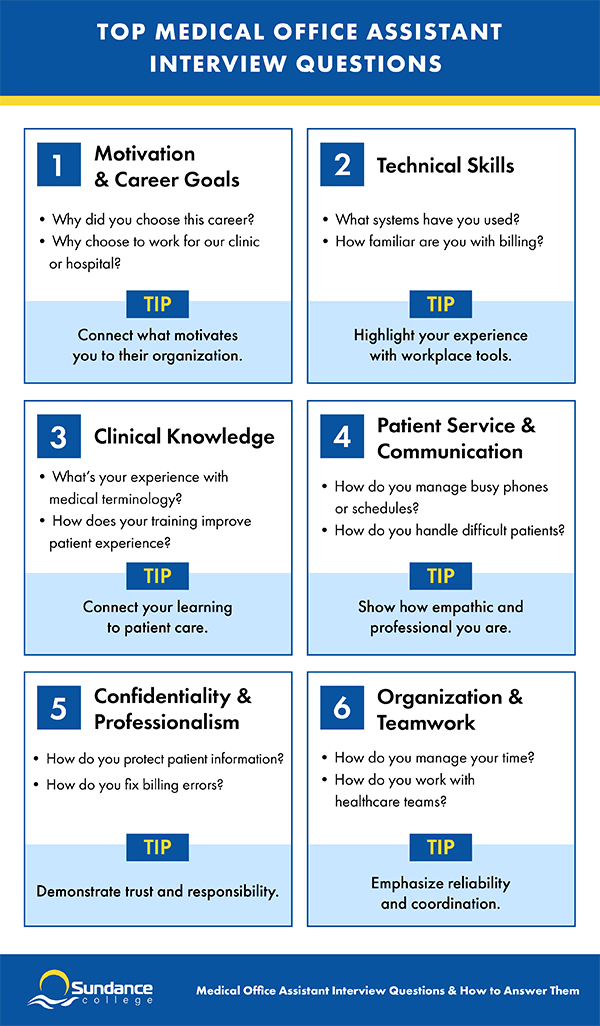
Every question in your interview is a chance to share a part of your story, from why you chose healthcare to what you learned in your training and how you’ve already started applying those skills. The most memorable answers are honest, confident, and specific about your experiences, helping you make a lasting impression and secure your career in healthcare administration.
How Sundance College’s Medical Office Administration Diploma Prepares You for Interview Success
Sundance College’s Medical Office Administration – Health Unit Coordinator diploma program is designed to help you develop the knowledge and skills needed to succeed in medical office administration. Over 43 weeks, you’ll learn medical terminology, transcription, electronic health records, billing, and office procedures, focusing on communication and coordination in patient care.
The program includes a five-week practicum in a clinic, hospital, or healthcare office, where you apply your training, gain hands-on experience, and strengthen your organization and communication skills.
Career Services support is also available as part of your diploma program, offering help with resumes, cover letters, interview preparation, and job search strategies.
“Career Services supports students throughout their academic journey, from practicum placement to resume writing, interview preparation, and career coaching. Our goal is to help every graduate feel prepared and confident when they begin their job search.”
— Stevie L., Sundance College Education Manager, Career Services
This guidance means you’ll be ready to transition from training to employment with the confidence that comes from real-world experience.
To get started, contact an admissions advisor today.
Frequently Asked Questions
-
How can I prepare for a Medical Office Assistant interview?
Start by reviewing common interview questions and thinking about how your skills apply in a healthcare setting. Review your coursework and the tasks you completed during your practicum to find real world examples to share. Research the clinic or hospital ahead of time so you can show genuine interest in their work and patients.
When you enrol in a Medical Office Administrator – Health Unit Coordinator diploma program, you’ll build skills in medical terminology, record management, billing, and clinical support, that you can share in every interview.
-
What questions should I ask the interviewer?
Asking questions shows curiosity and professionalism. You could ask:
- What does a typical day look like in this office?
- What is your process for validating insurance with your patients?
- What opportunities are there for training or advancement?
These help you learn more about the workplace and show that you’re committed to their organization.
-
How do I demonstrate knowledge without experience?
In the right diploma program, you’ll gain hands-on experience in medical terminology, record management, billing, and clinical support, including a practicum. This training helps you handle real-world situations with professionalism and care.
-
What if I’m asked about my weaknesses?
Interviewers want to see that you’re self-aware and committed to growing in the role. Choose one thing and explain how you’ve been improving. You might say you’re working on managing time during busy shifts or building confidence when handling multiple priorities. Employers value honesty and a willingness to grow.
-
What if I don’t know an answer during the interview?
Stay calm and take a moment to think. You can respond with, “That’s a good question. I’d like to consider how I would handle that.” If it’s something unfamiliar, explain how you would find the answer, such as checking procedures or asking a supervisor.
-
How do I show strengths if I have no experience?
If you don’t have experience yet, highlight transferable skills like organization, empathy, and communication. When you enrol in a diploma program with a practicum placement, you’ll gain experience and have examples that show professionalism, reliability, and how you support patients and healthcare teams.
Subscribe for more career advice
Blog Categories
Share on: