
Blog / 5 Reasons to Choose a Career as a Legal Assistant
Sundance Blog
5 Reasons to Choose a Career as a Legal Assistant

Professional Legal Assistant Diploma
Employment Opportunities:
- Legal Assistant
- Legal Secretary
- Legal Administrative Assistant
Professional Legal Assistant Learn more
Student aid eligible
2 March 2026 | Author: Jonathan Stoddart
| Read Time:
Quick Answer
A legal assistant career may be right for you if you’re looking for meaningful, stable, and professional work and value structure, organization, and clear responsibilities. This role appeals to people who want to influence outcomes in custody arrangements, business contracts or court proceedings across different areas of law. It offers consistent demand, defined processes, and long-term career potential.
Table of Contents
A career as a legal assistant is a great option if you’re looking for a way to play a role in the outcome of important legal cases like custody battles and contract disputes.
You’ll support lawyers and legal teams, helping them stay organized, prepared, and on schedule. You’ll have consistent career opportunities working within the legal system, helping individuals, families, and organizations protect their rights and resolve important legal matters.
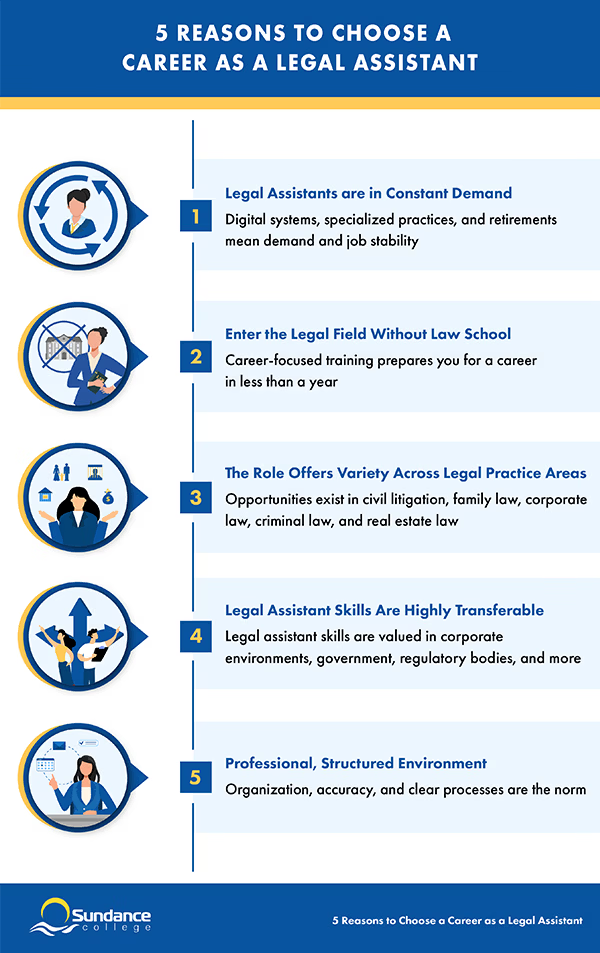
Let’s look at five compelling reasons this is an attractive career choice.
1. Constant Demand
Legal assistants are in high demand as law firms, corporations, and government offices manage increasingly complex caseloads and more demanding legal requirements at the same time as experienced staff are retiring.
Sundance College Professional Legal Assistant Instructor and former Senior Paralegal, Roger O. has observed both demographic and technological trends driving this demand.
“Many experienced legal professionals are approaching retirement, creating openings. Law firms are also expanding into new and specialized practice areas, increasing the need for dependable legal support.
Digital systems have made legal assistant roles more central to daily operations, particularly when it comes to documentation, coordination, and compliance.”
Together, these factors have led to steady growth in legal support roles across Canada. This gives you stronger job prospects and greater long-term stability.
2. Enter the Legal Field Without Law School
You don’t need to spend years in school to become a legal assistant. There’s a clear pathway that prepares you for this in-demand role in less than a year. Career-focused training gives you important skills, including:
- Legal research
- Contract law and administration
- Legal office procedures
The best career colleges also emphasize hands-on experience. You’ll be ready to support lawyers and their clients as soon as you graduate, making this a practical, efficient way to enter the legal profession.
3. Variety Across Legal Practice Areas
One of the appealing aspects of a legal assistant career is the wide range of legal practice areas. Lawyers and legal teams in practices as diverse as civil litigation, family law, real estate, corporate law, and criminal law all need support. And each area has its own focus, pace, and responsibilities.
Whether you’re drawn to the client-focused nature of a family law assistant role or the detail-driven work of a corporate legal assistant, the variety offers an opportunity to align your work with your interests.
4. Highly Transferable Skills
A legal assistant career is built on skills that apply across industries, legal functions, and professional environments, including law firms, in-house legal departments, corporate offices, and government settings. With the right training, you’ll develop a core set of transferable legal skills that remain valuable whether you work in litigation, corporate settings, family law, or real estate.
Roger O. explains that the skills taught in a Legal Assistant diploma program open doors:
“Legal admin skills such as organizing client files, research, supporting court filings, managing correspondence, and maintaining accuracy across legal documents are essential in virtually every legal environment. Knowledge of legal terminology, ethics, and office procedures makes a legal assistant valuable, allowing them to move between different legal teams.”
Experience gained in one area of law often transfers smoothly to another. In fact, these skills are used not only in legal settings, but in corporate environments, government, regulatory bodies, real estate, insurance, finance, healthcare, and education, where compliance and accuracy are critical. This flexibility will enable you to adapt, pursue new opportunities, or build a long-term career within the legal field.

5. Professional, Structured Environment
Legal assistants typically work in professional office environments where organization, accuracy, and clear processes are essential. Law firms, corporate legal departments, and government offices all rely on structured systems to manage files, deadlines, and client communications, creating a work setting that values consistency and attention to detail.
Responsibilities are clearly defined and supported by established procedures and legal-centered systems. This makes it easier to stay organized and manage priorities. You’ll find this appealing if you value predictability, professionalism, and a strong sense of accountability.
How to Become a Legal Assistant with Sundance College
You can be prepared for a career as a legal assistant in less than a year.
The Sundance College Professional Legal Assistant Diploma program prepares graduates for roles such as legal assistant, legal secretary, or legal administrative assistant in 45 weeks. It combines focused coursework with a 5-week hands-on practicum opportunity, allowing students to apply their training in a legal setting.
The program focuses on job-ready skills and hands-on experience. Industry-experienced instructors teach courses designed to meet employer expectations. As a result, the program is endorsed by the Alberta Association of Professional Paralegals (AAPP) as meeting its required standards of education.
The flexible online learning schedule allows you to balance education with your other responsibilities. The practicum opportunity gives you valuable experience that you can speak about during interviews.
Recent Sundance College Professional Legal Assistant Diploma program graduate Braighen C. quickly found employment after graduation.
“This program was the first step for me within the legal field, and I’ve been working as a legal assistant for almost two years.”
In fact, 84% of Sundance College graduates find employment in their chosen field within six months of graduation. Melanie D. also found fulfilling work in family law after completing the program.
“I really enjoyed learning about legal terminology and procedures in various areas of law. I’m excited to make a difference.”
Find out how the Professional Legal Assistant Diploma can help you transition into a respected legal career.
Frequently Asked Questions about Legal Assistant Careers (FAQs)
-
Does it matter if a legal assistant program is recognized or endorsed by a legal organization?
Yes. Recognition or endorsement by a professional legal body indicates that the program meets established educational standards within the legal field. It signals that the curriculum, learning outcomes, and instructional approach align with industry expectations. Sundance College has been endorsed by the Alberta Association of Professional Paralegals (AAPP) as meeting its required standards of education.
-
Can I work in law without going to law school?
Yes. There are careers that allow you to support legal teams and their clients through research, client communication, and document preparation.
A Legal Assistant Diploma program will train you for roles like legal assistant, legal secretary, or legal administrative assistant in under a year.
-
Do I need previous legal experience to become a legal assistant?
No. You do not need previous legal experience to become a legal assistant. Begin your legal career by completing a Legal Assistant Diploma program.
Employers look for job-ready training and practicum experience, which provides exposure to legal environments and helps prepare you to begin working in the field.
-
What skills do you need to be a successful legal assistant?
Successful legal assistants rely on technical proficiency, knowledge of legal office procedures, attention to detail, and strong organizational skills. This ensures that legal work is accurate and completed on schedule. Other key skills for legal assistants include confidentiality, critical thinking, and clear communication.
-
What does a legal assistant do every day?
Daily duties for legal assistants include preparing and organizing documents, managing case files, conducting legal research, tracking deadlines, and communicating professionally with lawyers, clients, and courts.
Legal assistants support legal teams across law firms, corporate offices, and government settings by keeping files current, documentation accurate, and processes on schedule.
-
Are legal assistant jobs in high demand?
Yes. Legal assistant jobs are in high demand as law firms, corporations, and government offices expand into new practice areas and adapt to digital legal systems. Retirements among experienced legal professionals are creating additional openings.
As legal work becomes more complex and technology-driven, trained legal assistants play a central role in supporting research, documentation, and client coordination.
Subscribe for more career advice
Blog Categories
Share on: