
Blog / What to Do on Blue Monday 2026
Sundance Blog
What to Do on Blue Monday 2026

Explore our Diploma Programs
Fields of Study:
- Business, Hospitality, and Legal
- Health and Human Services
- Technology
Explore our Diploma Programs Learn more
Student aid eligible
12 January 2026 | Author: Jonathan Stoddart
| Read Time:
Quick Answer
Blue Monday isn’t truly the saddest day of the year, but January can feel heavy. Reduced daylight, cold weather, financial stress, and disrupted routines all play a role. Small steps, like staying active, connecting with others, and planning your future, can help lift your mood.
Table of Contents
Blue Monday is sometimes referred to as the “most depressing” day of the year. While this is often presented as a scientific finding, it’s considered highly questionable.
What’s not in question, though, is the importance of mental health. In fact, 31% of Canadians say their mental health is significantly affecting their work or studies.
Fortunately, there are steps that can be taken to improve mood and sharpen focus. Let’s explore the causes of the January slump, the real story behind Blue Monday, and practical steps to improve your well-being.
Blue Monday Phenomenon
The name “Blue Monday” was reportedly coined by pop psychologist Cliff Arnall in 2004, and it falls on the third Monday in January every year. It has been referred to as ‘pseudoscience’.
It seems that Arnall was hired by a travel company to calculate the most depressing day of the year. The idea was to sell hope in the form of travel packages. Arnall chose the third Monday of January.
Despite its shaky premise, curiosity about Blue Monday persists. People may not believe that it’s actually the saddest day of the year, but many are looking for an explanation for how they feel this time of year and what they can do about it.
Before you book a trip, let’s separate fact from fiction.
Blue Monday 2026
In 2026, Blue Monday falls on January 19th. If you’re feeling a bit down as this date approaches, there are some good reasons.
Blue Monday: Fact vs. Fiction
Although Blue Monday may not be the saddest day of the year, there are reasons why January, and Mondays, can affect us.
Cold weather can dampen enthusiasm. The holidays are over and it’s time to get back to the normal routine. Many New Year’s resolutions, written with hope and earnest intentions, have already been broken. The result is a slump that many people feel this time of year.
Mondays are also unpopular. It’s often attributed to a dread of going back to work, but sleep patterns also factor in. Schedules change during weekends, with later nights and mornings being the norm. These disrupted sleep cycles can leave you feeling groggy and unfocused as the week begins.
If you’re not at your best this time of year, you could have the January blues, or simply a case of the Mondays.
The good news is that there are practical steps you can take to keep a sense of balance and lift your mood.
Top 3 Blue Monday Ideas
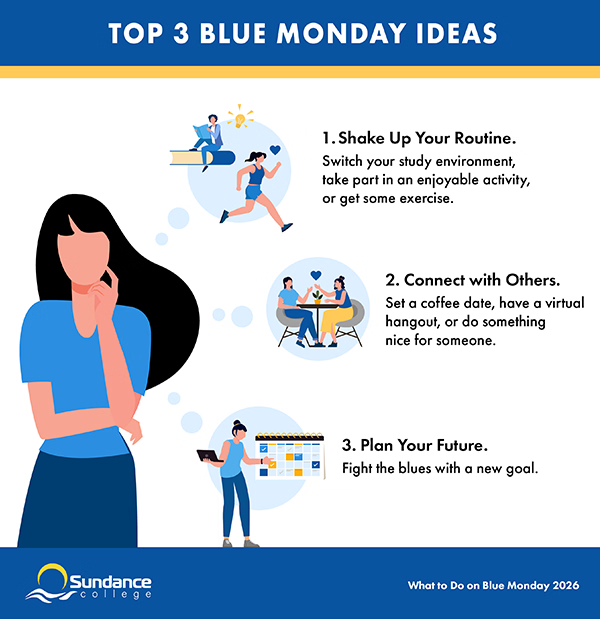
Whether Blue Monday is truly the saddest day of the year is up to you. Here are the top 3 things to do that don’t involve big-budget holidays.
1. Shake Up Your Routine
There are lots of ways that you can fight the blues every day by shaking up your usual routine.
Try studying from a new location. Libraries, cafes, and other public places offer you an opportunity to switch up your environment and help you focus.
Valerie T., a member of Sundance College’s Student Services team, notes that a change of environment can re-invigorate study.
“Students talk about studying in all kinds of environments. While different types of surroundings appeal to different people, what’s consistent is the boost of energy we all get from a change in scenery.”
Spa breaks are nice as well, you could even try a DIY approach. A warm shower, face mask, stretching, or aromatherapy at home can be nice.
Even a 15-minute walk around the neighborhood can serve as a reset, helping you clear your mind.
Physical exercise can be a powerful stimulant, but what if the weather prevents outside activity? Stay active indoors with simple, no-cost options like bodyweight circuits, stretching, yoga, or quick online workouts that fit into small spaces. Even brief movement, such as indoor walking, mobility breaks, or a 10-minute dance session, can boost mood and energy.
2. Connect With Others

Socializing with a friend can help your mood. Thanks to virtual meetups, it’s possible to check in and spend some time with a friend without even leaving your home. Even better, you can meet in person at a coffee shop, if schedules permit.
Helping others has profoundly good effects as well. Studies suggest that acting altruistically can actually lengthen your life. Volunteering with a local community organization, buying a coffee for the person behind you, or smiling at a stranger are examples.
3. Plan Your Future
Thinking about the future can be a powerful antidote to the January blues. When motivation dips, having something to work toward can bring back a sense of purpose and momentum. This could be a new goal, a skill you want to build, or a direction you want to explore.
Even small steps, like identifying a career that might be a better fit for you or recognizing areas for growth, can shift your mindset from feeling stuck to feeling ready to move forward.
How Sundance College Can Help
One way to change your future is by moving toward a career that interests you. Finding work that aligns with your strengths can lift your outlook. Building a career-oriented development plan can create a renewed sense of purpose.
Sundance College’s diploma programs prepare you for a new career in an in-demand position in under a year. A flexible online format allows you to balance learning with your job and other aspects of your life. Each Sundance College Diploma program includes a practicum placement opportunity, which gives you experience that employers look for. Career services will support you with resume writing assistance and interview practice before you move into the job market.
These are some of the reasons why 84% of Sundance graduates find employment in their chosen field within six months of graduating.
As recent graduate Joel A. attests, career growth can have an emotional impact.
“This feels like a real corner I’ve turned. My family’s proud of me, and I’m proud of myself too.”
Recent Sundance College graduate Stacey N. also recognizes the difference a new career makes.
“It doesn’t matter how old or how young you are, an investment in education is an investment in yourself. I no longer go to work every day; I go to live my passion.”
These stories show just how beneficial it can be to invest in your own career development.
To get started with your training, contact an admissions advisor today.
Frequently Asked Questions (FAQs)
-
Is Blue Monday actually the saddest day of the year?
There is no scientific consensus on the claim that Blue Monday is the saddest day of the year. However, Mondays are typically a tough day for many, due in part to disrupted sleep patterns over the weekend. January can also cause sadness. The holidays are over, and, in the Northern Hemisphere, daylight and good weather are lacking.
-
How can I prepare for Blue Monday?
Prepare for Blue Monday by focusing on habits that support your well-being all year long. Simple actions like getting outside when possible, staying active indoors, connecting with others, and breaking up your routine with small “micro-breaks” can all help. Taking a few minutes to plan your week, setting manageable goals, or outlining something you’re looking forward to can also make this day (and the rest of January) feel more manageable.
-
Is Blue Monday harmful to mental health?
Blue Monday itself isn’t harmful. The idea behind it is widely considered pseudoscience.
At the same time, it’s important to recognize that some of the factors associated with January and Mondays, such as reduced daylight, cold weather, financial stress, and disrupted sleep, can negatively impact how people feel, regardless of the calendar date.
The conversations Blue Monday sparks can be useful for mental health awareness. They encourage people to check in with themselves and others.
-
What are the best ways to stay positive in January?
Some of the most effective January positivity tips include getting regular movement, switching up your environment, connecting with friends, and setting goals that give you something to work toward. Even small actions, like a brief indoor workout, a walk to clear your mind, or a quick chat with someone you trust, can help lift your mood during the darker winter weeks.
-
Are there benefits to talking about Blue Monday even if it’s a myth?
Yes. Even though Blue Monday’s origin is in question, discussing it can encourage people to reflect on their mental health. It opens the door to conversations about seasonal low mood, stress, financial pressure, disrupted sleep patterns, and other real challenges people face in January. The awareness it creates often matters more than the myth itself.
-
How long do the January blues typically last?
The ‘January Blues’ usually peak around mid-month, specifically on “Blue Monday” (the third Monday of January), which is often referred to as the “saddest day of the year” due to a combination of cold weather, holiday debt, and the realization that New Year’s resolutions are harder than you thought we would be.
Subscribe for more career advice
Blog Categories
Share on: