
Blog / What Does a Bookkeeper Do? Role, Key Duties, and Responsibilities
Sundance Blog
What Does a Bookkeeper Do? Role, Key Duties, and Responsibilities

Accounting, Tax, and Payroll Diploma
Employment Opportunities:
- Accounting Assistant/Technician
- Bookkeeper
- Income Tax Return Preparer
- Payroll Administrator
Accounting, Tax, and Payroll Learn more
Student aid eligible
17 April 2026 | Author: Vallankan Mendonca
| Read Time:
Quick Answer
A bookkeeper keeps financial records accurate and up to date, so an organization always knows where it stands financially. They record transactions, review entries, and prepare reports that support decisions and tax requirements.
Table of Contents

Every organization needs someone to track sales, purchases, and payments. Bookkeepers manage these tasks by organizing financial transactions and maintaining detailed records for future reference. This helps organizations stay compliant with regulations, monitor every dollar, and make informed financial decisions.
To better understand bookkeeping responsibilities, let’s explore what a bookkeeper is and what their role includes.
What is a Bookkeeper?
A bookkeeper is a professional who records an organization’s financial transactions. These include sales, purchases, payments, and receipts. By organizing these transactions, they keep records accurate and up to date. This gives organizations a clear view of their finances and helps them make informed decisions.
The practice of bookkeeping goes back thousands of years. It started in ancient civilizations, where people kept records on clay tablets.
Over time, it developed into a specialized profession that organizations rely on. Bookkeeping remains essential because it helps companies track their money, support financial reporting, and meet legal requirements.
Day-to-Day Work of a Bookkeeper
Bookkeepers are responsible for maintaining financial records. They record transactions, manage invoices, track payments, and make sure accounts match up. What a bookkeeper does can differ depending on the size and type of organization.
In small organizations, bookkeepers often have broader responsibilities, like handling payroll or helping with taxes. In large organizations, they usually focus on one area, such as accounts payable or accounts receivable.
Responsibilities may also vary by industry. For example, bookkeepers in retail might track inventory, while those in nonprofits may monitor grants and donations.
Key Duties and Responsibilities of a Bookkeeper

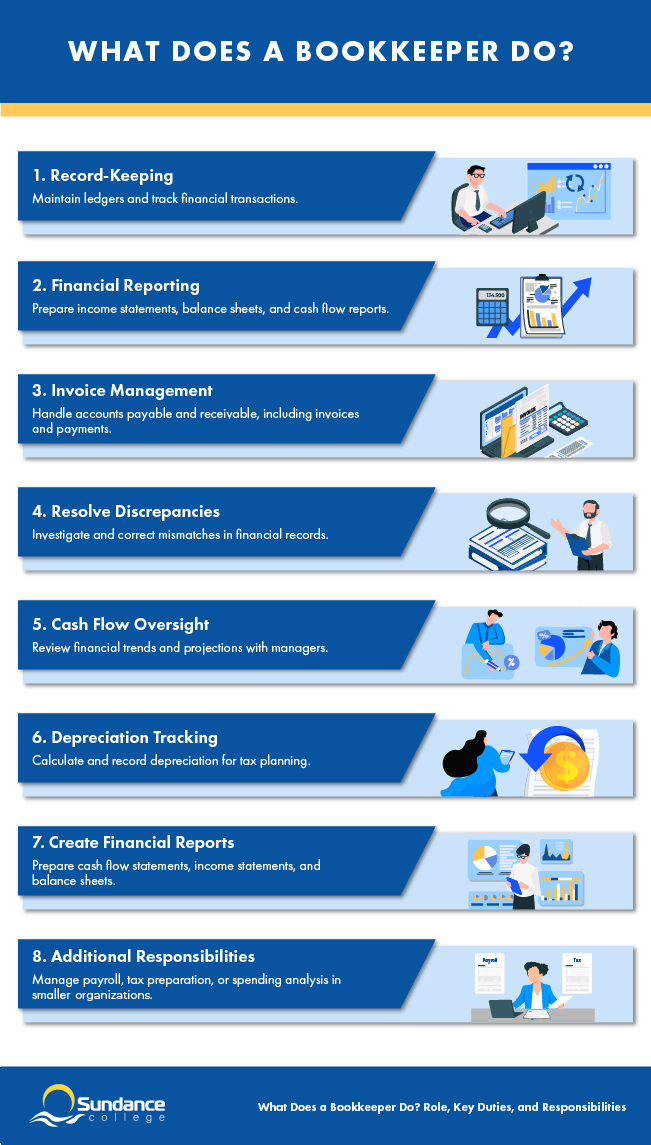
As a bookkeeper, your day will involve recording, reviewing, and organizing financial information. Here’s what you can expect:
- Maintaining Ledgers
You’ll record daily transactions in ledgers, including dates, amounts, and account details. These records will serve as the basis for financial reporting. - Preparing Financial Statements
You’ll be responsible for preparing income statements, balance sheets, and cash flow statements. These reports show how the organization is performing. - Managing Invoices
You’ll handle incoming and outgoing payments. This includes creating invoices, recording payments, and processing bills. - Resolving Bank Discrepancies
You’ll check bank statements against records. If something doesn’t match, you find and fix the problem. - Discussing Cash Flow
You’ll meet with managers to review income, expenses, and overall cash flow. - Calculating Depreciation
You’ll record and manage asset depreciation over time.
This helps with tax planning and keeps financial information accurate. - Handling Additional Financial Work
In smaller organizations, your work may also include:- Processing payroll
- Preparing basic tax returns
- Reviewing spending patterns
By handling these responsibilities, you help keep the organization organized and provide management with useful information for decision-making.
Skills Required for Bookkeeping

You’ll need a mix of financial knowledge and workplace skills to succeed in the field. This includes:
Accounting and Bookkeeping Knowledge
The ability to analyze transactions, record entries, and prepare financial statements. This includes receivables, inventory, cash, and other transactions.
“I learned the whole accounting process, from figuring out what a transaction involves to putting together the final financial statements. This hands-on training helped me understand each step better.”
– Carolyn H., Accounting, Tax and Payroll Graduate
Accounting Software Skills
Use tools like QuickBooks and Excel to enter data, organize records, and generate financial reports.
“Using QuickBooks helped me get comfortable recording, organizing, and reviewing financial data. Now I can easily manage invoices, payments, and financial reports.”
– Hang Y., Accounting, Tax, and Payroll Graduate
Payroll Management Skills
Know how to calculate gross earnings, deductions, and net pay.
Personal Income Tax Preparation Skills
Determine taxable income, apply deductions and credits, and prepare tax returns.
Communication and Interpersonal Skills
Be able to speak and deliver effective oral presentations.
Business Essentials
Know how to organize projects, build professional connections, and follow workplace procedures.
“I’ve always enjoyed working on data entry and payroll tasks. Sundance expanded on what I was already doing, so it felt like the perfect next step.”
– Tamara, Accounting, Tax and Payroll Graduate, Sundance College
With the right training, you’ll build the skills to handle financial records, use industry tools, and work with data accurately.
INFOGRAPHIC
How Sundance College Prepares You for a New Bookkeeping Career
The Accounting, Tax, and Payroll diploma program at Sundance College is developed to prepare you for the responsibilities as a bookkeeper.
Throughout the program, you’ll develop skills in bookkeeping, payroll, and tax preparation. You’ll work with financial statements, prepare tax returns, and record transactions using tools like QuickBooks.
The program includes a practicum opportunity, where you can apply your training in a real-world setting.
You’ll also have access to Career Services for support with resumes, interviews, and your job search for a lifetime.
To get started, contact an admissions advisor today.
FAQs
-
What is the difference between a bookkeeper and an accountant?
A bookkeeper handles daily financial records, while an accountant uses that data for analysis, reporting, and financial planning.
-
What financial records does a bookkeeper maintain?
Bookkeepers maintain records of sales, purchases, payments, receipts, ledgers, and financial statements.
-
Do bookkeepers handle payroll and taxes?
In small organizations, bookkeepers may process payroll and prepare tax returns. In larger organizations, these tasks are often handled by specialized staff.
-
What software skills does a bookkeeper need?
Bookkeepers use tools like QuickBooks and Excel to record data, organize records, and generate reports.
-
What is the typical salary of a bookkeeper?
As a bookkeeper, you can earn as much as $61,755 per year. Your salary will vary based on experience, location, and workplace.
-
What education or training is required to become a bookkeeper?
To become a bookkeeper, you need a diploma program that covers accounting, financial recordkeeping, payroll, and tax preparation. Employers look for candidates who understand how to record transactions, prepare financial reports, and work with accounting software.
The best Accounting, Tax, and Payroll program will prepare you for a new bookkeeping career in under a year. It should give you hands-on training in accounting, bookkeeping, payroll management systems, and personal income tax preparation. The program should also include bookkeeping software like QuickBooks and a practicum opportunity, so you can apply what you’ve learned in a real-world setting.
Subscribe for more career advice
Blog Categories
Share on: