
Blog / What Do Addictions and Community Health Professionals Do?
Sundance Blog
What Do Addictions and Community Health Professionals Do?

Addictions and Community Health Professional Diploma
Employment Opportunities:
- Addictions Worker
- Youth Support Worker
- Family Support Worker
- Drop-in Centre Worker
Addictions and Community Health Professional Learn more
Student aid eligible
27 April 2026 | Author: Richelle Peace
| Read Time:
Quick Answer
Addictions and Community Health Professionals support those who are navigating difficult life situations. They work closely with those affected to offer guidance, connect them with the right support, and help them build practical skills for everyday life. Their work is hands-on and people-focused, with a focus on moving toward greater stability and improved well-being.
Table of Contents

“The opposite of addiction is not sobriety – it’s connection.” – Johann Hari, Author of Chasing the Scream.
Addictions and community health workers play a direct role in creating that connection.
They support people who are struggling with addiction and link them with resources vital to rebuild their lives.
By the end of this article, you will understand the important role addiction workers play, and get a closer look at their responsibilities, and the impact they have on the communities they support.
Daily Tasks for Addictions and Community Health Workers
“Addictions workers assist social workers, counsellors, case managers, and other healthcare professions in developing recovery plans. They also facilitate support groups and monitor clients’ progress.”
-Megan G, Instructor, Addictions and Community Health Professional Program, Sundance College
When you become an addictions and community health professional, some of your core responsibilities may include:
- Conducting Client Assessments: Gather information from clients to understand their immediate needs and history.
- Monitoring Progress: Check in regularly with your clients to evaluate their progress and make necessary adjustments to their care plans.
- Crisis Management: Respond to urgent mental health or substance use concerns and connect clients with necessary services.
- Coordinating Care: Connect clients with community resources such as housing, healthcare, and other support services.
- Documentation: Keep detailed records of daily interactions, interventions, and updates to client care plans.
- Following Up with Clients: Reconnect after referrals to confirm that clients receive the support they need.
Daily duties for addictions and community health professionals are diverse and always impactful. Each day brings new opportunities to make a meaningful difference in the lives of others.
Day-to-day work often comes down to how professionals show up for clients in real moments.
“Every interaction can have a huge effect on the client. Those small interactions are huge. It’s important to lead with empathy, show compassion, and focus on reducing harm in any way possible.”
-Serena N., Instructor, Addictions and Community Health Diploma Program at Sundance College.
Responsibilities of Addictions and Community Health Workers

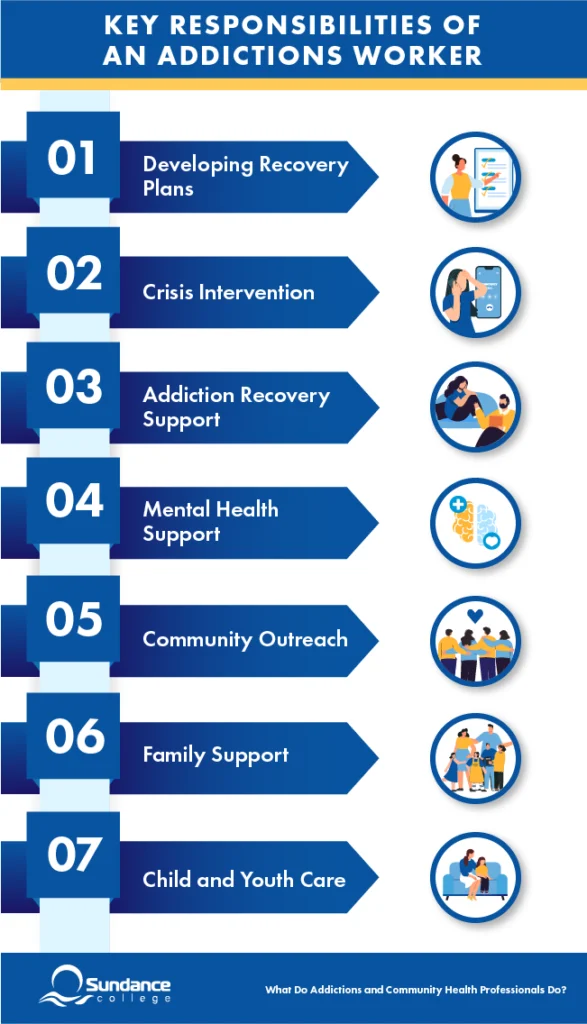
Skilled professionals in this field are in high demand across community and healthcare settings. Below are some of the responsibilities of an Addictions and Community Health professional.
Developing Recovery Plans
Addictions and mental health professionals help to create recovery plans with their clients. This process requires a clear understanding of each person’s unique situation.
When you work in this field, you will meet with clients to talk about their goals, challenges, and what support they need. This is an opportunity to understand where someone is at and what they want to work toward.
From there, the plan takes shape in a way that feels realistic and manageable. Regular check-ins keep you and the client on the same page to ensure the plan stays organized and up to date.
Crisis Intervention
Addictions and community health professionals respond quickly when a crisis occurs.
Support can take different forms. It may include calling emergency services, helping someone de-escalate, or simply being there to listen. In these moments, a calm approach and clear decision-making are critical.
Crisis response also relies on trauma-informed care and a shared approach to harm reduction.
“Make sure that you have a trauma-informed care perspective and make sure you have conversations with your supervisor, your coordinators, your coworkers. Make sure everyone is on board and is reducing harm with every interaction.”
-Serena N., Instructor, Addictions and Community Health Diploma Program at Sundance College
A consistent focus on harm reduction and client-centered care supports both immediate safety and long-term recovery.
Addiction Recovery Support
Supporting recovery also involves connecting with the resources they need to move forward.
This work includes referrals to:
- Healthcare and community services
- Social support services
- Employment services
- Daycare accommodations
- Housing resources
It may also draw on your knowledge of the relapse prevention (RP) models and both proactive and reactive intervention techniques. Facilitating support groups may also be part of the role.
Addictions workers are an important part of the comprehensive care that addresses all aspects of the recovery journey.
Mental Health Support
Many clients face additional mental health challenges alongside addiction. Addressing these challenges is part of the role.
This work includes educating clients and their families, sharing information within the community, and offering strategies for managing stress. It also involves coordinating with mental health services to ensure clients receive the right support.
Community Outreach
Beyond individual care, addictions and community health workers often work in community outreach programs.
Outreach focuses on raising awareness, sharing prevention strategies, and reducing stigma around addiction and mental health. It also creates opportunities to connect people with early support and care.
Child and Youth Care
Some addictions and community health roles focus on supporting children and youth affected by addiction
This work involves providing age-appropriate care to young people who experience addiction directly or within their family. It also includes early intervention and education to support healthy development.
These efforts can reduce long-term risks and support stronger outcomes over time.
Become an Addictions and Community Health Professional
A career as an addictions and community health worker offers a meaningful way to make a positive impact on community and support people through challenging situations.
The field provides a rewarding opportunity to help people rebuild their lives, reconnect with their families and communities, and work toward long-term recovery.
Doing this work effectively requires a strong foundation that comes with the right education.
“Everyone entering the field needs to have education in harm reduction, high risk populations, psychology, ethics, and relapse prevention and intervention. Education is huge is this field.”
-Megan G, Instructor, Addictions and Community Health Program at Sundance College
The best way to start your journey towards becoming an addiction worker is to enroll in the career-focused Addictions and Community Health Professional diploma program. Your program will be taught by industry-experienced instructors like Megan and Serena, who have over 20 years of combined experience working in mental health, addictions, and community health.
The program also includes a 7-week practicum in a real-world setting. This gives you hands-on experience working with clients before you graduate.
Pro Tip: Prepare for your next step by learning how to approach interviews in the addictions and community health field.
Listen to: What Do Addictions and Community Health Professionals Do?


What Do Addictions and Community Health Professionals Do?
Sundance College Podcast
27 April 2026
Frequently Asked Questions
-
What education do you need to become an addictions worker?
Starting a new career in addictions and community health requires a diploma in addictions, mental health, or a related field.
The best programs provide hands-on education in harm reduction, mental health, ethics, and relapse prevention, along with a real-world practicum opportunity.
-
What is trauma-informed care and why does it matter in addictions work?
Trauma-informed care recognizes that many clients have experienced trauma.
This discipline guides professionals to respond with empathy, avoid re-traumatization, and create a safe, respectful environment.
-
What does crisis intervention involve in addictions work?
Crisis intervention involves responding to urgent situations such as relapse or mental health emergencies.
Professionals use their skills in de-escalation, assessing risk, and connecting clients with immediate support or emergency services.
-
How do addictions workers support mental health?
These professionals provide education, offer practical coping strategies, and connect clients with mental health services. Support often includes ongoing check-ins and coordination of care.
-
Can addictions workers support children and youth?
Yes. Some roles focus on children and youth to provide age-appropriate support and intervention. These workers use their specialized skills to also offer education for those affected by addiction directly or within their families.
-
What is the role of community outreach in addictions and community health?
Community outreach raises awareness, shares prevention strategies, and reduces stigma. Professionals in this field also help connect individuals with early support and local resources.
Subscribe for more career advice
Blog Categories
Share on: