
Blog / Oil and Gas Administration Interview Questions and Answers
Sundance Blog
Oil and Gas Administration Interview Questions and Answers

Explore our Diploma Programs
Fields of Study:
- Business, Hospitality, and Legal
- Health and Human Services
- Technology
Explore our Diploma Programs Learn more
Student aid eligible
30 March 2026 | Author: Vallankan Mendonca
| Read Time:
Quick Answer
To succeed in oil and gas administration interviews, you need to demonstrate an understanding of the industry and its processes, the ability to manage data and documentation accurately, and strong coordination skills between field and office teams. Employers look for candidates who can apply practical, job-ready skills from real-world training.
Table of Contents
Oil and gas administrators communicate with field operations, handle land and lease documentation, and support production reporting and ticketing. To succeed in oil and gas administration interviews, you need to show that you understand the industry and its administrative processes, and demonstrate that you have the skills to fill the role.
“A good way to prepare for an oil and gas administration interview is to research the company and understand what they do. This is important because it shows genuine interest and helps you connect your answers to their work.
Candidates should be familiar with common industry terms and show experience or training in handling documents, updating data, and communicating with different teams, as these are key daily tasks in the role.
For those new to the field, connecting your diploma training to the job duties and showing awareness of how the industry works makes a strong impact.”
-Pola A., Oil and Gas Administration program instructor at Sundance College
One effective way to answer interview questions is the STAR method. Describe the Situation, the Task you were responsible for, the Action you took, and the Results or outcome when you share examples from your real-world experience or hands-on training.
Common Oil & Gas Administration Interview Questions
Here are some common oil and gas administration interview questions and sample answers that showcase your skills.
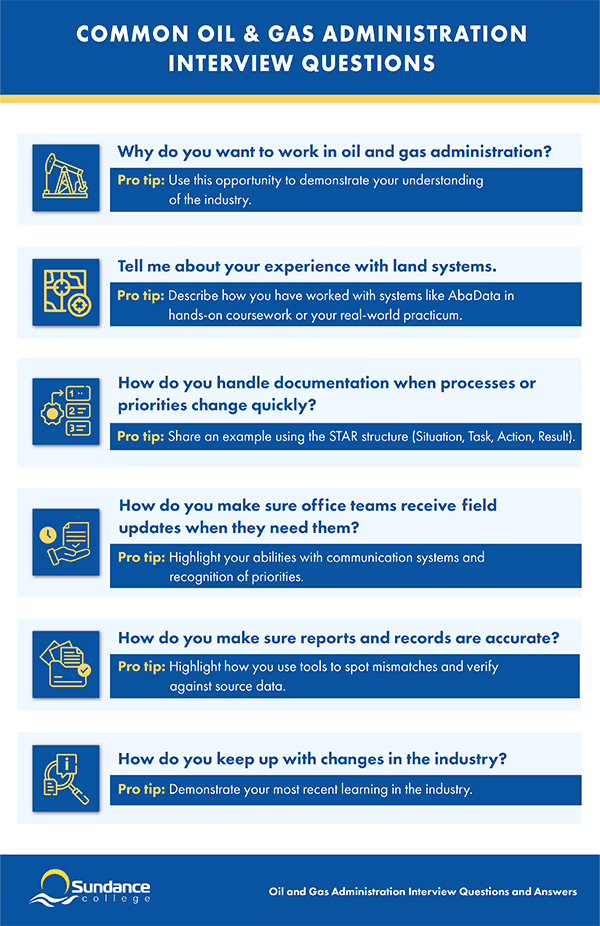
Why do you want to work in oil and gas administration?
When interviewers ask this question, it’s an opportunity to demonstrate your understanding of the industry, its history, administrative processes, and practices.
Sample answer
“I’m interested in oil and gas administration because of the diverse areas you can support, from land systems and mapping to field operations and production accounting.
During my training, I gained a broad understanding of exploration, pipelining, refining, and even transportation. I also learned about alternative energy sources and how oil and gas companies can integrate them into their operations.
Because of the range of opportunities and the direction the industry is heading, I want to build my career in this field.”
Tell me about your experience with land systems.
Show your familiarity with land systems and mapping in the oil and gas industry and how you have worked with it.
Sample Answer
“My experience with land systems comes from my training, where I learned how land is identified and managed in Abadata.
Hands-on activities included mapping and land utilization, as well as identifying locations and gathering property details. We covered industry mapping regulations and the structure of mineral and property rights.
This gave me a clear understanding of how land information is recorded, accessed, and used, and how it supports activities across the industry.”
How do you handle documentation when processes or priorities change quickly?
In oil and gas administration, documentation priorities can change quickly. Show how you respond to changes and keep things accurate.
Sample answer
“During my practicum with a renewable energy company, I worked with data related to solar installations. While I was there, there was a change in what information needed to be recorded.
I worked with my supervisor to identify what had to be updated, made the changes in Excel, and showed the changes to my colleagues.
As a result, we were all recording the new information the same way, and nothing was missed.”
How do you make sure office teams receive field updates when they need them?
Field updates can come in at different times, and some need to be shared right away. Show how you handle the flow of information by using the STAR method to share an experience from your hands-on training or practicum experience.
Sample answer
Situation:
“During my practicum at an oil and gas company, I coordinated between the field team and the office team when updates came in.”
Task:
“My responsibility was to record changes and notify the right people on time.”
Action:
“When the field team sent updated production volumes, I logged the changes in AbaData. I then flagged the update and informed the office team right away.”
Result:
“This kept everyone working with the latest information and helped avoid delays or miscommunication.”
How do you make sure reports and records are accurate?

In oil and gas administration, working with land records and production data requires accuracy. Show how you build reviews into your process.
Sample answer
“During my practicum at an oil and gas company, I worked with lease records. I entered legal land descriptions and ownership details into the company database. After entering the data, I reviewed it for missing or duplicate entries. Then, I compared it with the original document before saving. This kept the records accurate and free of errors.”
How has your education prepared you to adapt to the evolving demands of today’s industry?
The oil and gas industry continues to evolve, with new technology in exploration and production and updates to regulatory and reporting requirements. Show how you build your knowledge and stay informed.
Sample answer
“In my Oil and Gas Administration diploma program, I built my understanding of both traditional operations and alternative energy sources.
I developed knowledge in exploration, pipelining, completion, and refining. This gave me a clear picture of how the industry works.
I also learned about alternative energy, with a focus on how oil and gas companies can fully integrate with the renewable sector. This gave me insight into how the industry is evolving.
This has prepared me to adapt and take on new responsibilities in a changing industry.”
How does the Sundance College Diploma prepare you for this role?
The Sundance College Oil & Gas Administration diploma program prepares you to support functions from exploration and accounting to refining and transportation in an oil and gas office.
The program covers traditional oil and gas operations and alternative sources of energy, giving you a broader understanding of the energy sector.
You’ll learn about operational exploration, pipelining, completion and refining. This shows you how the industry works every day.
When it comes to alternative energy, you’ll learn about how the renewable energy industry is growing in Canada. You’ll also see how these changes affect efficiency and sustainability, and how oil and gas companies are starting to use renewables in their work.
You’ll have the opportunity to apply your training through a practicum in a professional setting, along with lifetime support for resume development, interview preparation, and job search through Career Services.
By the time you graduate, you’ll have practical exposure to oil and gas office processes, an understanding of how alternative energy fits within the energy sector, and interview preparation that helps you speak effectively about your readiness for administrative positions.
To get started, contact an admissions advisor today.
Frequently Asked Questions (FAQs)
-
Do I need experience to get a job in oil and gas administration?
No. You don’t need prior experience. The Oil and Gas Administration diploma program builds your knowledge in production accounting, land mapping, logistics, and energy operations, so you’re ready for the job.
-
What if I’m asked about weaknesses in a job interview?
Choose a skill you’re improving, such as learning a new system, understanding processes, or handling overlapping deadlines. This shows you’re aware of what you need to work on and are taking steps to improve.
-
Do oil and gas administrators need to know about renewable energy?
Yes, renewable energy is a growing in importance. It shows you’re aware of industry changes and prepared to take on responsibilities as the industry evolves.
-
What is the STAR method and how do I use it in an interview?
The STAR method is a simple way to structure answers to showcase your experience. It stands for Situation, Task, Action, and Result. Start by setting the context, explain your responsibility, focus on the actions you took, and finish with the result.
-
What questions should I ask at the end of a job interview?
Ask questions that show interest in the role, such as how the office works with field teams, which systems are used most often, and how information is reviewed before it moves forward.
-
How important is software proficiency in oil and gas administration?
It’s important to have experience working with tools like Word and Excel. AbaData is an industry-specific tool used for land records, mapping, and documentation. Being comfortable with them helps you work accurately and support your team.
Subscribe for more career advice
Blog Categories
Share on: