
Blog / How to Choose the Right Pharmacy Assistant Program: What to Look For
Sundance Blog
How to Choose the Right Pharmacy Assistant Program: What to Look For

Pharmacy Assistant Diploma
Employment Opportunities:
- Retail Pharmacy Assistant
- Hospital Pharmacy Assistant
- Central Fill Dispensary Assistant
- Pharmaceutical Business Development Assistant
Pharmacy Assistant Learn more
Student aid eligible
23 March 2026 | Author: Jonathan Stoddart
| Read Time:
Quick Answer
Choose a pharmacy assistant diploma program that teaches the skills employers are looking for and builds both foundational knowledge and practical skills. Look for training that includes pharmaceutical software, compounding, and both community and institutional pharmacy procedures.
Hands-on training and a practicum opportunity will build your practical skills. Online options and a modular format are crucial so you can work while you learn. The best programs are completed in under a year and offer lifetime career services support.
Table of Contents
- Why Your Pharmacy Assistant Program Choice Makes a Real Difference
- Courses to Look for in a Pharmacy Assistant Program
- Hands-On Training in Key Technical Skills
- Practicum Experience and Career Support
- Pharmacy Assistant Career Opportunities
- How Sundance College’s Pharmacy Assistant Diploma Program Prepares You for Success
- Frequently Asked Questions (FAQs)
Working as a pharmacy assistant means being the helpful, knowledgeable link between patients and their prescriptions. It’s a rewarding and meaningful way to make a difference, and it’s a stable career opportunity.
Choosing the right Pharmacy Assistant diploma is just as important as choosing the career itself. What’s included in the program will shape your confidence, your skills, and your readiness to work in a real pharmacy setting. This article outlines what to look for so you can make an informed decision.
Why Your Pharmacy Assistant Program Choice Makes a Real Difference
To move into this new career, it’s important to choose a program that provides you with the skills and experience that employers are looking for.
The duties of a pharmacy assistant range from dosage calculations and working with pharmacy software to assisting patients and understanding drug classes. Choose a program that provides hands-on training in these areas and prepares you to support pharmacists and help pharmacies operate efficiently.
If you already have work and other responsibilities, your pharmacy assistant program will provide online options and student support, so you don’t have to put your life on hold.
It will also provide access to a dedicated career services team, which is crucial to turning your training into a new job.
Courses to Look for in a Pharmacy Assistant Program
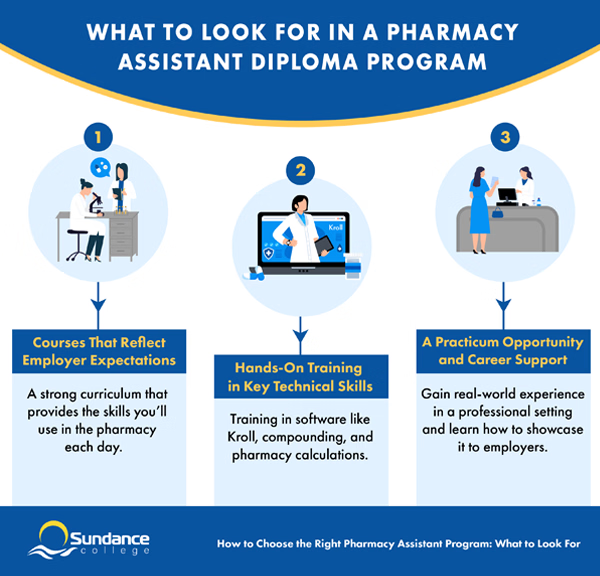
When it comes to courses, make sure the program matches employer expectations.
“Look beyond the program title and focus on what you’ll actually be learning. A well-rounded program should cover both the foundational knowledge behind pharmacy work and the practical skills used in day-to-day settings.”
-Noor S., Instructor in Sundance College’s Pharmacy Assistant Diploma program
Choose a program that includes training in pharmaceutical software such as Kroll, which pharmacies use to process prescriptions, manage patient records, and support pharmacy workflow.
Pharmacy compounding instruction should also be included so you can learn the techniques used to prepare medications accurately.
The program should provide training in both community and institutional pharmacy procedures, helping you understand how pharmacy operations function in retail and hospital environments.
Ensure the program also covers pharmacology, pharmacy calculations, anatomy and physiology, and health and ethics.
Hands-On Training in Key Technical Skills
Working as a pharmacy assistant requires practical skills like compounding, pharmacy calculations, and understanding drug classes.
“Through guided exercises and simulated scenarios, instructors walk students through common pharmacy procedures. Students complete practical assignments that reflect pharmacy tasks, including interpreting mock prescriptions, processing orders, and managing inventory scenarios.
This approach helps students build confidence, accuracy, and a solid understanding of pharmacy workflow before entering a professional setting.”
-Noor S.
In a pharmacy assistant program, guided exercises, online learning tools, and hands-on training will help you build these crucial skills.
Learning to work with specialized pharmacy systems is key to supporting tasks such as prescription processing, patient record management, and managing inventory.
“Hands-on instruction with widely used pharmacy systems like Kroll will prepare you to provide the accuracy, efficiency, and proper documentation that the role requires.
Pharmacy software training is about more than knowing where to click. It’s about understanding how it connects to calculations, prescription filling, and workflow processes.”
-Noor S.
Choose a pharmacy assistant program that will make sure your practical skills are job-ready.

Practicum Experience and Career Support
A pharmacy practicum opportunity is where you’ll experience the pace and structure of a working pharmacy environment.
This professional experience will help you understand what’s expected in a pharmacy workplace, participate in patient care, and use the skills you’ve learned.
You’ll learn how pharmacy teams operate and build real-world experience that you can reference when answering common pharmacy assistant interview questions.
The pharmacy assistant diploma program that you choose should include a practicum opportunity and provide support in job search strategies, resume writing, and interview techniques to make the most of it.
Pharmacy Assistant Career Opportunities
Pharmacy assistant training will prepare you for careers across a range of healthcare and pharmaceutical business environments.
Retail Pharmacy Assistant
Work in community pharmacies, providing knowledgeable customer service and administrative responsibilities while working closely with pharmacists.
Hospital Pharmacy Assistant
Support pharmacy teams in institutional healthcare settings by assisting with medication preparation, labeling, and inpatient pharmacy procedures.
Central Fill Dispensary Assistant
Assist in specialized facilities focused on high-volume prescription processing, with a focus on efficiency and accuracy.
Pharmaceutical Business Development Assistant
Provide behind-the-scenes administrative and coordination functions within pharmaceutical or healthcare businesses.
Pharmacy Administrative Professional
Focus on pharmacy administration, including record management, coordination, and communication.
How Sundance College’s Pharmacy Assistant Diploma Program Prepares You for Success
Sundance College’s Pharmacy Assistant Diploma program will prepare you to start a pharmacy assistant career in under a year.
The 43-week program covers the essential skills pharmacy assistants rely on every day, including pharmaceutical software, compounding, and both community and institutional pharmacy procedures.
The program’s 7-week practicum opportunity allows you to apply your knowledge in a real-world pharmacy environment and gain experience that will help you stand out from other applicants.
Sundance College’s modular learning format means you’ll complete your training on one topic before moving on to the next, maximizing retention.
Online training options provide flexibility, allowing you to balance your education with work, family, and other commitments. The Student Services Team will provide academic guidance, while Career Services supports you with resume development, interview preparation, and job search strategies for life.
Sundance College graduate Alyssa C. turned her practicum into employment.
“I did my practicum at a local pharmacy, and they hired me right away. I’ve now been working there for over a year.”
She uses the skills she gained in the Pharmacy Assistant Diploma program every day in her work.
“There are many things I learned in my program that I use every day at work, like inputting prescriptions, patient information, and billing. Learning how to use Kroll was one of my favourite parts of the program, and I still use it daily, including the shortcuts I learned.”
Alyssa, like many Sundance College graduates, used knowledge gained through coursework to succeed in her new career. In fact, over 84% of Sundance College graduates find employment in their chosen fields within six months of graduating.
Connect with a Sundance College Admissions Advisor to explore how the Pharmacy Assistant Diploma can prepare you for your pharmacy assistant career.
Frequently Asked Questions (FAQs)
-
How do I know which Pharmacy Assistant program is the best for me?
Choose a program that reflects employer expectations. Look for training that includes foundational knowledge, practical skills, hands-on pharmacy software instruction, and a practicum opportunity. The program should have a modular learning format, include lifetime access to career support, and prepare you for a new career in under a year.
-
What should the best Pharmacy Assistant curriculum include?
The best pharmacy assistant curriculum includes hands-on training in pharmaceutical software, compounding, and both community and institutional pharmacy procedures, as well as foundational knowledge like physiology, anatomy, and pharmacology.
It will also allow you to demonstrate these skills during a practicum opportunity.
-
How long does it take to complete a Pharmacy Assistant diploma program?
A pharmacy assistant program should teach practical skills, foundational knowledge, and provide a practicum opportunity in less than a year.
-
What questions should I ask before enrolling in a Pharmacy Assistant program?
Questions should focus on what the program includes and how it is delivered. Ask about the curriculum, length of the program, and whether a practicum opportunity is included. Ensure the program includes pharmacy software training, such as Kroll, has a modular learning format, and features career services for life.
-
Who is a Pharmacy Assistant program right for?
A Pharmacy Assistant program is a good fit for people who are organized, detail-oriented, and enjoy working with others in a healthcare setting. It’s well suited for those who want a stable, structured role that combines customer service with administrative and technical tasks, such as processing prescriptions, managing patient information, and supporting pharmacy operations.
-
What makes the Sundance College Pharmacy Assistant Diploma program a strong choice?
The Sundance College Pharmacy Assistant Diploma program will prepare you for a career as a pharmacy assistant by training you in the practical skills that employers expect, including pharmaceutical software, compounding, and both community and institutional pharmacy procedures. The program also teaches foundational knowledge like pharmacology, physiology and anatomy, and includes a practicum opportunity, all in under a year. The learning format is modular and includes online options, and Career Services support for life.
Subscribe for more career advice
Blog Categories
Share on: