
Blog / Taking a Career-Focused Look at Accounting, Tax, and Payroll Diplomas
Sundance Blog
Taking a Career-Focused Look at Accounting, Tax, and Payroll Diplomas

Accounting, Tax, and Payroll Diploma
Employment Opportunities:
- Accounting Assistant/Technician
- Bookkeeper
- Income Tax Return Preparer
- Payroll Administrator
Accounting, Tax, and Payroll Learn more
Student aid eligible
14 September 2026 | Author: Nick Greene
| Read Time:
Quick Answer
An Accounting, Tax, and Payroll diploma teaches specialized knowledge and skills including:
- Financial accounting
- Bookkeeping
- Payroll
- Income tax preparation
- QuickBooks accounting software
Sundance College's 43-week program also includes a 5-week practicum opportunity, giving you hands-on experience in an accounting workplace. Graduates can pursue jobs across various industries such as Bookkeeper, Payroll Administrator, and Accounting Technician.

Table of Contents
- Three Reasons to Study Accounting, Tax, and Payroll
- Characteristics of Successful Accounting, Tax, and Payroll Professionals
- How to Choose the Right Accounting, Tax, and Payroll Diploma Program for your Career
- Build Practical Accounting, Tax, and Payroll Skills at Sundance College
- Frequently Asked Questions about Accounting, Tax, and Payroll Diplomas
Every business needs accurate financial records, timely payroll, and organized financial information. Accounting, Tax, and Payroll professionals handle many of these day-to-day responsibilities.
Depending on your role, you could record transactions, reconcile accounts, process payroll, prepare tax returns, maintain financial records, or work with accounting software.
Whether you want to work in bookkeeping, payroll, tax preparation, or accounting, the right training helps you build the technical and business skills employers look for.
As you consider this career, here is what to know about careers in accounting and how Sundance College’s career-focused diploma program prepares you for the workplace.
Three Reasons to Study Accounting, Tax, and Payroll

Warren Buffett once said that “accounting is the language of business.” Learning that language gives you a foundation for understanding how businesses track finances, make decisions, and plan for the future.
The benefits of pursuing an Accounting, Tax, and Payroll career include:
1. An In-Demand Profession
Every business needs accurate financial records, payroll, tax preparation, and day-to-day accounting support.
That makes accounting, bookkeeping, payroll, and tax skills useful across a wide range of workplaces. You could apply these skills in an accounting firm, a small business, a financial institution, a healthcare organization, a government agency, or another industry.
2. Work Across Different Industries
Accounting professionals work in almost every industry from financial services to non-profit organizations. You could work in:
- Financial Services: Banks, investment firms, and insurance companies.
- Healthcare: Hospitals, clinics, and nursing homes.
- Public Sector: Local, provincial, and federal government agencies.
- Professional Services: Law firms, consultancies, and marketing companies.
- Entertainment: Movie studios, music labels, and tour operators.
- Non-Profit: Charities, foundations, and research institutions.
- Education: Schools, service providers, and education technology companies.
The work and responsibilities vary by employer, but the core accounting skills remain across these settings.
3. Multiple Career Opportunities
Within each sector, there are various career opportunities with an Accounting, Tax, and Payroll diploma:
- Accounting Technician: Helps manage financial statements, transactions, and records. Assists with payroll tasks.
- Bookkeeper: Maintains financial records and statements, processes transactions, and performs financial analysis. Also conducts reconciliations.
- Income Tax Return Preparer: Prepares tax returns and supports clients with deductions and other tax-related requirements.
- Accounting Assistant: Provides administrative support to accounting departments.
- Payroll Administrator: Processes payroll and provides support to employees. Manages payroll records, deductions, and compliance.
- Office Assistant: Manages supplies, schedules, and communication. Files, prepares, and organizes documentation.
Characteristics of Successful Accounting, Tax, and Payroll Professionals

Technical financial knowledge is important, but Accounting, Tax, and Payroll professionals need qualities that help them work accurately and responsibly.
1. Attention to Detail
Accuracy matters in accounting. A minor error in a financial record, payroll calculation, or tax document can have significant consequences. An accounting professional needs to spot discrepancies and keep records accurate.
2. Analytical Thinking
Accounting professionals review financial records and information to identify discrepancies, understand financial activity, and support business decisions. Strong analytical skills help them make sense of financial data.
3. Integrity
Accounting and payroll professionals regularly handle confidential financial and employee information. Employers and clients trust them to protect that information, follow professional requirements, and handle financial records responsibly.
How to Choose the Right Accounting, Tax, and Payroll Diploma Program for your Career
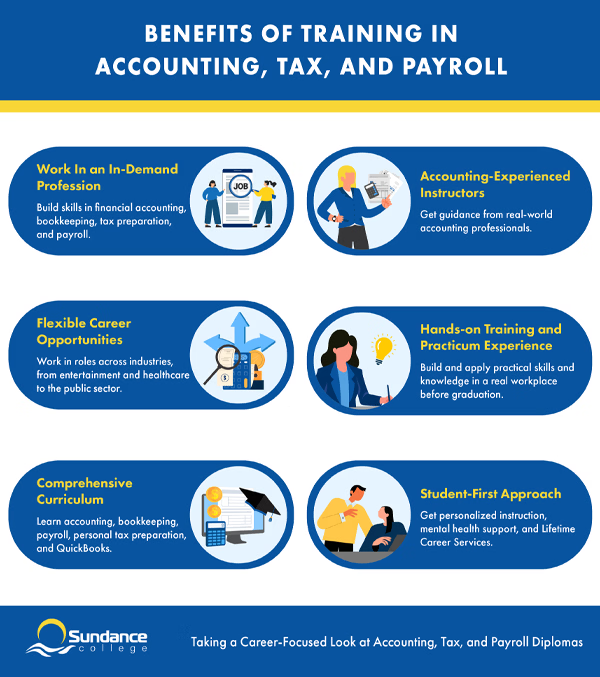
There are many options for getting an Accounting, Tax, and Payroll diploma. How do you know if you’ve chosen the right college? Look for a program that gives you relevant technical training, practical experience, knowledgeable instructors, and support as you prepare for employment.
1. Courses and Curriculum
As an Accounting, Tax, and Payroll professional, you’ll work with more than just numbers. Communication, organization, and business writing are also part of the job.
A strong program teaches project organization, business writing, and networking. It also provides technical training in bookkeeping, taxes, and payroll.
Sundance College’s Accounting, Tax, and Payroll diploma program includes courses in:
- Bookkeeping and Financial Accounting
- Computerized Bookkeeping – QuickBooks Online
- Personal Income Tax Preparation
- Payroll
- Business Essentials
- Effective Business Writing
- Organizational Behavior
- Communication and Interpersonal Skills
- Microsoft Applications
2. Accounting-Experienced Instructors
When choosing a program, request more information about the instructors’ education and industry experience. Instructors with experience in the field bring workplace examples and practical knowledge into the classroom.
Sundance College’s instructors are practicing industry professionals who apply real-world insights to their teaching.
“At Sundance College, we always have our students’ best interests at heart. We use our industry knowledge and experience to help them succeed. And we’re always looking for ways to expand that knowledge.”
-Adrian I, Accounting, Tax, and Payroll Instructor at Sundance College
3. Hands-on Training and Practicum Opportunities
When choosing a career college, pay attention to whether the program offers hands-on training and a practicum opportunity.
Having a practicum on your resume is invaluable as it improves your employability and helps you apply your classroom knowledge in a real-world workplace setting. It also creates networking opportunities and gives you a competitive edge against other applicants.
Sundance College combines practical training with a 5-week practicum opportunity. As a student, you will develop strong accounting skills and apply it hands-on during your practicum. This helps you to understand the tools and programs you would come across during your career.
“Sundance College’s 43-week Accounting, Tax, and Payroll program teaches the logic behind accounting, tax, and payroll formulas. Students apply their knowledge in leading business accounting software QuickBooks. They also get the chance to work hands-on in a real-world accounting environment.”
– Adrian I, Accounting, Tax, and Payroll Instructor at Sundance College
4. Approach to Teaching
A college’s approach to education affects how you learn and how much support you receive throughout the program.
Sundance College students study one course at a time, allowing them to focus on each subject before moving to the next. Students also have direct access to instructors and opportunities for personalized support.
Sundance College also provides Career Services to help students prepare for employment. Support includes resume preparation, interview practice, and job search guidance.
Students have access to mental health specialists and other student support as they work through their programs.
“At Sundance College, we meet our students where they are. We also understand that success extends beyond the classroom. That’s why we provide the resources students need to grow both personally and professionally.”
– Laiq B, Accounting, Tax, and Payroll Instructor at Sundance College
Build Practical Accounting, Tax, and Payroll Skills at Sundance College

Accounting, Tax, and Payroll professionals combine financial knowledge with interpersonal skills. From accounting and payroll to data analysis, the role is essential to the majority of businesses.
Sundance College’s 43-week Accounting, Tax, and Payroll Diploma combines instruction, practical training, and a 5-week practicum opportunity. You will develop skills in:
- Financial Accounting
- Computerized Bookkeeping – QuickBooks
- Payroll
- Business Communication
- Income Tax Preparation
- Microsoft Applications
- And more
Graduates pursue roles such as Accounting Technician, Bookkeeper, Income Tax Preparer, and Payroll Administrator.
“My experience with Sundance College has been very positive and rewarding. The instructors are knowledgeable, supportive, and always willing to help students understand the course material. They create a learning environment that encourages participation and makes it easy to ask questions.”
– Fola O., Accounting, Tax, and Payroll
Take the first step toward your Accounting, Tax, and Payroll career by connecting with us.
Frequently Asked Questions about Accounting, Tax, and Payroll Diplomas
-
Do I need experience to enroll?
No. To enroll in Sundance College’s Accounting, Tax, and Payroll program, you need a high school diploma or mature student status.
-
How long does an Accounting, Tax and Payroll diploma take to complete?
Sundance College’s Accounting, Tax, and Payroll Diploma program takes 43 weeks to complete. The program also includes a 5-week practicum opportunity.
-
What is the average salary for an Accounting, Tax, and Payroll professional?
An Accounting, Tax, and Payroll Professional in Canada can earn up to $61,755 a year on average. This varies based on your location, industry, and experience level.
-
What software should an Accounting, Tax, and Payroll professional know?
Accounting, Tax, and Payroll professionals use software like QuickBooks for bookkeeping and financial accounting. They also use Microsoft Word, Outlook, and Excel for reporting, documentation, and communication.
-
What is the difference between payroll and accounting?
Payroll focuses on paying employees and managing related records and deductions. Accounting covers a broader range of financial activities, including transactions, expenses, financial reporting, taxes, and payroll.
-
How do I find a job as an accounting professional?
Along with an Accounting, Tax, and Payroll diploma, you will also need a strong resume.
To improve your chances of employment:
- Review job listings to make sure your resume shows the right skills
- Regularly update your resume
- Practice writing and personalizing cover letters
- Network with Accounting, Tax, and Payroll professionals
- Work on your interviewing skills
Sundance College’s lifetime Career Services include resume prep, mock interviews, and job search guidance.
Subscribe for more career advice
Blog Categories
Share on: